Excavations at Adie’s Brae
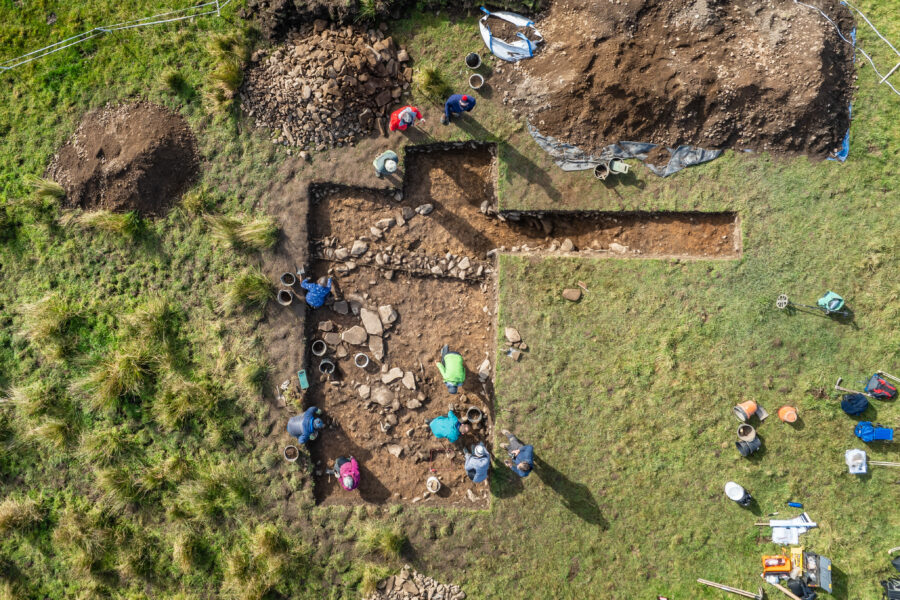
Excavations at a scooped settlement north of Moffat are helping to shed light on life in Southern Scotland in prehistory.
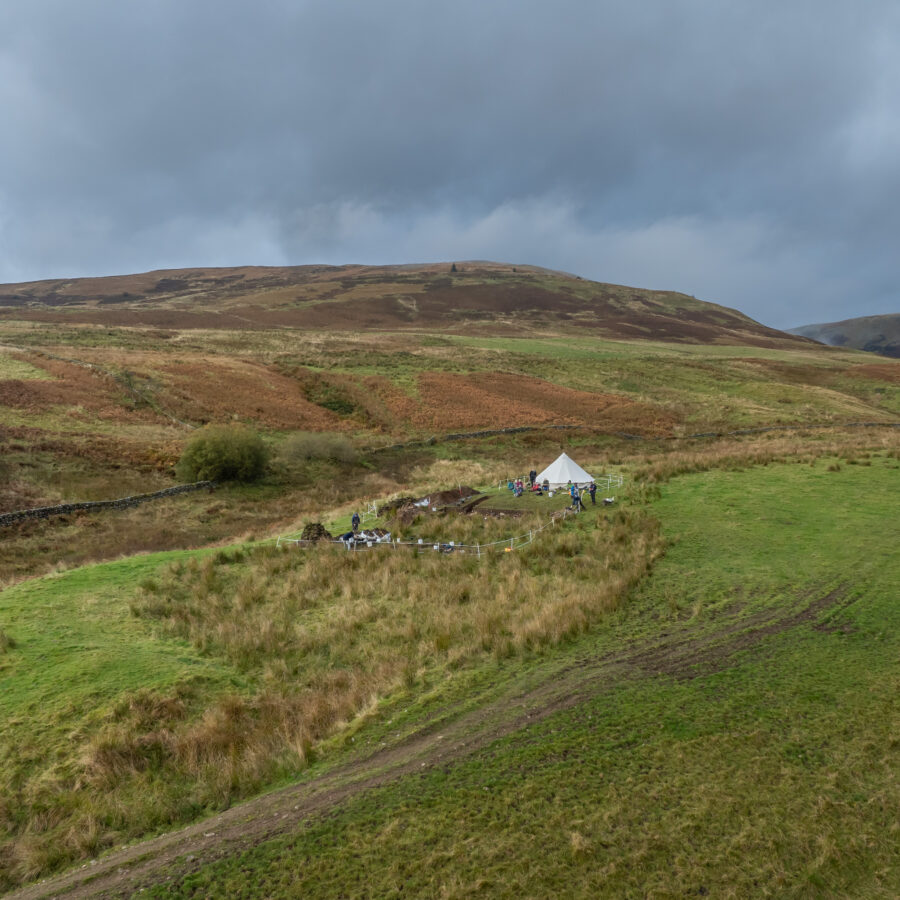
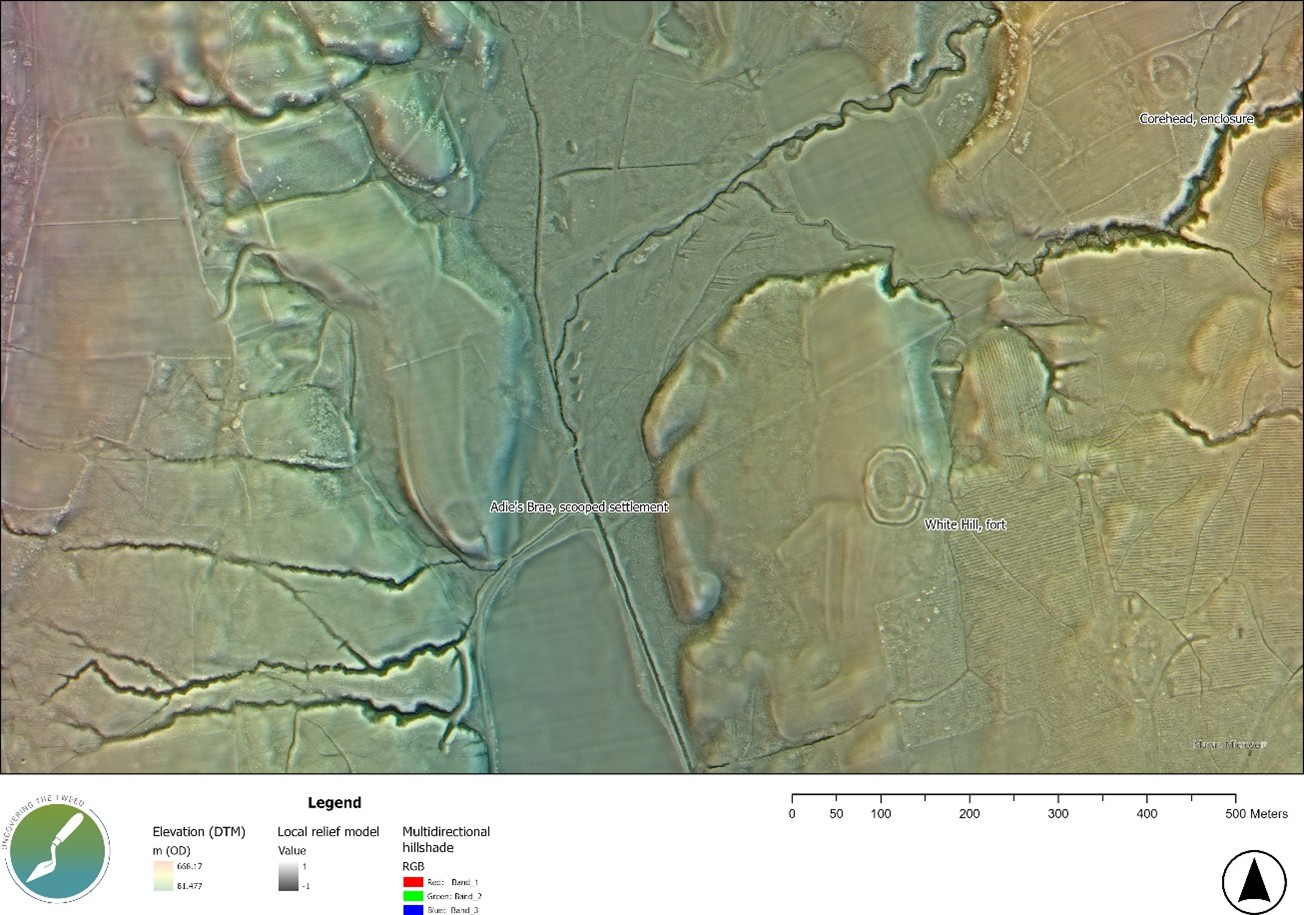
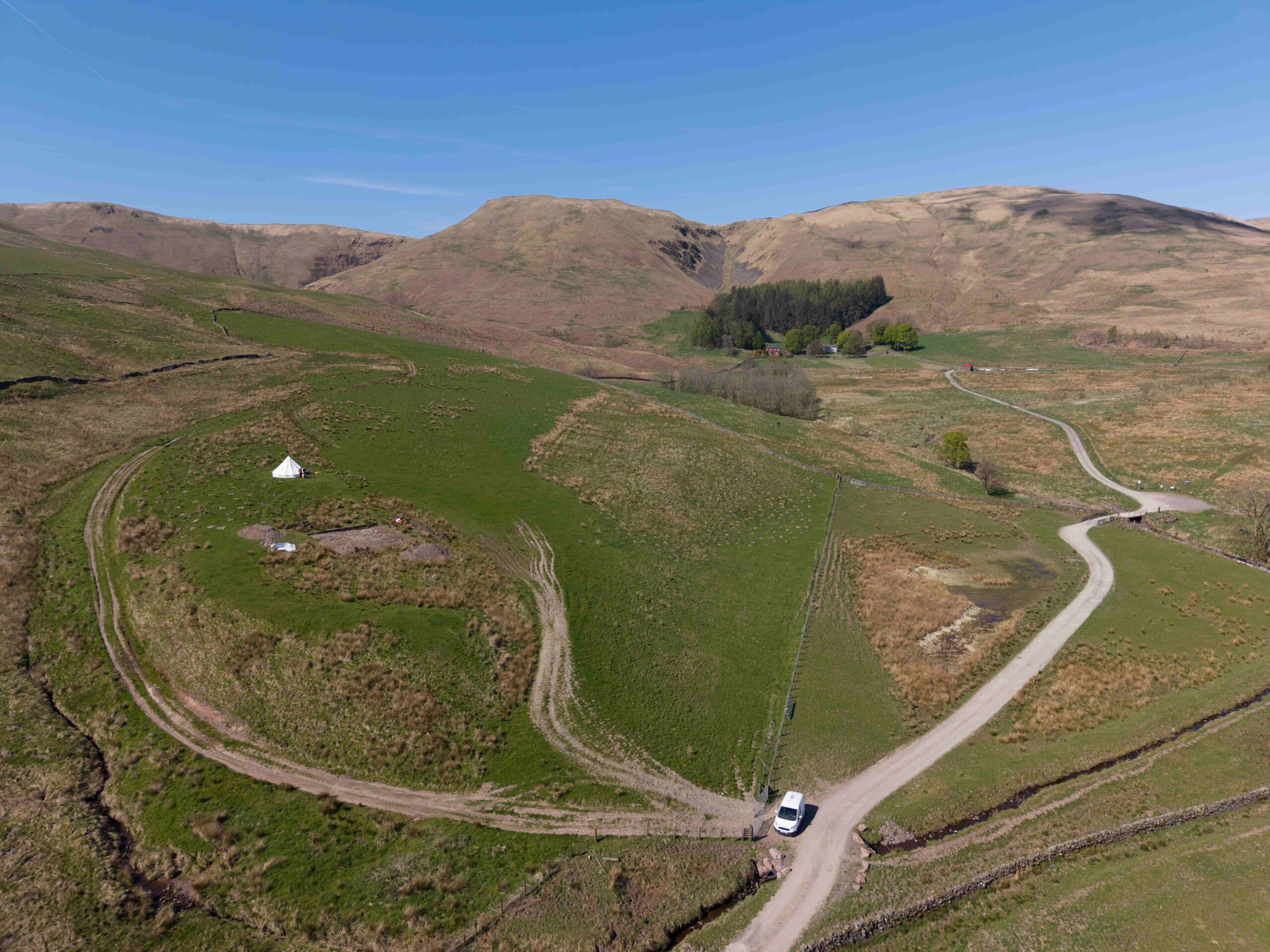
The landscape around Ericstane and Corehead, north of Moffat, contains some very visible traces of the late prehistoric period, and represents a very good example of how prehistoric archaeology can survive around the fringes of improved cultivation and later forestry. Within a 2 km stretch along the Ericstane glen, at least three major forts and a further three scooped settlements are located on the margins of the fields found along the valley floor. Close to the modern A701, overlooking the valley floor, a well preserved section of Roman road cuts across the landscape, accompanied by a signal station. The Ericstane area comprises a busy Iron Age landscape, and must have been a key interface between Roman troops and native communities in the first century AD, and in the late 18th century, peat diggers found half of a Roman commander’s brooch close to the road (visit Moffat Museum to find out more).
About Scooped Settlements
Scooped settlements are enclosed dwellings dating to the middle to late Iron Age in Scotland, with many likely in use during the period of Roman presence. They are particularly common in Annandale and along the Tweed, where around 40 examples are known, though relatively few have been excavated. Their dating is often inferred from the fact that some overlie the ramparts and ditches of earlier Iron Age forts, indicating they were built later.
Typically sub-circular or oval and around 40–60 metres across, scooped settlements are defined by an enclosing earth and stone bank. Their interiors were often cut into sloping ground, with the excavated material used to create level platforms for roundhouses. These enclosures usually contained a small yard, likely used for domestic activities such as craft production, food preparation and possibly keeping livestock.
Two examples which provide some of our evidence for these small middle/late Iron Age settlements are those excavated by Iain Banks at Woodend and by George Jobey at Boonies. Finds included native and Roman pottery, querns, stone tools, glass bangles and personal ornaments, including a penannular brooch, largely dating to the 1st and 2nd centuries AD.
Investigating Adie’s Brae
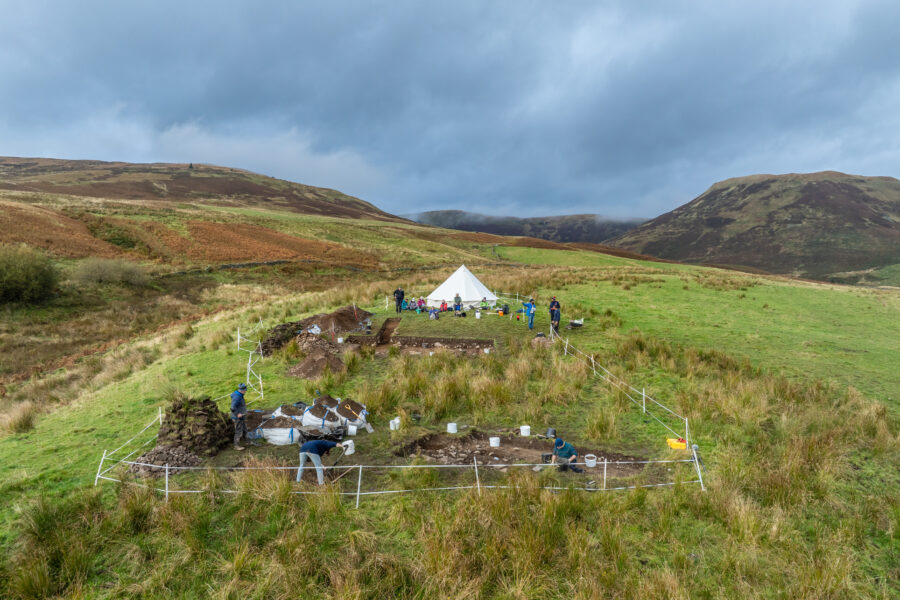
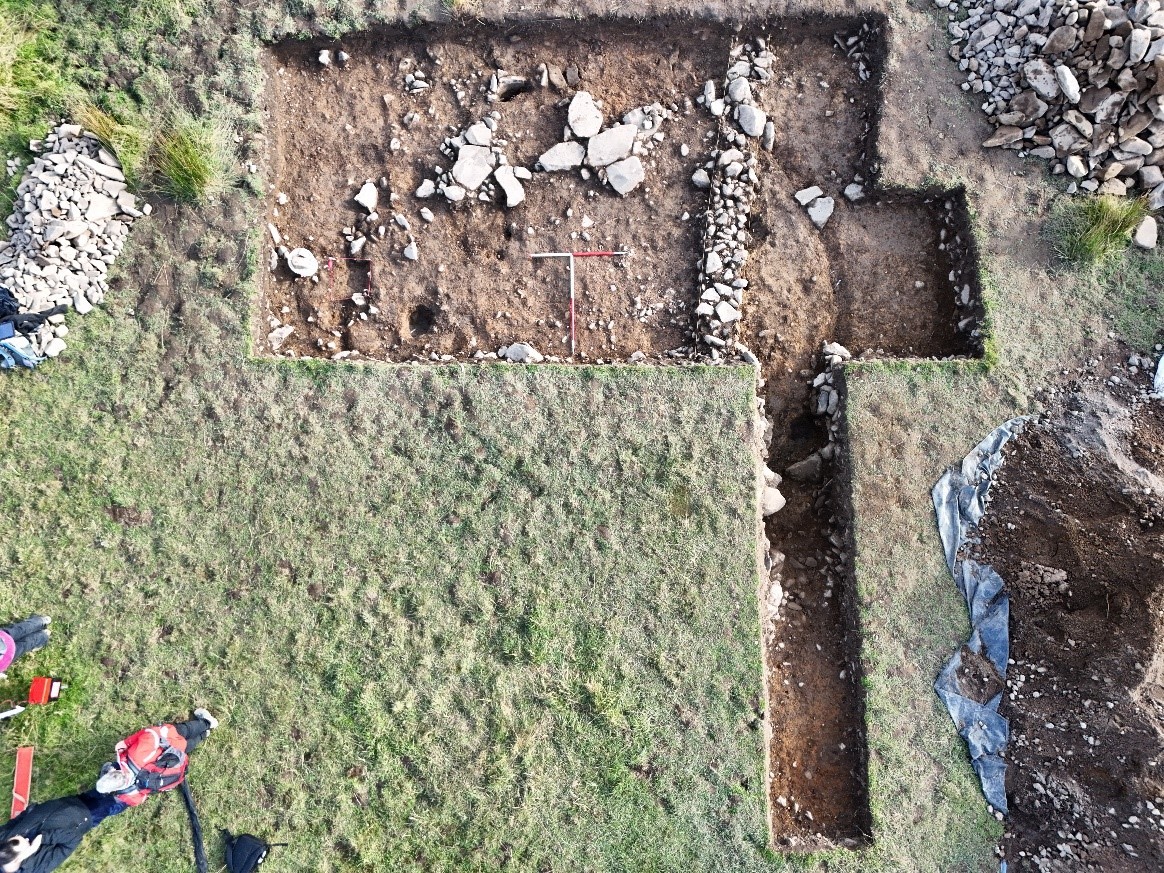
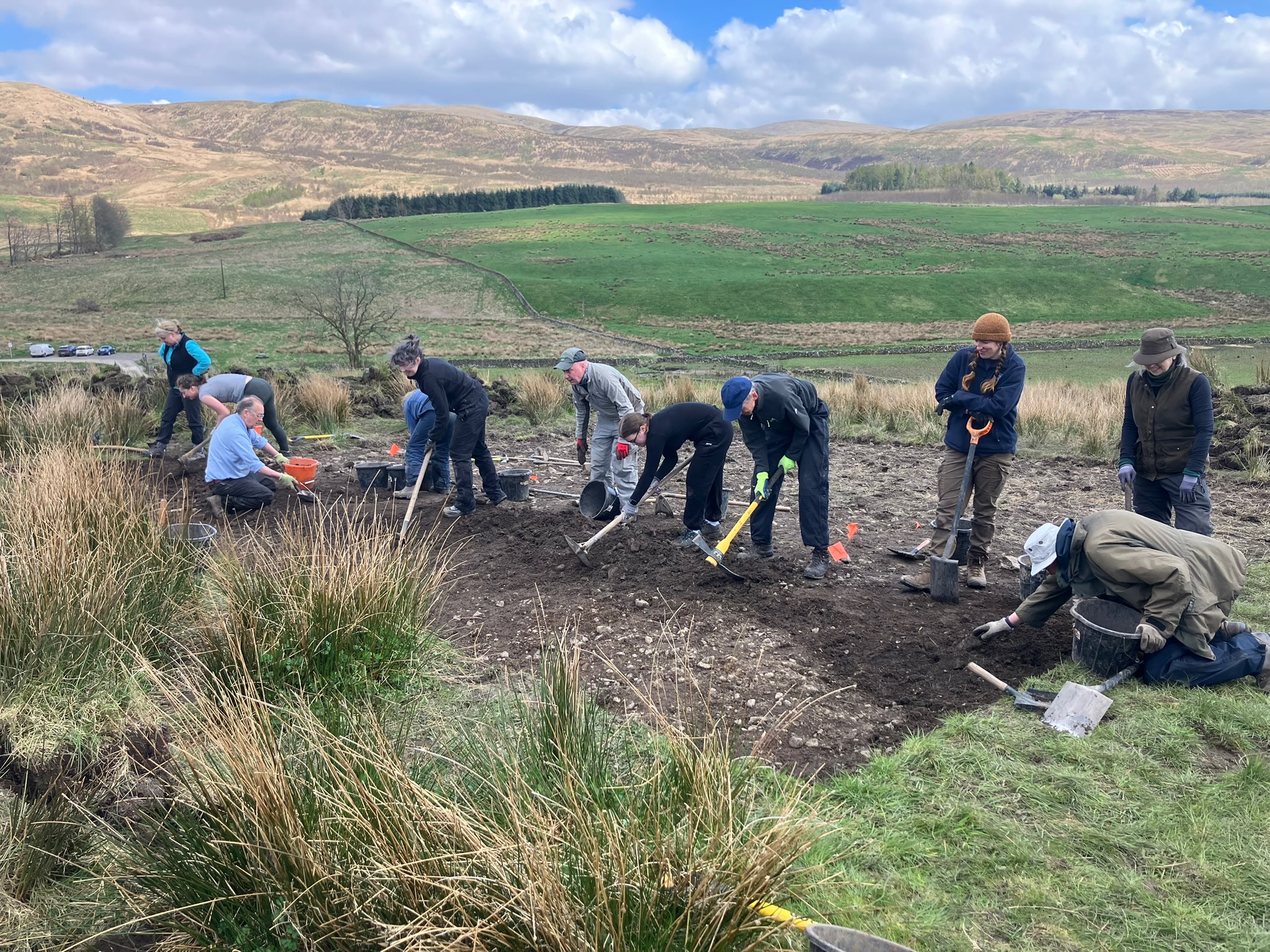
Adie’s Brae had long been assumed to be a related form of settlement, but no investigation at the site had ever been carried out until recently. In autumn 2024 Uncovering the Tweed collaborated with the landowner Borders Forest Trust to undertake a two week excavation of three trenches. The aim was to establish when the site was occupied and shed some light on the details of its construction and use. Following a successful excavation which provided lots of answers – and further questions – we returned to Adie’s Brae in April 2026 to continue our investigations.
We’ve summarised our findings below, or you can download the Data Structure Report for a more in-depth overview. We are currently working on the post-excavation programme from Season 2 and will share our findings here in due course.
Season 1 Excavations
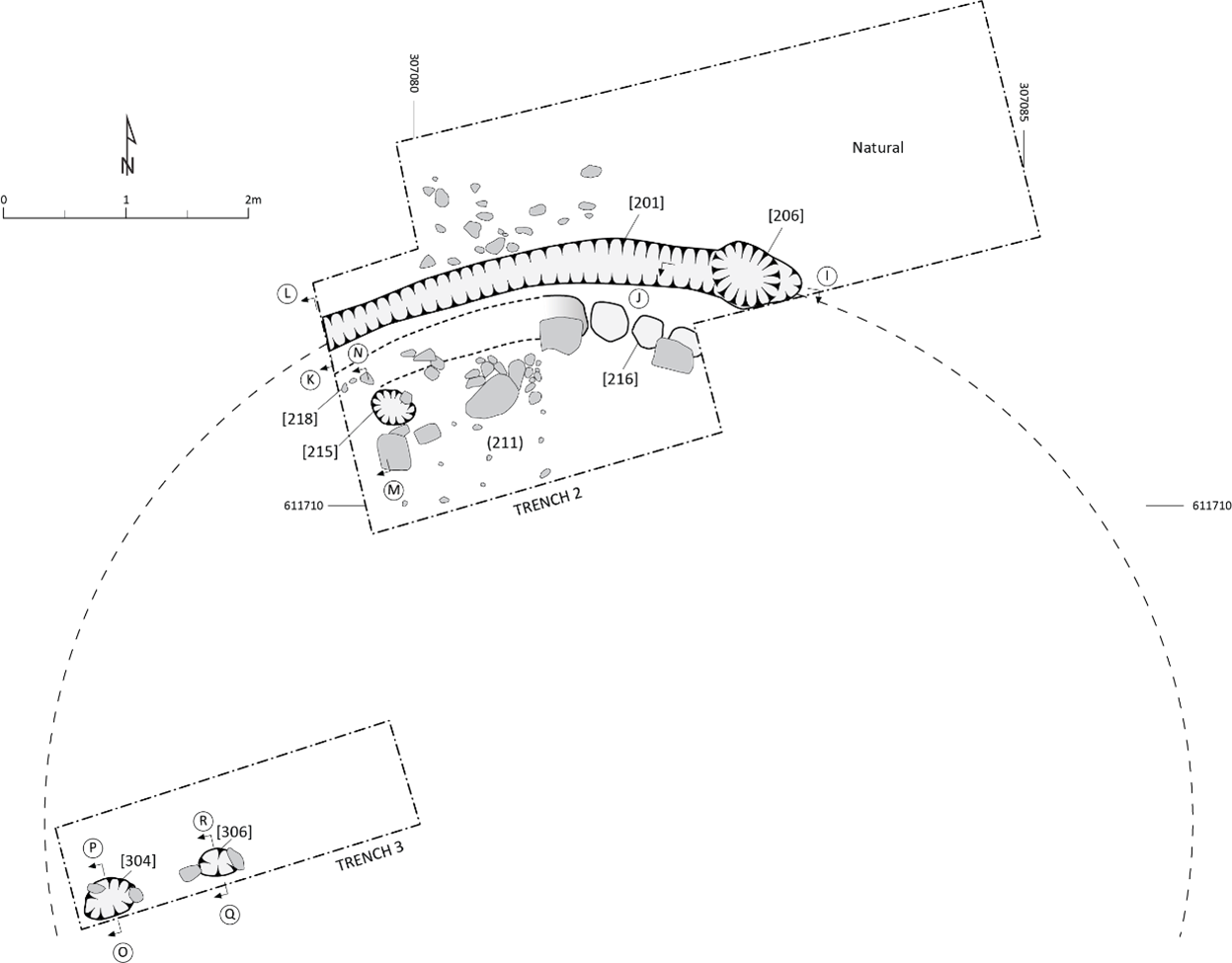
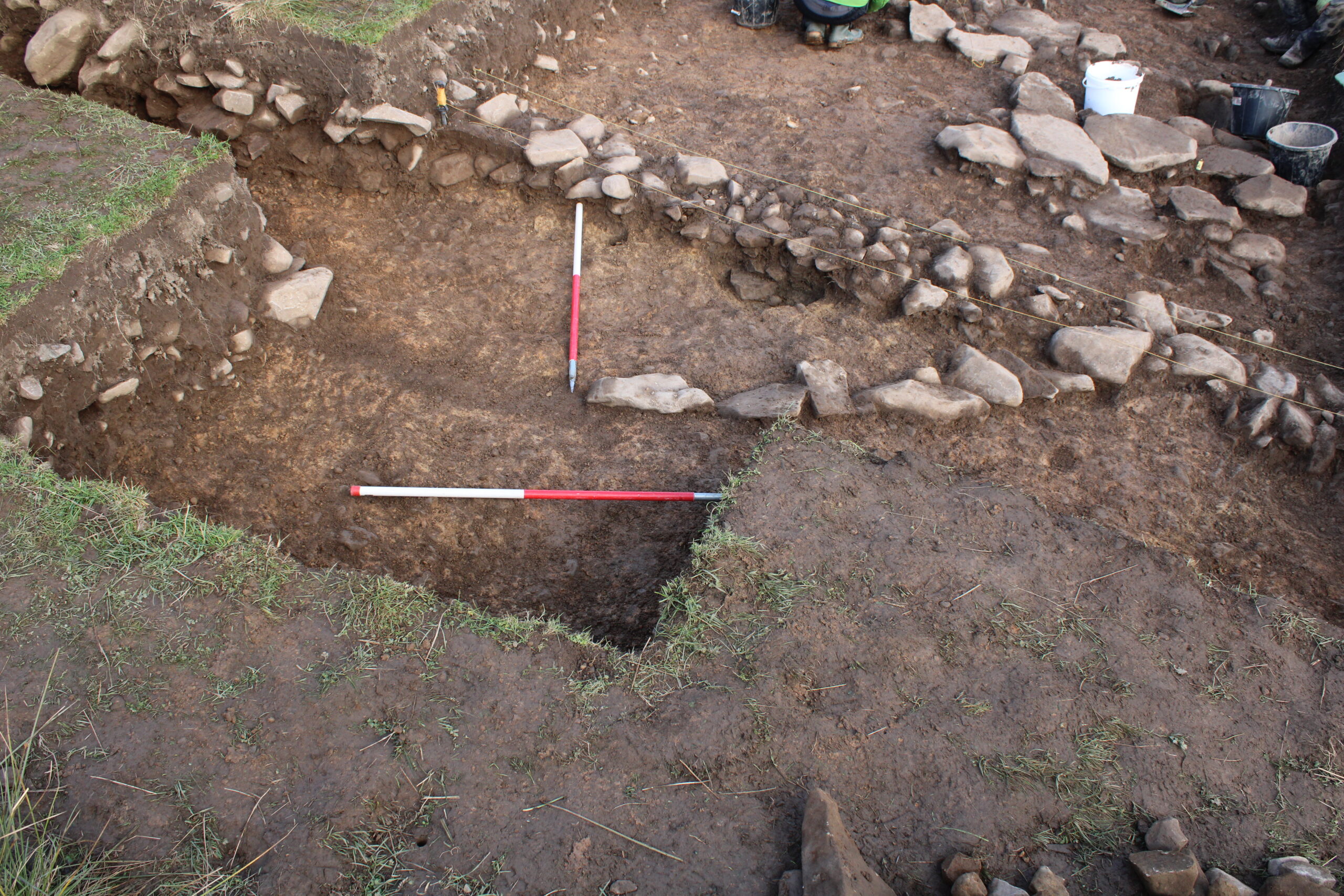
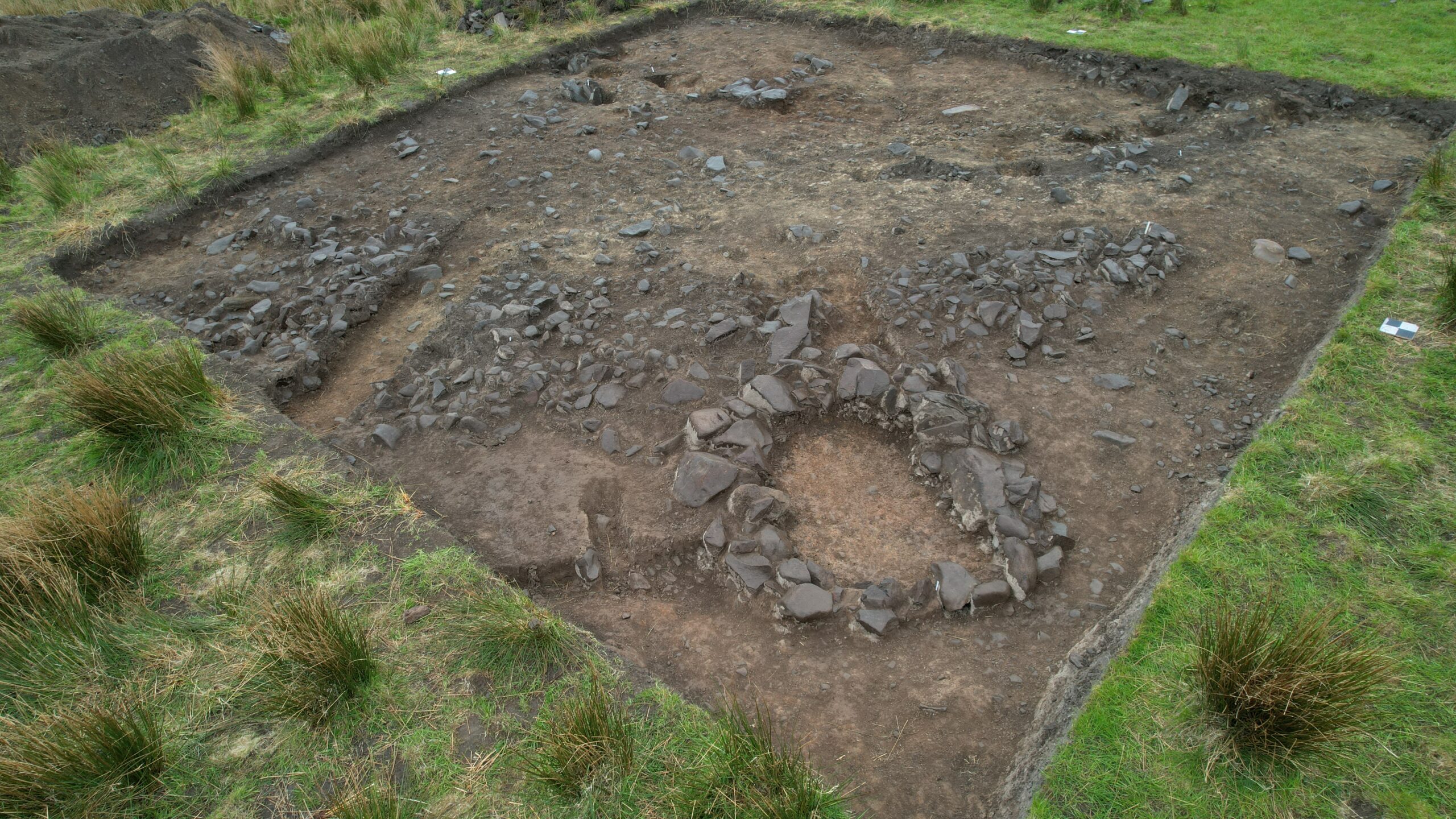
The excavation of three trenches revealed the structural remains of at least two roundhouses with associated features including pits and postholes. These were set within the interior of the scooped settlement, towards the rear and centre. The enclosing bank for the scooped settlement was also investigated which comprised large angular greywacke stone in a dark silty sand matrix. This was entirely collapsed where excavated but is likely to have comprised an earthen bank with stone facing, at the top of a natural slope to the rear of the scooped settlement.
Several charcoal samples were retrieved that will provide radiocarbon dates for a range of features excavated. The artefactual assemblage was relatively small and included in situ fragments of iron objects, coarse stone tools, and a possible lead object. From the topsoil, fragments of a redware ceramic with a green glaze indicate later medieval or post-medieval use of the site while finds of flint and a chert core reflect earlier prehistoric activity.
Season 1 Post-excavation Results So Far
The post-excavation programme for season 1 (October 2024 excavations) is underway. Soil samples were processed to release any small ecofacts like burnt wood, burnt grain and seeds. Charcoal from secure contexts were then sent to SUERC lab to be dated which help pin down the chronology of the site. Finds such as the iron objects and coarse stone tools are analysed by our specialists. Eventually this is all pulled together to tell the story of Adie’s Brae and the community who lived there.
Environmental and economy
So far the post-excavation results have confirmed the presence of cereal crops on site such as hulled barley and two-row hulled barley. These are crops regularly grown in the Iron Age. Some weed species such as dock and wild radish are also present, likely caught up by mistake when cereal crops were harvested and redeposited on the site when the crops were processed. The animal bone assemblage from the site was poorly preserved due to the acidic soils and most fragments were too small to identify however the species represented definitely included some cattle and some sheep/goat.
Burnt wood in the form of charcoal was also identified in the soil samples and represents remains of tree species such as hazel, ash, willow and alder as well as some fragments from apple type trees. Some larger fragments of hazel and willow roundwood from the surface of one of the structures could be all that remains of a wattle screen that has burnt. The other fragments are all in keeping with species gathered for use as fuel for cooking and craft processes and likely represent hearth waste. The species present indicate the settlement was located in a cleared area with access to deciduous relatively open mixed woodland.
Dating
Several of the short-lived wood species from secure deposits such as the ring-grooves in both the structures, sealed pits and postholes were scientifically dated using radiocarbon dating. This process measures slightly radioactive carbon-14 which is present in all living things such as people and animals (bones), trees (charcoal) and plants (charred macroplants). The dating indicated that the settlement was in use from the very late first century BC with the main focus of activity from the 1st century AD into the 2nd century AD. This is in keeping with the few other examples of scooped settlements that have been excavated and are associated with finds broadly dating to this period. There are only a few excavated examples of scooped settlement from modern work so getting secure dates and evidence of settlement is a brilliant result for broadening our understanding of this regionally distinct monument class from southern Scotland and northern England.
Cremated bone
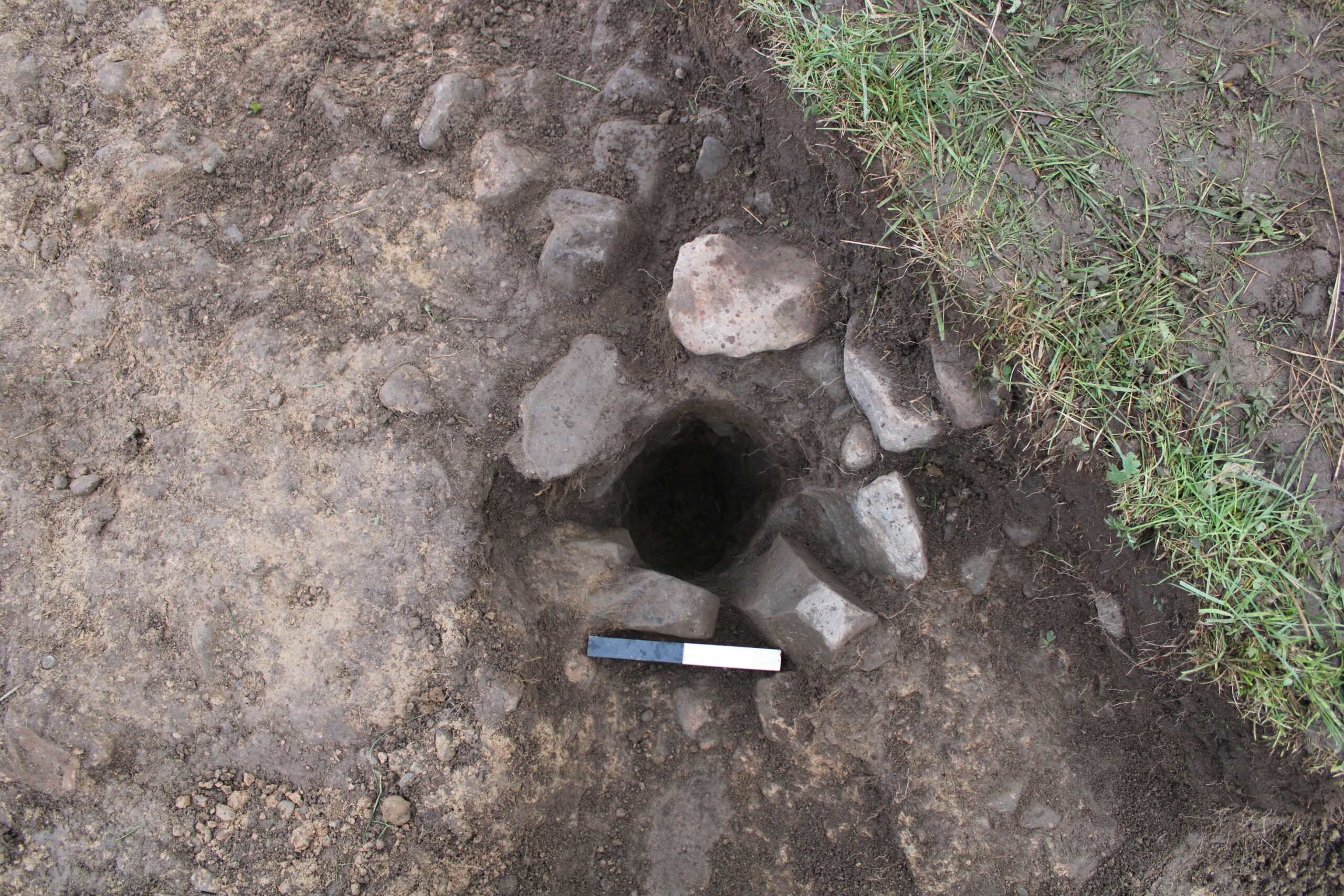
A small pit was excavated in one of the structures on site which contained a concentration of burnt bone fragments. Specialist analysis later confirmed that this represented the remains of one cremated possibly male individual. The presence of a fully fused iliac crest fragment indicates the individual was over the age of 17 at time of death. The cremation probably represented a token deposit, with the pyre located elsewhere. Mortuary contexts from this period are very rare in this part of Scotland, and the remains from Adie’s Brae have the potential to inform on aspects of funerary ritual, and pyre technology as well as the health of the people of this period. The radiocarbon dates indicate this person was cremated sometime between the second half of the 1st century BC and the end of the 1st century AD, broadly contemporary with the use of the settlement.
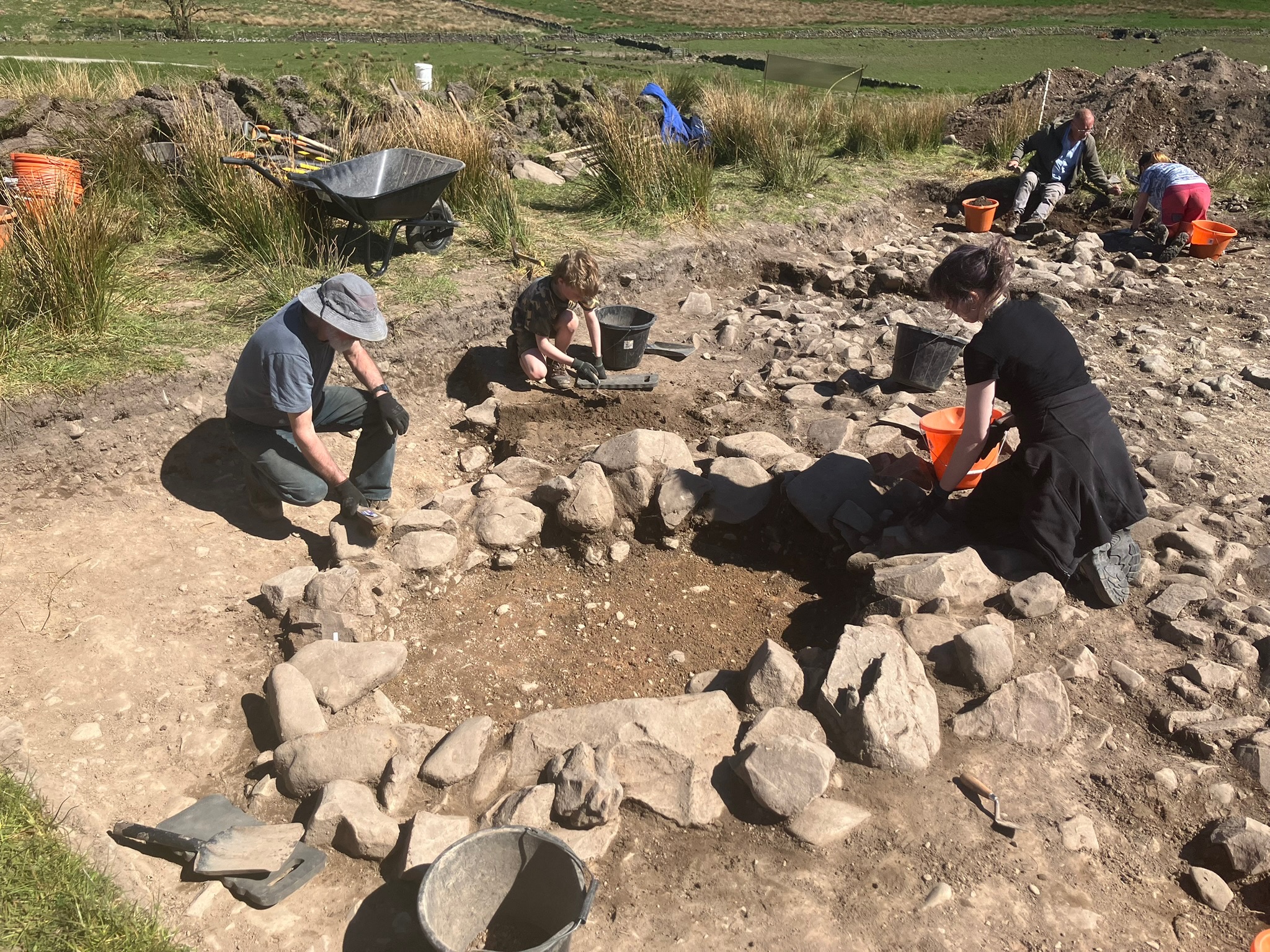
The cremation was placed in the ring-groove of the roundhouse in Trench 2. The close grouping of the bone fragments could indicate it was originally deposited in an organic container such as a textile pouch. The presence of the cremation cut through the infill suggests that the cremation was interred after the roundhouse had fallen out of use, potentially as a closing deposit. Given the rarity of remains dated to this period within the area, this is unlikely to be a common mortuary practice, and a degree of selection must have been applied. This is a really rare example of funerary evidence from this period in south-west Scotland and a valuable contribution to our understanding of mortuary ritual in the Late Iron Age.
Artefacts
Two stone tools were of particular interest from the Adie’s Brae finds assemblage. These consist of a possible plough pebble (SF 009) and an ard or mattock stone (SF 023) both of which give some insight into the agricultural and clearance activities undertaken in this area.
Plough pebbles consist of unshaped pebbles made from a hard durable stone and multiple pebbles would be fitted into the base or sole of a wooden ard to protect and shield the wood from wear and damage. As the ard was pushed or dragged through the soil it was common for pebbles to fall out during use and be lost into the ploughsoil. It’s location in the deposit above the Iron Age structure could indicate it is related to cultivation of the land after the scooped settlement is out of use.
The ard or mattock stone is similar to examples from early prehistoric contexts found elsewhere in Scotland and therefore may pre-date the Iron Age settlement, related to an earlier episode of clearance or ground preparation. The stone has distinctive wear which occurs when it is used as a mattock, hoe or ard point; the abrasion being the result of breaking up and cutting through the soil. It represents a rare example of a prehistoric tillage implement from a lowland site in the south-east of Scotland.
Later activity
A small assemblage of iron finds, lead scrap and working waste and a heat affected stone were identified in the topsoil along with several sherds of post-medieval reduced ware, all relating to later use of the site long after the enclosure wall of the settlement had collapsed.
Season 2 Excavations
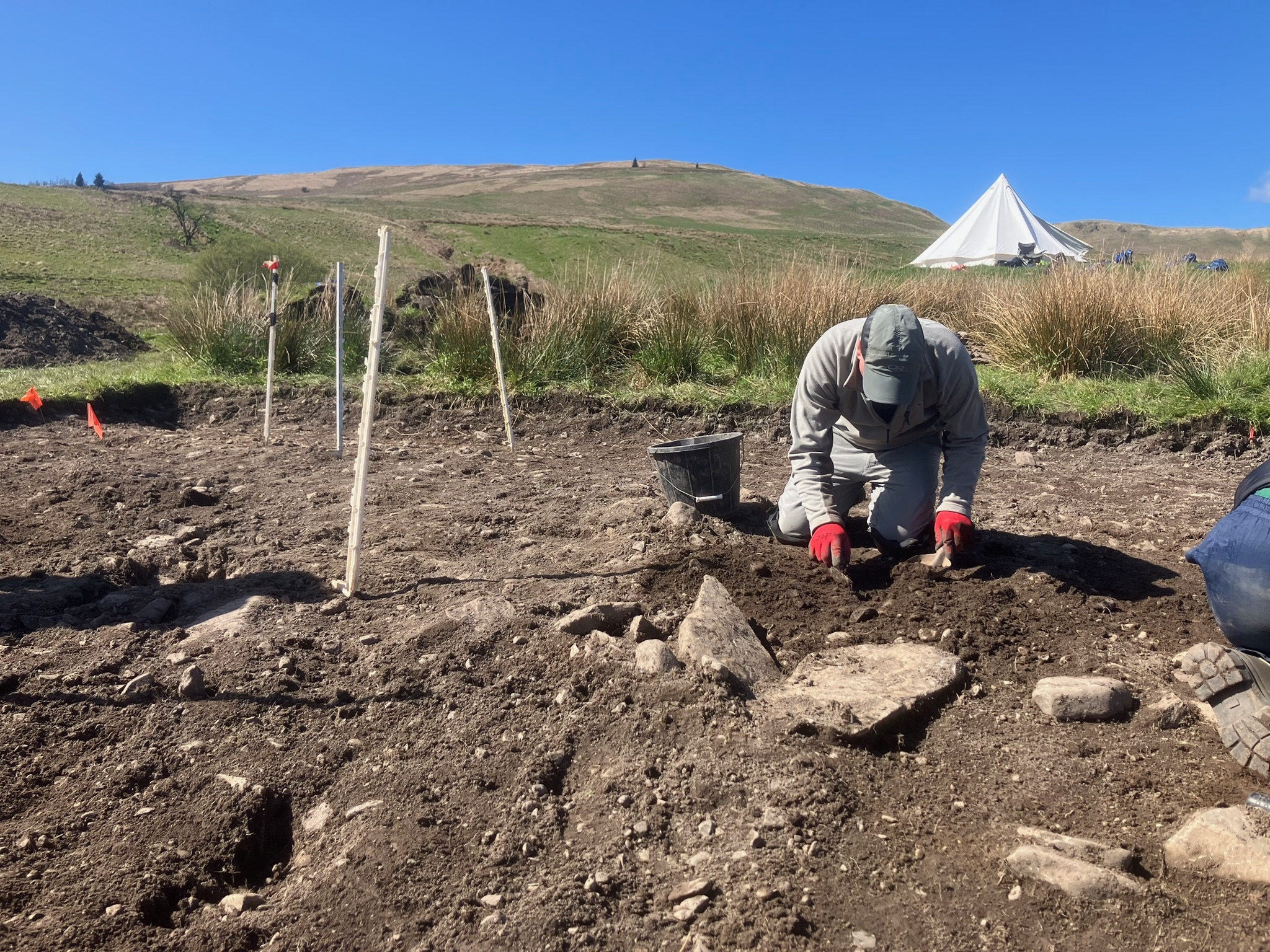
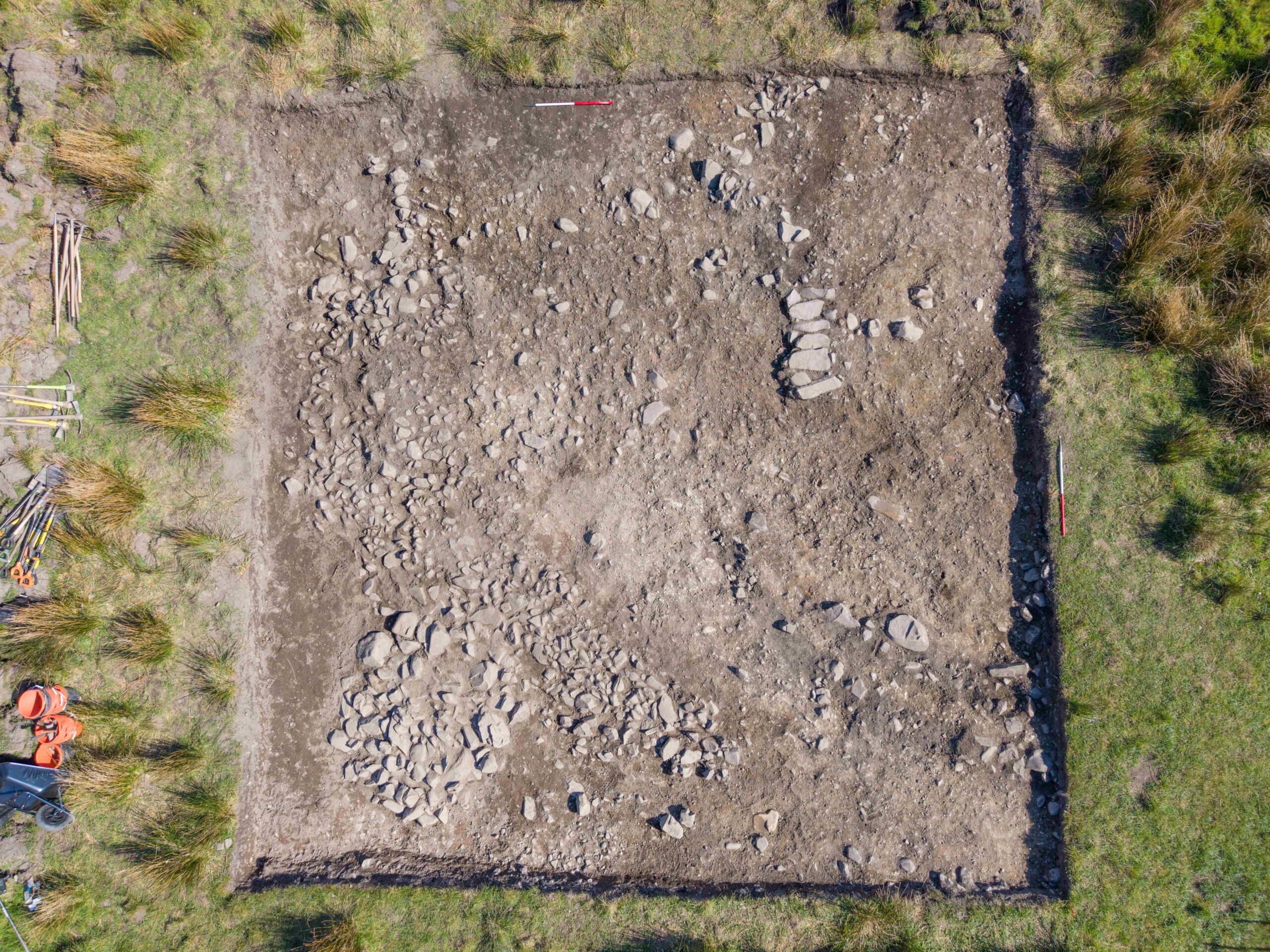
We returned to the site in April 2026 to further investigate the second roundhouse identified in 2024 with the unusual cremation in a larger Trench 4. It was important to uncover more of this structure to better understand the context of the funerary activity and the use of the building. Work in 2026 confirmed the presence of another substantial ring-groove roundhouse, potentially with more than one phase of refurbishment and sections of paved or surfaced interior. The biggest find in Trench 4 was the evidence for a stony deposit possibly representing a path and a small cairn or stance of stones in the yard space outside the roundhouse entrance. There was also clearly evidence for an even earlier structure on the platform which in the form of a faint ring-shaped gully that showed up on the last day after some heavy rain. This feature was clearly under all the other features excavated on the site and hints at an earlier roundhouse in this location, later built over by Roundhouse 2. These scooped settlements were relatively long-lived settlements with multiple buildings being built on top of each over time as the old structures fell down or the community expanded.
What’s next?
After returning in April 2026 we now have some more post-excavation work to progress before we finalise the report on the site. We have a few samples to process and some finds to analyse including more early prehistoric lithics and a possible iron knife blade which might relate to the Iron Age settlement.
Further Reading
RCAHMS 1997 Eastern Dumfriesshire: an archaeological landscape (es. Pages 144- 155)
Banks, Ian 2000 ‘Excavation of an Iron Age and Romano-British enclosure at Woodend Farm, Johnstonebridge, Annandale, 1994 & 1997’ Proc Soc Antiq Scot 130
Jobey, G. 1974 ‘Excavations at Boonies, Westerkirk and the nature of Romano-British settlement in Eastern Dumfriesshire’ Proc Soc Antiq Scot 105