Carved Stones
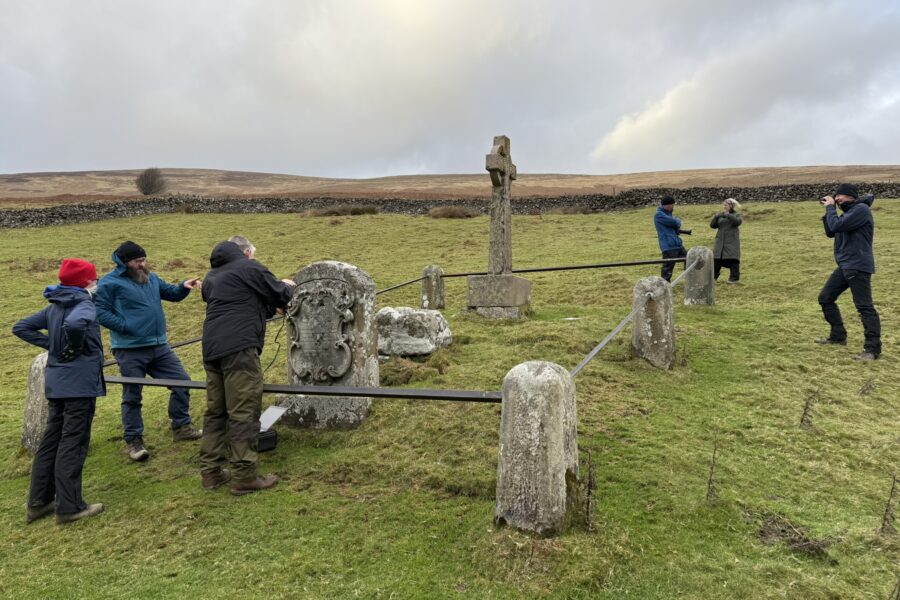
Carved stones of Scotland and North East England have been considered a priority for research and a valuable archaeological resource in research frameworks for these areas. Carved stones can be found from almost every period from prehistoric rock art to Anglo-Saxon stone sculpture and hogback stones to mile markers. These form tangible elements of the archaeological resource along the Tweed.
With a focus on early historic to late medieval stones, this project is seeking to record some of the carved stones along the Tweed corridor. Stones will be recorded digitally, with participants trained in using photogrammetry and laser scanning, with additional records taken and integrated with historical desk-based research.
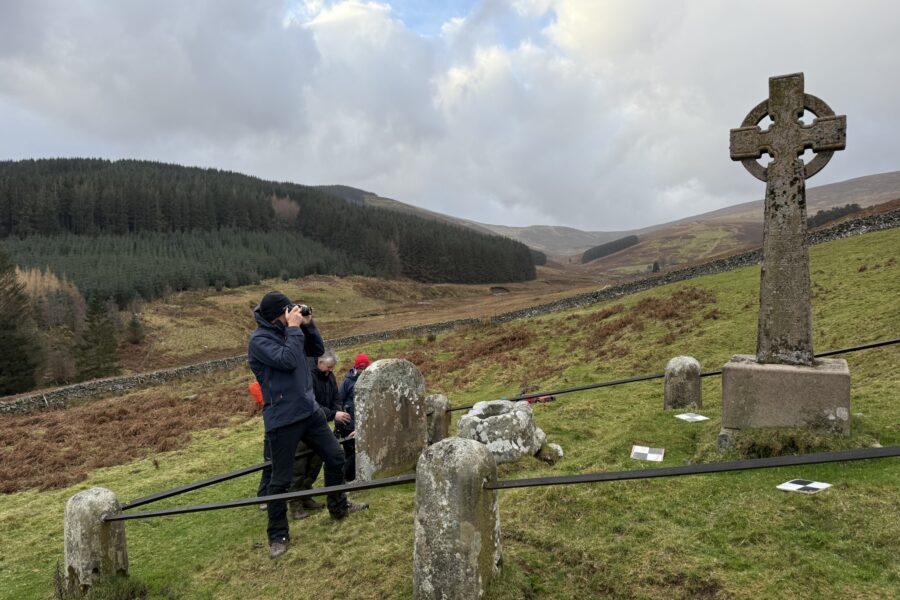
Kirkhope Stones
Research on the Carved Stones theme so far has comprised participants working with members of AOC’s survey team to record a cluster of carved stones located at Kirkhope in Manor Valley, south of Peebles. They used a combination of photogrammetry, traditional photography and structured light scanning techniques to create a detailed record and several 3D models of the stones.
The current site of the stones is located within a rich archaeological landscape including multiple earthworks forming rectangular enclosures, cairns and later prehistoric sites in the wider landscape. The immediate context of the earthworks at the site where participants recorded the carved stones are recorded on the index card from the site on Trove (link below). The earthworks represent several enclosures and field banks as well as scoops and terraces which could relate to platforms upon which structures would have been situated. They could relate to the use of the area around the proposed chapel site for farming – but it is not clear if they relate to the same time period of the chapel or perhaps more likely have emerged later as the land use has evolved.
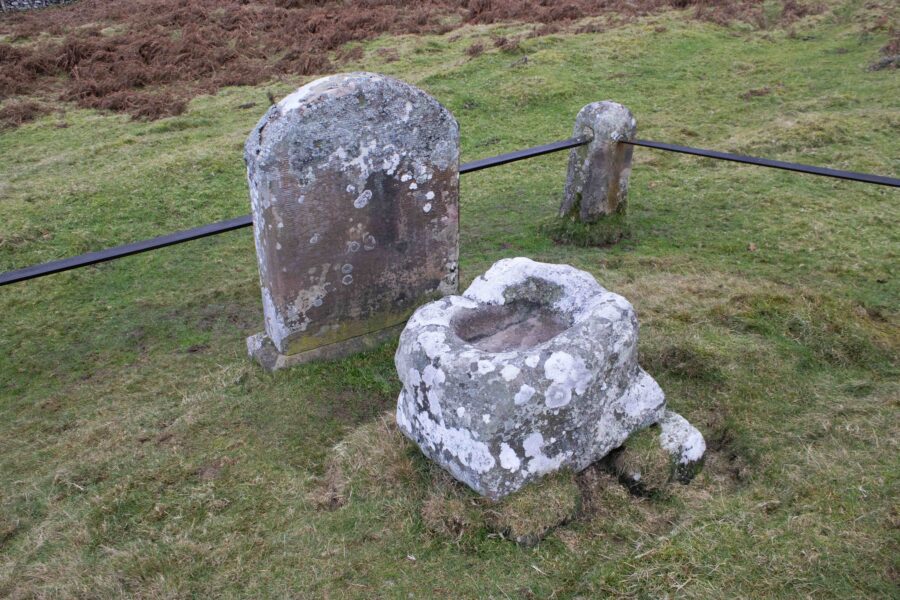
Between the 6th and 8th centuries AD, the southeast of Scotland was within the Anglian kingdom of Northumbria. It was a period which saw the increasingly widespread adoption of Christianity by the communities who lived and worked in this region.
This location in Manor Valley is also reputedly the find spot of the Coninie Stone, a carved stone dating to the early medieval period, possibly from around the 6th century AD. It is a memorial to Coninia, which could derive from a female name. However, apart from her religion, little else is known. The commemoration in stone indicates an important individual, certainly the earliest named individual known from the region. The stone is now held at Tweeddale Museum in Peebles.
Read more about the Coninie Stone on Trove
More information about significant carved stones in the SE of Scotland including a great record shot of the Coninie Stone is now available on the South-east Scotland Archaeological Research Framework:
Recording the Stones
The team used a combination of photogrammetry, traditional photography and structured light scanning techniques to create a detailed record and several 3D models of the stones.
Photogrammetry
Photogrammetry involves capturing images of an object or structure from various angles using a ground based camera and/or drone. Specialised software can analyse these images to extract three-dimensional (3D) measurements and create accurate and precise models creating a detailed record for the future. In archaeology this process is used to document features, create a digital record that can be made accessible online and to pick out features, such as faint inscriptions, that are hard to see in normal light.
Structure from motion (SfM)is a type of photogrammetric and computer vision technique that estimates 3D structures from 2D images creating incredibly detailed models of archaeological sites. It can be used in cultural heritage preservation as well as presenting sites to a wider public online.
Model Processing
A range of versions of the models can be processed and presented to the audience. Models of individuals stones enable more detail to be brought out while larger models allow the context of the site to be captured in more detail – more valuable when people are not able to visit the sites themselves. By presenting the models with different textures or mesh’s or by casting artificial light from different angles across the object you can start to spot different features which is why we often present several different models which will illustrate different aspects of the object.
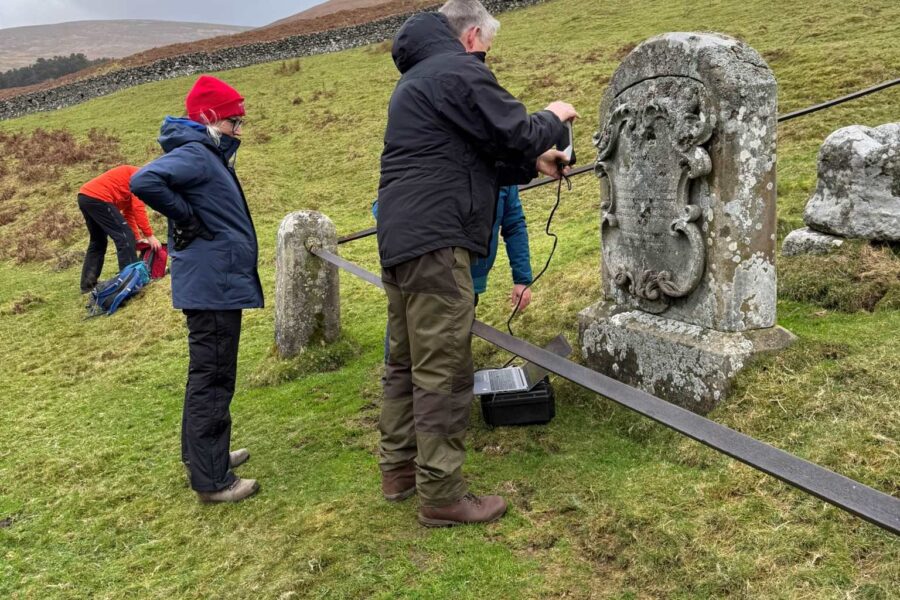
3D Scanning
Structured light scanning using a small hand held 3D scanner involves projecting a known pattern of light onto the object being scanned. The light interacts with the object’s surface and the pattern shapes itself according to the contours of the object while a camera captures images of these same areas from different angles.
The patterns are analysed and algorithms are then able to reconstruct a highly accurate 3D model of the object using triangulation. This technique is applied when highly accurate models or intricate detail need to be captured.
Explore the models created during survey below: