Exploring Prehistoric Lives Through Lithics
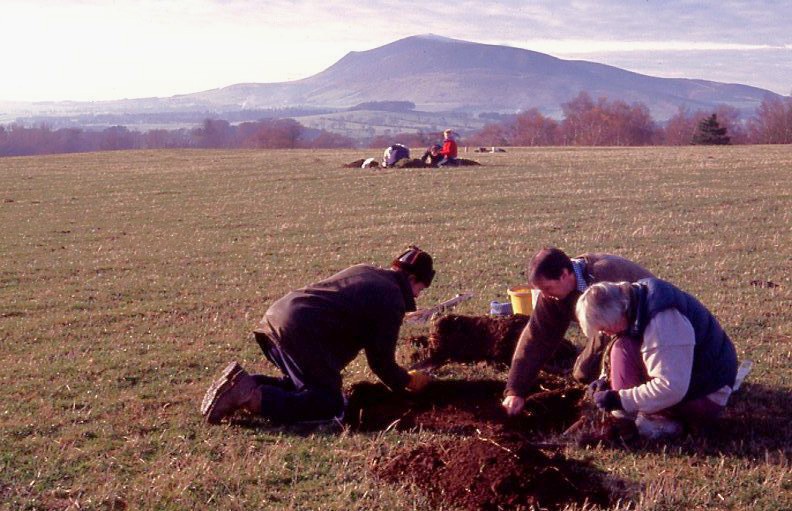
Over many years, Biggar Archaeology Group, led by the late Tam Ward and more recently Jim Ness, has fieldwalked and surveyed many of the fields around the Biggar Water, a tributary of the Tweed.
Their survey work identified numerous pieces of worked lithic indicating that these watercourses and the land around them were used repeatedly by communities in prehistory. These assemblages are now held in Biggar Museum, with some of the outstanding finds such as the Upper Paleolithic evidence from Howburn on display. Many of the other fieldwalking and later excavation assemblages merit further study.
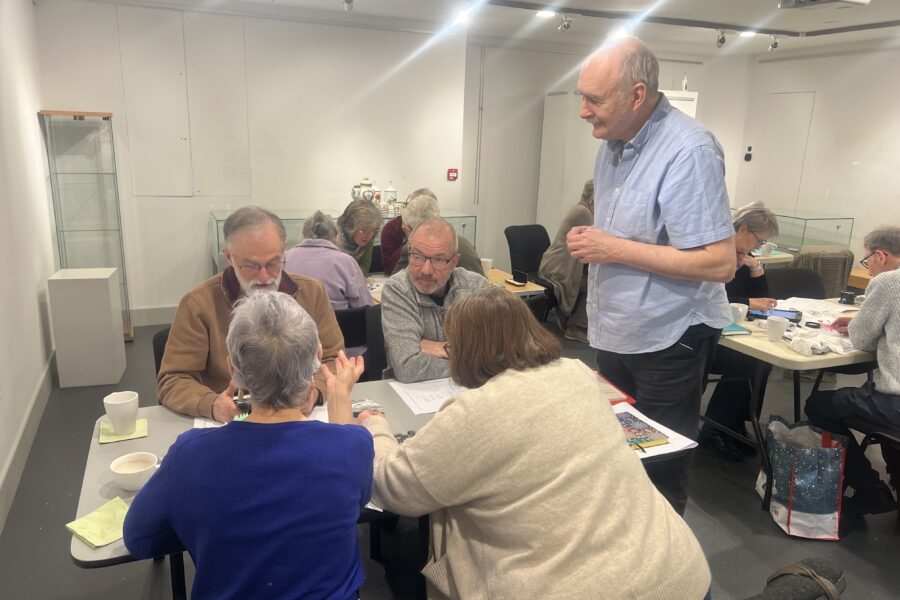
Uncovering the Tweed worked in collaboration with Biggar Museum, participants including members of Biggar Archaeology Group, and lithics specialist Torben Bjarke Ballin to undertake further work on some of the assemblages. Through two workshops hosted at the museum, participants learned skills including as raw material and tool type identification, and a chance to get to grips with cataloguing an assemblage.
The workshops focussed on fieldwalking assemblages from Carwood Farm, located to the north of Biggar, near Biggar Common. With Torben’s guidance, participants identified a chert-dominated assemblage with smaller quantities of pitchstone, flint and other materials. Along with fragments of debitage or waste material from the lithic working a number of intriguing tools were identified which indicated the presence of a palimpsest of different periods of activity in early prehistory taking place in this location.
The Material from Carwood
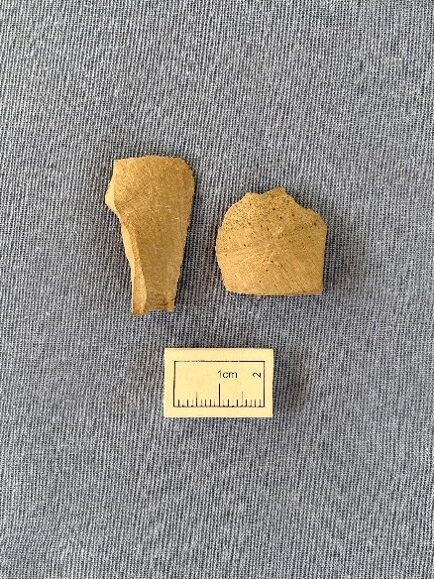
Following the workshops, Torben produced a full report on the assemblage derived from BAG’s test pit excavations at Carwood, 2008-09 and 2014.
You can get into all the detail in Torben’s report via the link below, but in summary, the assemblage from the Carwood Area test pits likely forms part of a larger, multi-period site around Carwood Farm. The area was likely settled repeatedly from the Mesolithic/Neolithic transition onwards. The assemblage demonstrates evidence of activity during the Early, Middle and Late Neolithic periods, as well as the Early and Middle Bronze Age.
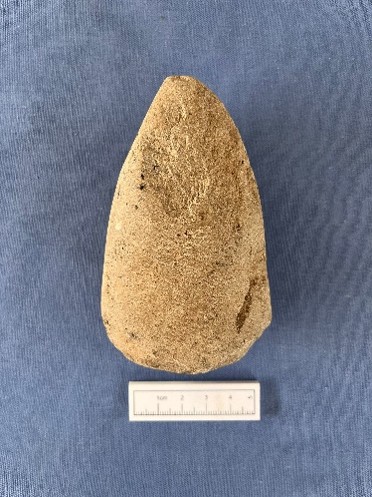
In total, 195 pieces of debitage were recovered from the site . The debitage includes three chips, 146 flakes, 20 blades, six microblades, 15 indeterminate pieces and five preparation flakes (all crested pieces). An additional 31 tools were identified which included nine scrapers, four cutting implements, one combined scraper/knife, two fragments of bifacial tools, 11 pieces with edge-retouch, four axeheads and fragments thereof, two fragments of jet ‘napkin rings’ (dress ornaments – one possibly a bangle) and five cobble tools. The pottery sherds from the same assemblage suggest activity at the site during the Early, Middle and Late Neolithic periods as well as during the Early Bronze Age.
Around 31 of the lithic fragments were from pits rather than the ploughsoil, which meant more could be inferred from their context. Some of the pitchstone deposited in these pits along with flakes of discarded axeheads in Cumbrian tuff and Carinated pottery probably represent deliberate depositions, dating to the Early Neolithic, around 3500 BC.
Other pits containing the polished axeheads possibly post-date this as they contained fragments of possible impressed or grooved ware pottery and a radiocarbon date from the transition between the Middle and Late Neolithic periods, around 3000 BC. In summary, the lithic finds probably represent several consecutive domestic settlements at the site, as well as artefacts (pitchstone and polished stone axeheads) deposited in ritual pits. Knapping debris in the pits probably entered the features when they were dug through existing knapping floors.
This site probably represents repeated settlement at the location from the Early Neolithic and through to and including the Middle Bronze Age. Some of the raw materials were clearly procured through extensive exchange networks: flint from the north-east of England; pitchstone from Arran; Cumbrian tuff from north-west England. The chert which dominates the assemblage was available locally, most likely collected from local streams where it can still be found easily today.
The number of lithic diagnostic types and technological approaches suggest that most of the assemblage may date to the Middle/Late Neolithic period. Although initially interpreted as rubbish pits, this new analysis has indicated that at least some of the pits have deliberate deposition of significant objects such as ‘exotic’ pitchstone blades, a well-made polished edged knife and axeheads. As well as the lithics, some pits contain remnants of prehistoric pots and some jet objects, deliberate ‘special’ deposits being placed in these pits. Could they represent some form of offerings, possibly to deities or ancestors?
The assemblage from Carwood has revealed that the early prehistoric communities of the Biggar watershed had far-reaching connections and complex ideologies, some evidence of which survives still in these plough-truncated sites.
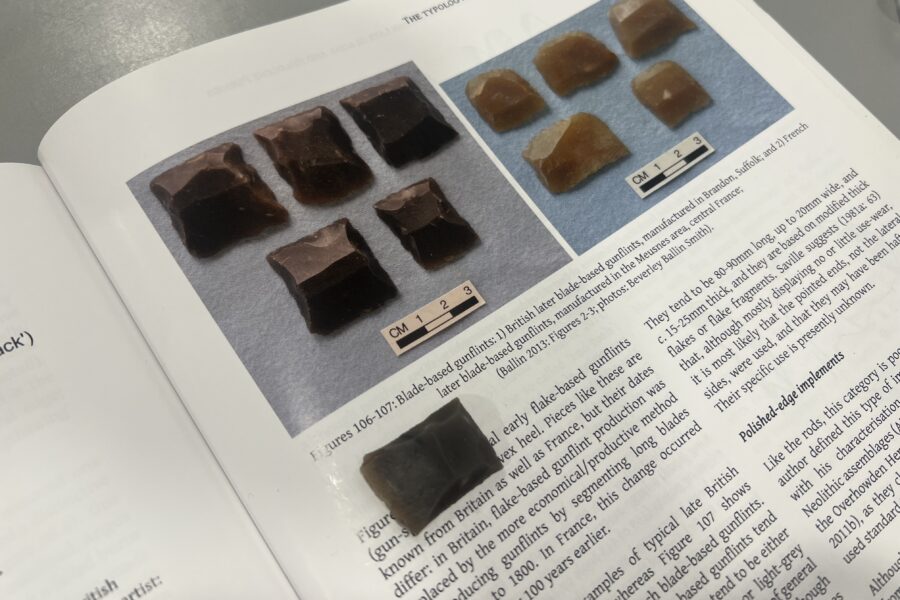
Throughout the session, participants referred to Torben’s classification guide, available for free download via Archaeopress (hard copy also available for purchase).
Download ‘Classification of Lithic Artefacts from the British Late Glacial and Holocene Periods’