St Cuthbert’s Chapel
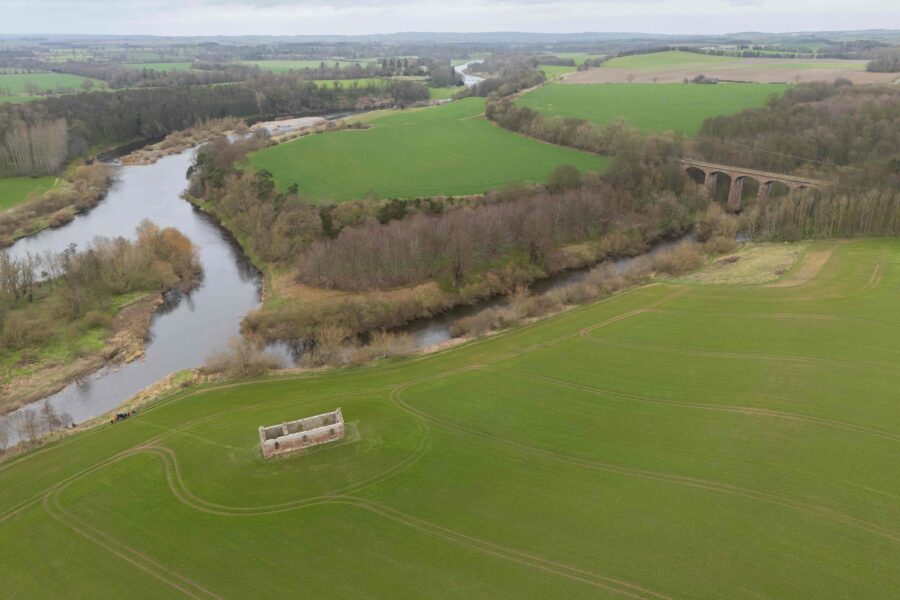
St Cuthbert’s Chapel sits at the mouth of the River Till, where it meets the Tweed. The ‘chapel’ that stands today is believed to have been constructed as a folly, likely in the early 19th century. But was the building located on the spot of a previous chapel? It’s thought that St Cuthbert’s body may have been carried to the site as it was taken from Morpeth to Tillmouth, so was a chapel built in his honour as a shrine on such an important location at the confluence of the two rivers? Uncovering the Tweed set out to investigate the site to try to find out more.
This strand of research was developed in collaboration with Till Valley Archaeological Society, and TillVAS member Pauline in particular, following a long-standing fascination with the site and its landscape. In 2026, AOC’s archaeologists worked with Pauline and TillVAS to undertake a programme of research, surveys and excavations at St Cuthbert’s Chapel. We are grateful to TillVAS for working with us to bring this project to fruition. Many thanks also to the landowner for giving us permission to carry out the work.
The results of the HBR survey are summarised below, and we will add more, and information about the geophysical survey and excavations, in due course.
History
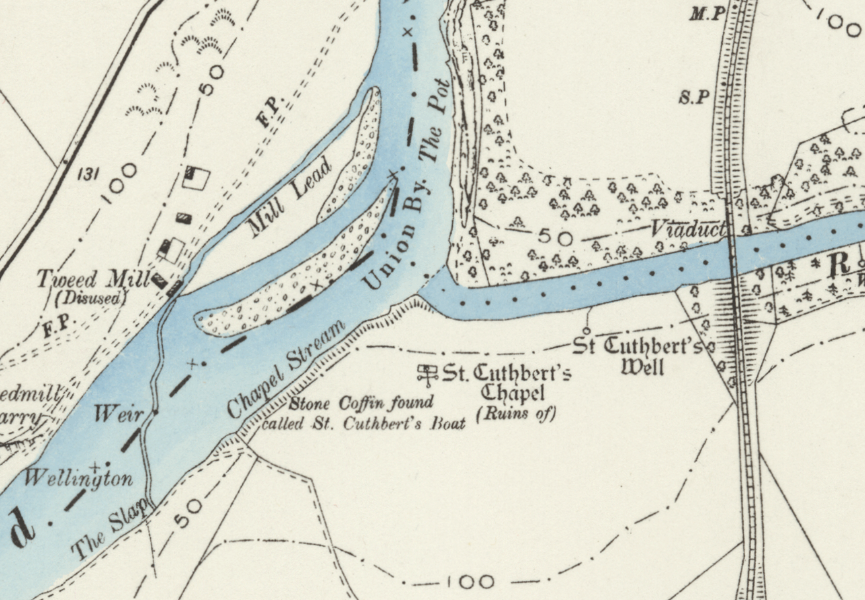
St Cuthbert’s Chapel is first mentioned in 1311. A Grade II listed chapel still occupies the site today though it is almost certainly a later construction. While no visible evidence remains of an earlier chapel building, a previous survey did note the likely reuse of earlier medieval stones in its construction which may have been taken from a previous building on the site. Other heritage sites in the area also point to a strong connection with St Cuthbert: St Cuthbert’s Boat (a stone coffin mentioned in the local Historic Environment Record recorded in the 1860s); St Cuthbert’s Well (a nearby circular feature visible on LiDAR data); Tillmouth Deserted Medieval Village, and others. Raine, writing his History and Antiquities of North Durham in 1852, mentions the coffin found at Tillmouth which was allegedly used to float St Cuthbert’s body to the chapel from Melrose.
HBR Survey
HBR stands for Historic Building Recording and is vital for the recording of upstanding buildings. It may seem that HBR bears little resemblance to below-ground archaeology but, while some of the methods may differ, the process and aims are very similar.
Crucially, archaeologists are trying to take as complete a record of the structure as possible. That includes general characteristics like dimensions/measurements to much more detailed work like recording the way stones have been utilised in constructing a wall, or identifying tool/mason marks on the stone work.
Surveyors are also looking for signs of repair or separate phases of construction which might help to reveal how the structure was used and changed through its life cycle.
The Chapel at Tillmouth
The layout of the Chapel is a two-cell building, designed and constructed to look like an ruinous medieval chapel. Its builders may have been aware of an earlier chapel in the site, and its possible that remains of an earlier structure may have been visible when it was built, and may have been incorporated in the new structure.
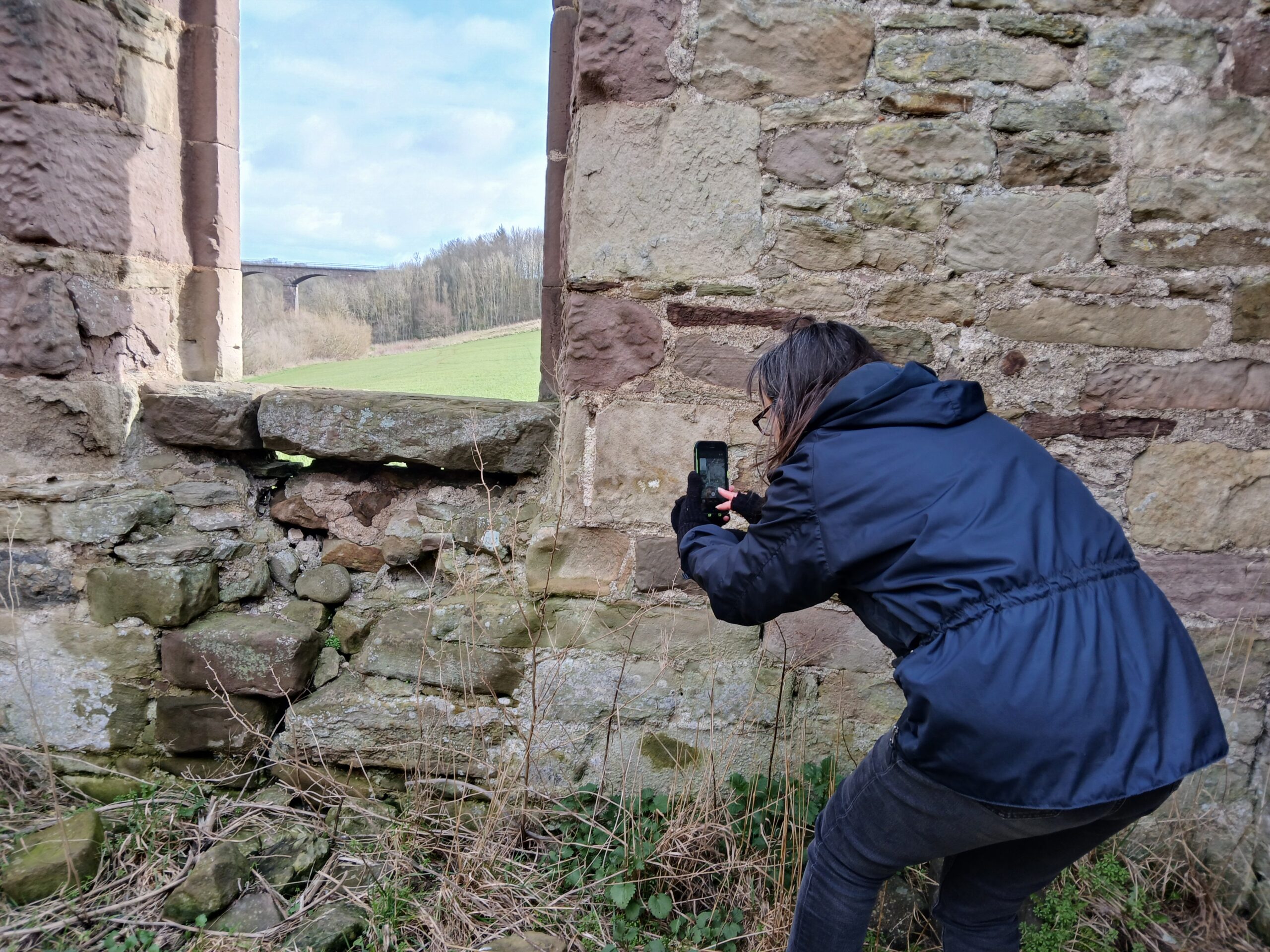
So what evidence did we find? AOC and the volunteers, as well as undertaking a measured survey of the building using a 3D laser scanner and drone (photogrammetry) survey, did a thorough walkaround of the building. The building is three bays wide with gable ends, no roof, and contemporary large pointed arch windows, two to the ‘nave’ and another to the smaller room to the west side. One of the windows in the north elevation had even been deliberately rubble-blocked to make it look even more like a ruin.
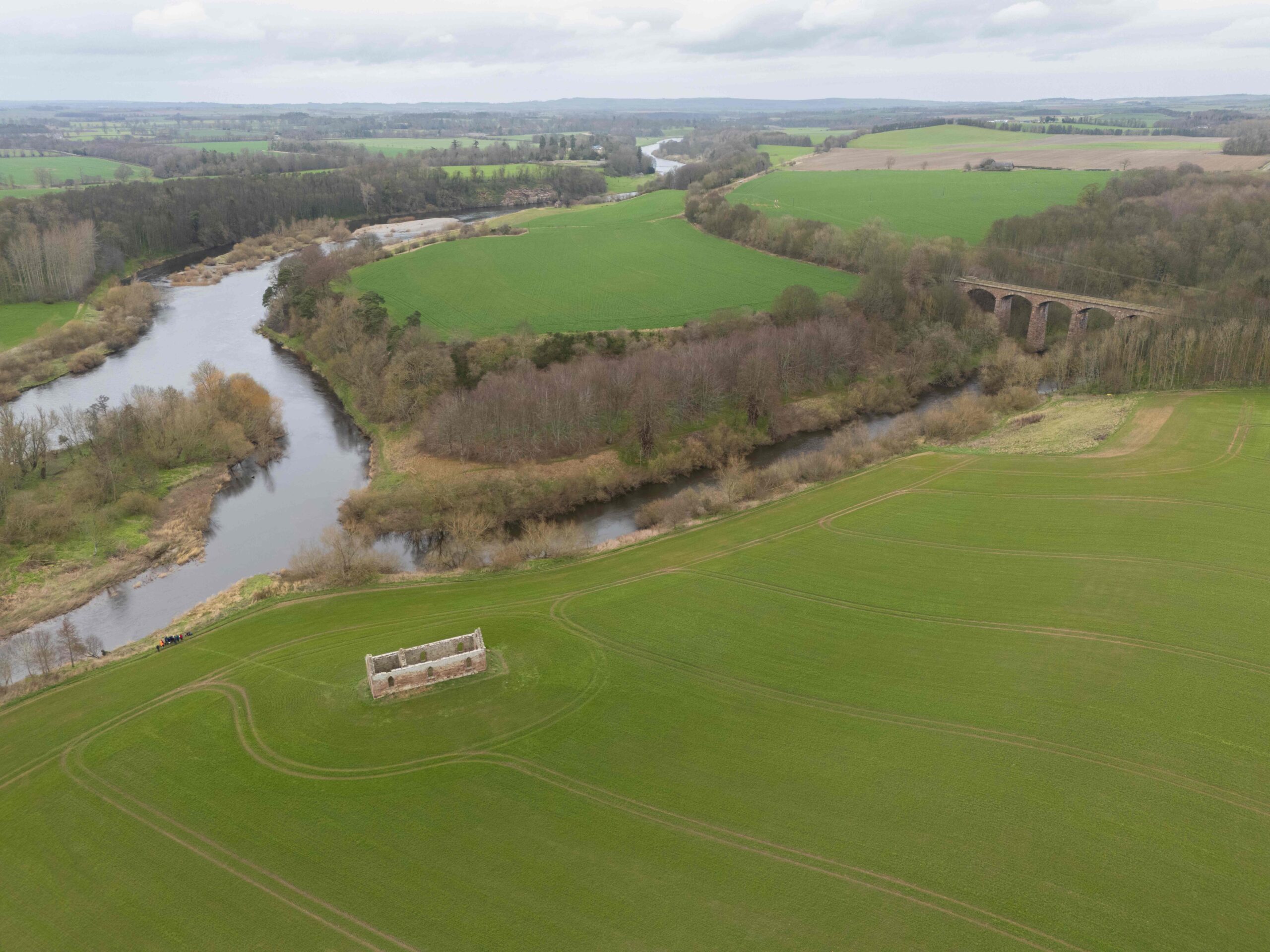
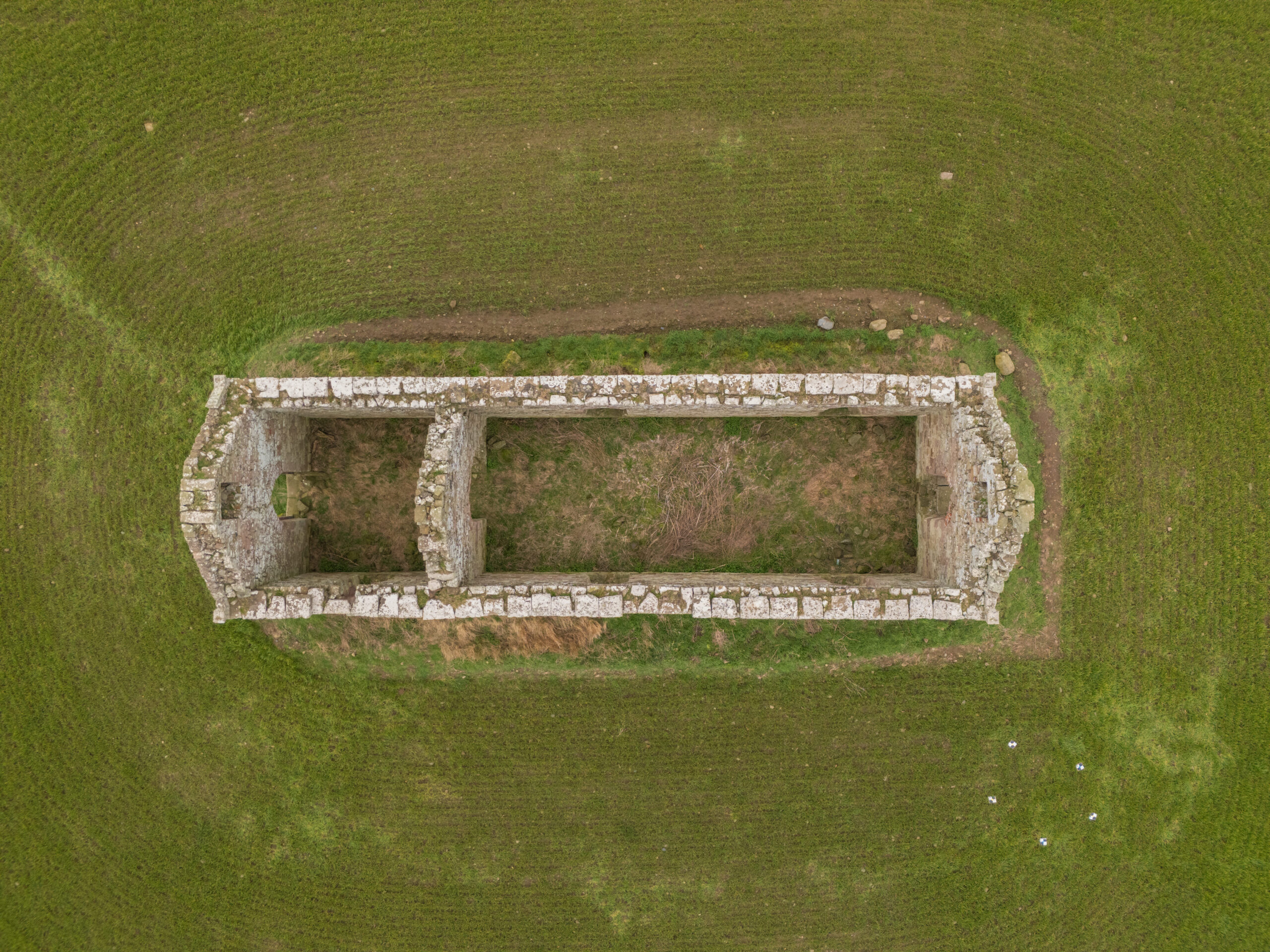
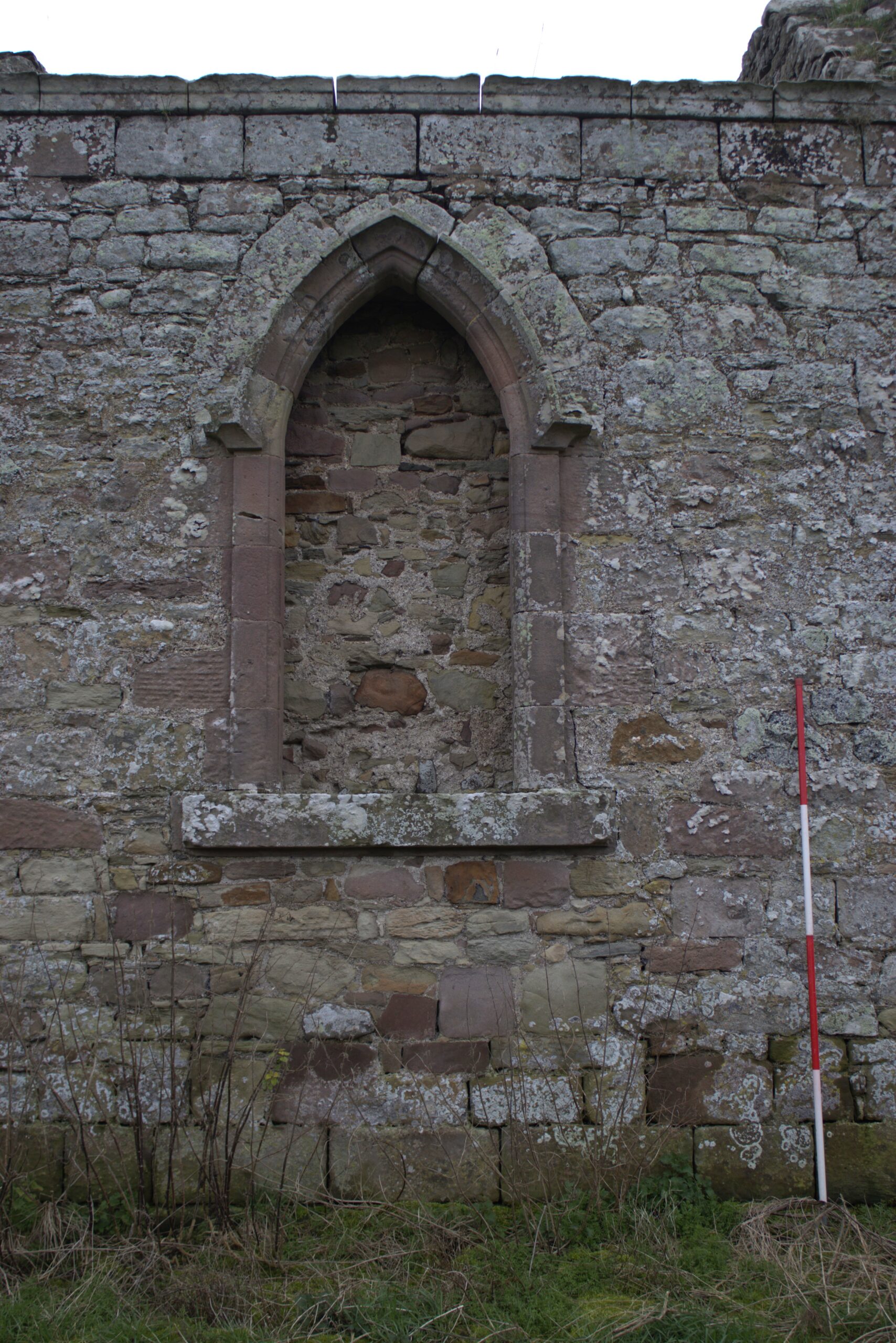
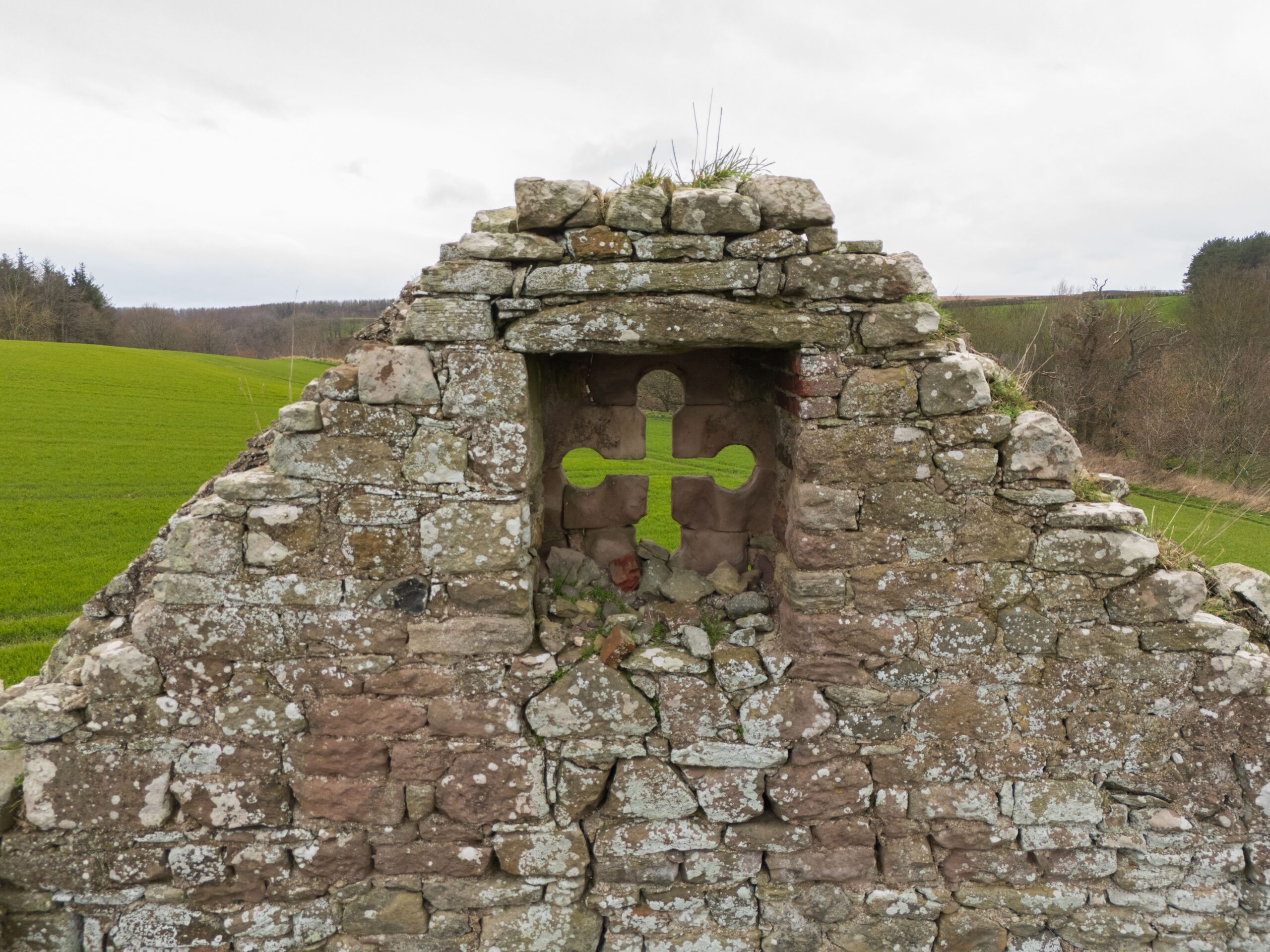
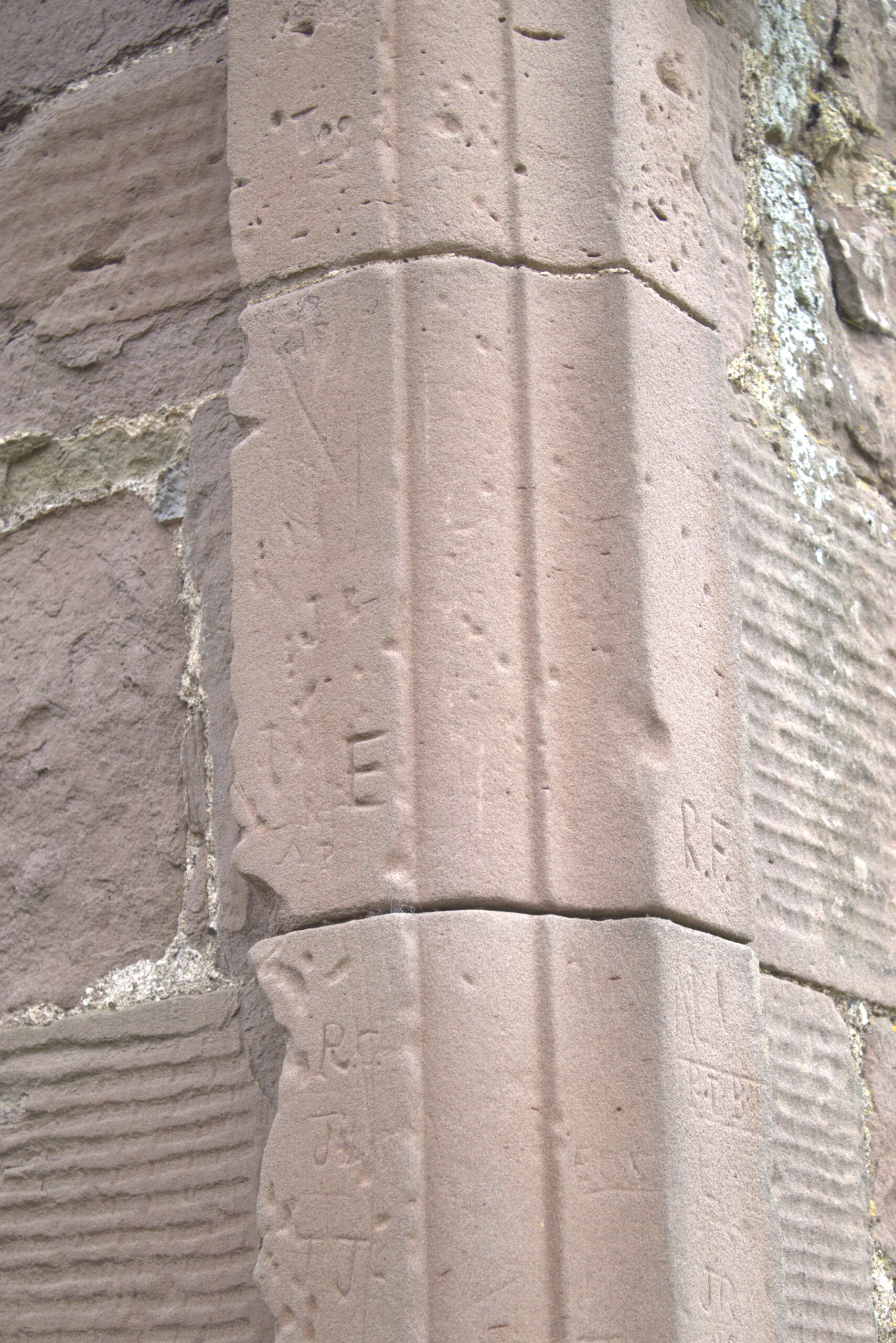
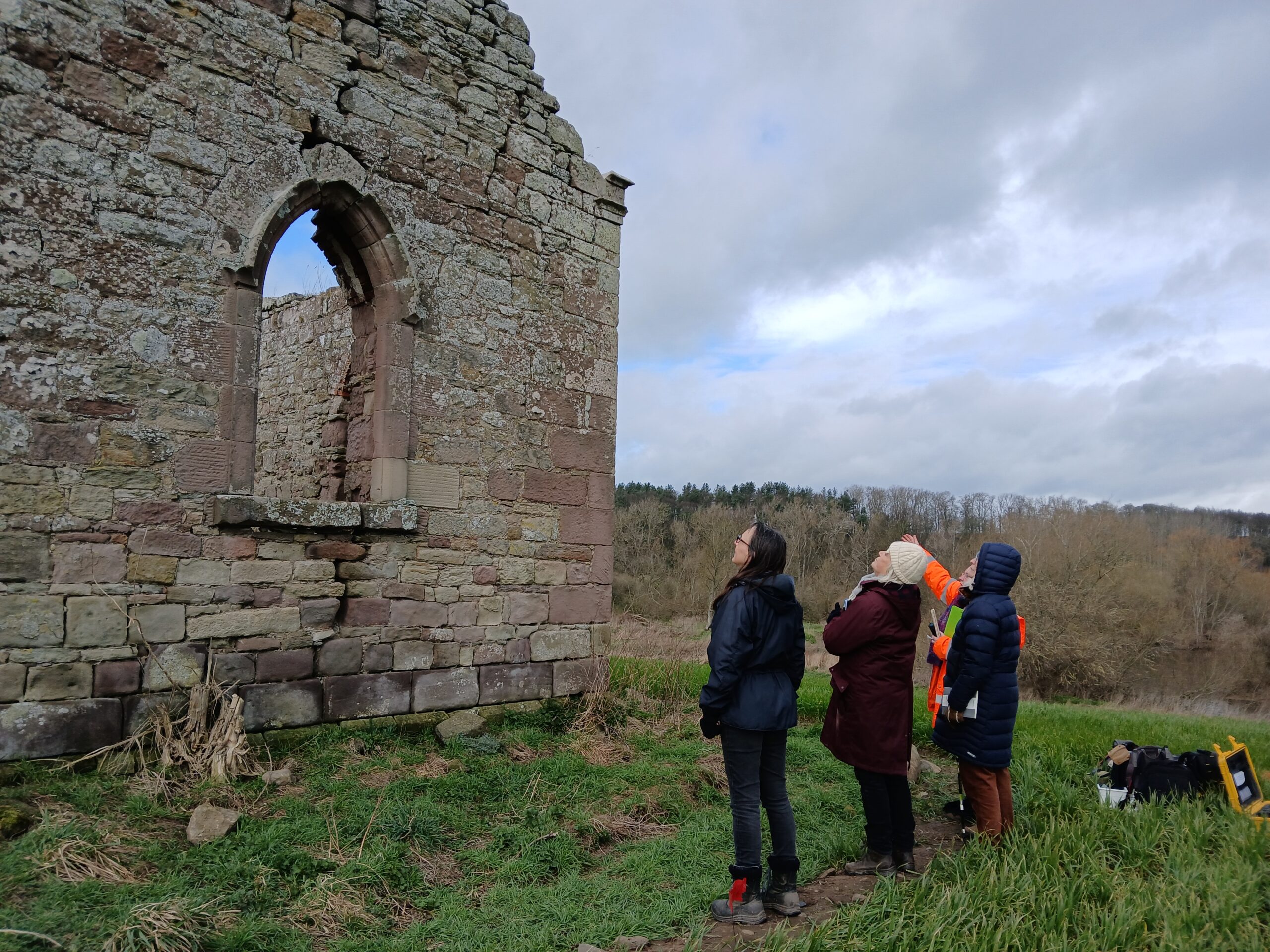
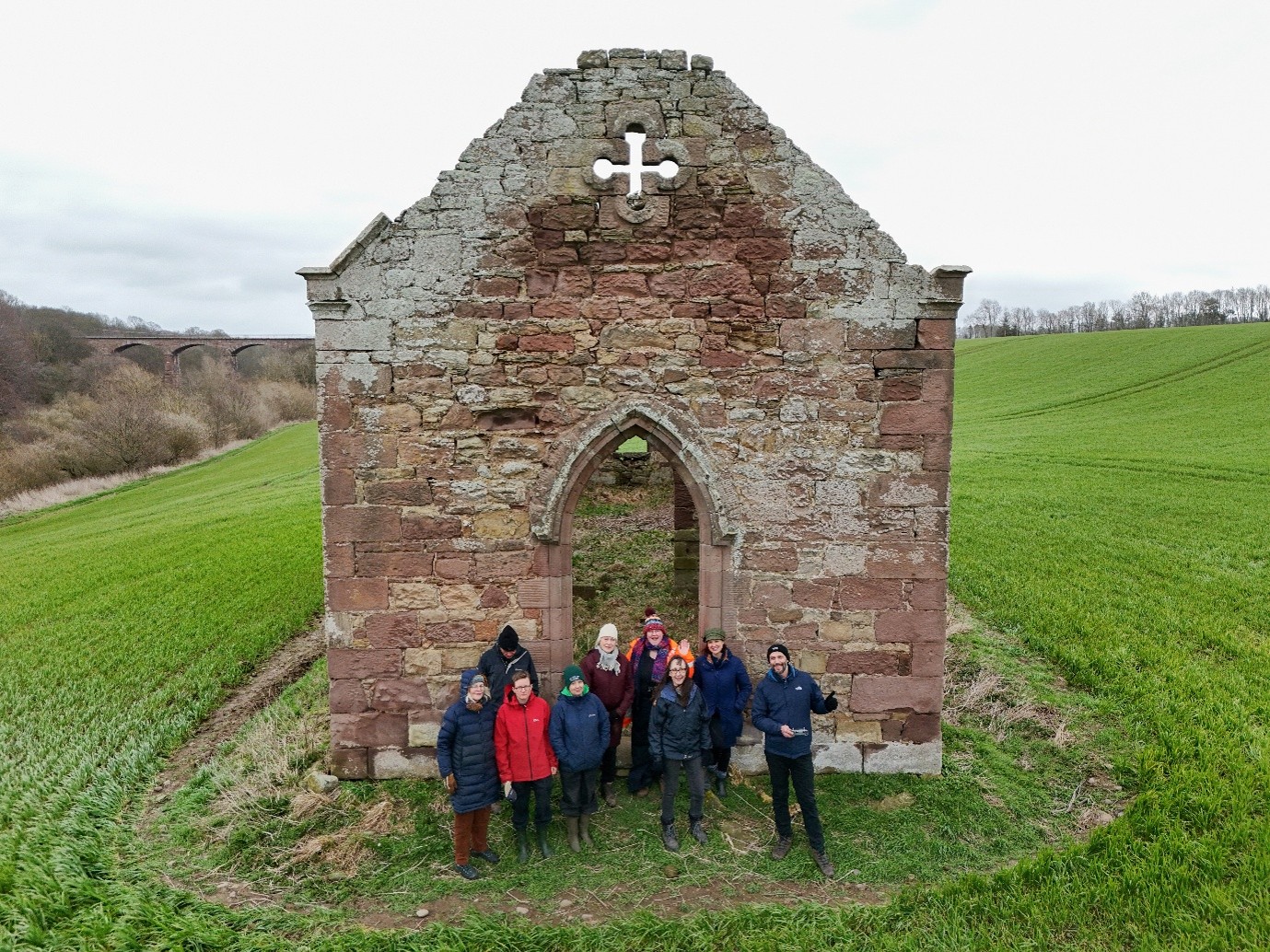
There was a lot of graffiti on the entrance to the west gable and the east gable window, one of which provided a date of 1885. Inside, a lot of the stonework had been consolidated using Victorian brick, and there was also evidence of re-use of some worked stone to the lower courses of the interior walls. Were these pieces taken from the original medieval chapel?
The survey of St Cuthbert’s Chapel provided skill-training for volunteers in HBR and digital survey while also uncovering further evidence that St Cuthbert’s Chapel is a folly made to appear as a medieval chapel. The likelihood remains however that a chapel did originally stand at this site overlooking the confluence of two rivers which have retained their importance to local communities for thousands of years.
One of the products of our survey is a 3D model of the building, which you can explore below.