Designed Landscapes – Eildon Hall
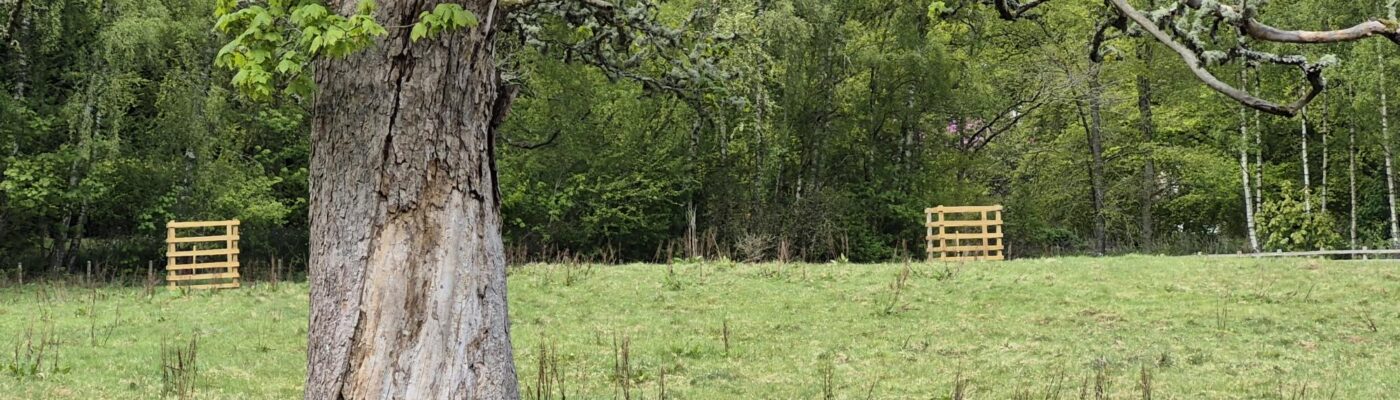

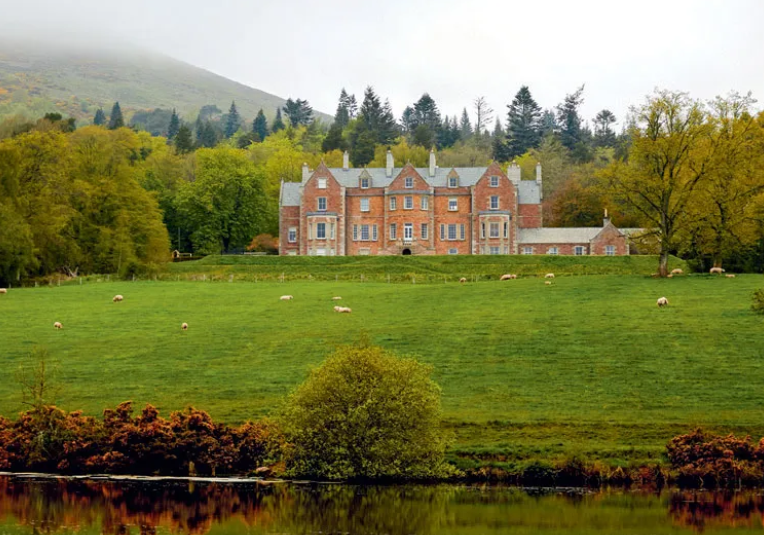
Situated in stunning surroundings on the south slopes of the Eildon Hills, Eildon Estate has strong connections to both the landscape and aristocratic history of the Scottish Borders.
Background
The estate occupies a prominent position overlooking the Tweed valley and forms part of the wider Buccleuch Estates, one of Scotland’s largest historic landholdings.
The origins of the estate can be traced back to lands associated with Melrose Abbey. Medieval records show that the monks of Melrose held the lands of Eildon as one of their agricultural granges, managing the estate directly and using it to support the Abbey’s economic activities. Following the Reformation, ownership passed through several families, including the Stewarts, before becoming associated with the Mein family during the 18th Century.
The present house, Eildon Hall, was built between 1802 and 1806 for Dr Thomas Mein, a Royal Navy surgeon. Mein also established many of the estate’s woodland plantations, which remain an important feature of the landscape today. The Hall was originally designed as a classical Country Villa constructed from distinctive local pink sandstone.
In 1838 Walter Francis Montague Douglas Scott, 5th Duke of Buccleuch, purchased the property. The Duke commissioned the renowned Scottish architect William Burn to enlarge and remodel the house during the 1860s, transforming Eildon Hall into the substantial Country House seen today, blending Georgian and Victorian architectural styles.
Beyond the house itself, the estate contains extensive woodland, farmland, a Designed Landscape, walled gardens and estate buildings that contribute to its character. The estate’s setting beneath the iconic Eildon Hills creates one of the most recognisable historic landscapes in the Scottish Borders, linking designed planting, productive agriculture and the area’s rich cultural heritage.
Tree Planting Activity
Appearing on maps from 1822 onwards, the landscape had already acquired its present layout with large blocks of broadleaved woodland and narrow belts of planting enclosing several fields. Much work has already been done on this landscape by the estate with replanting in 2007 establishing the Oak avenue along the roadside to the south and maintenance on several foot paths and hedgerows.
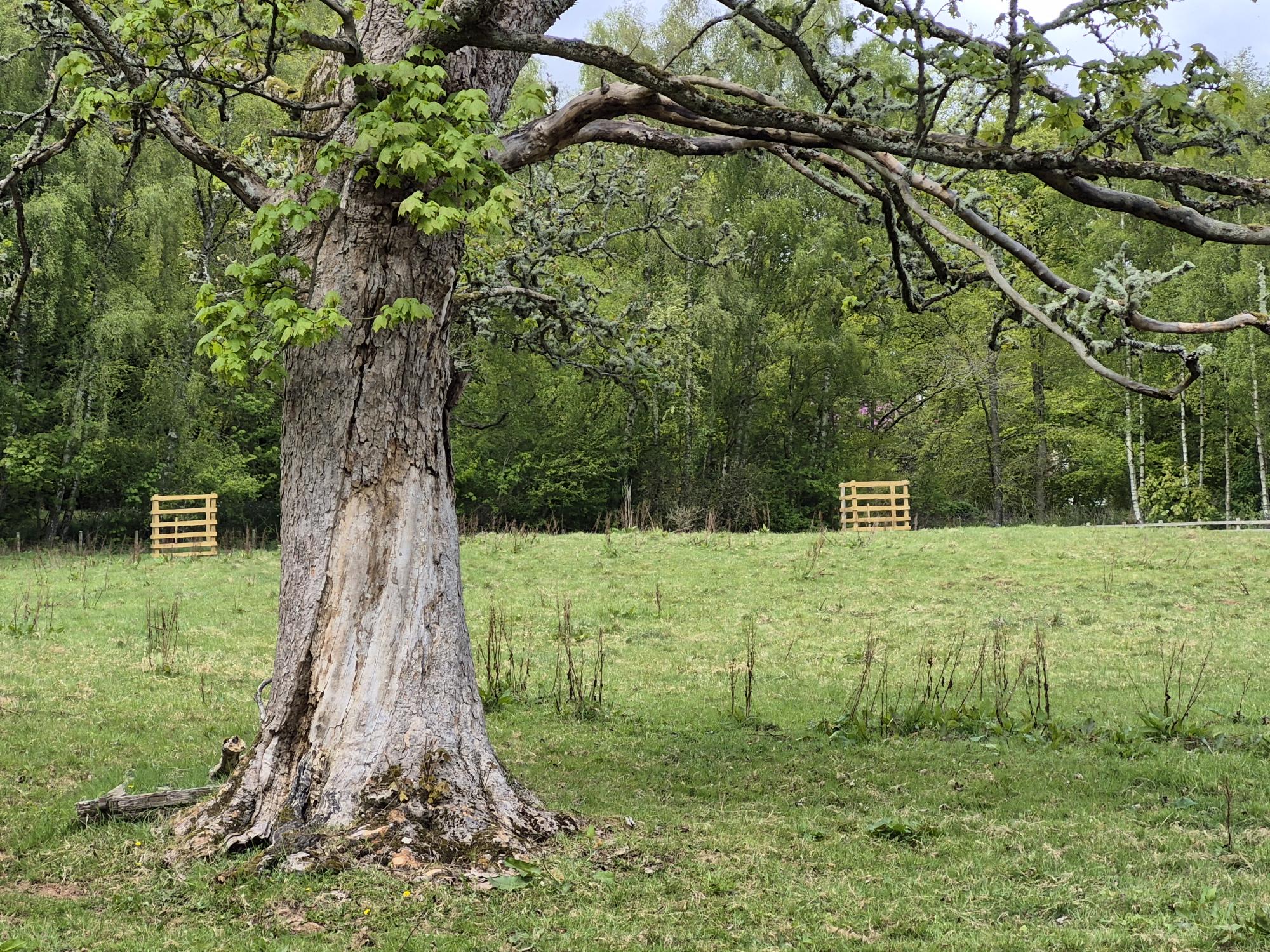
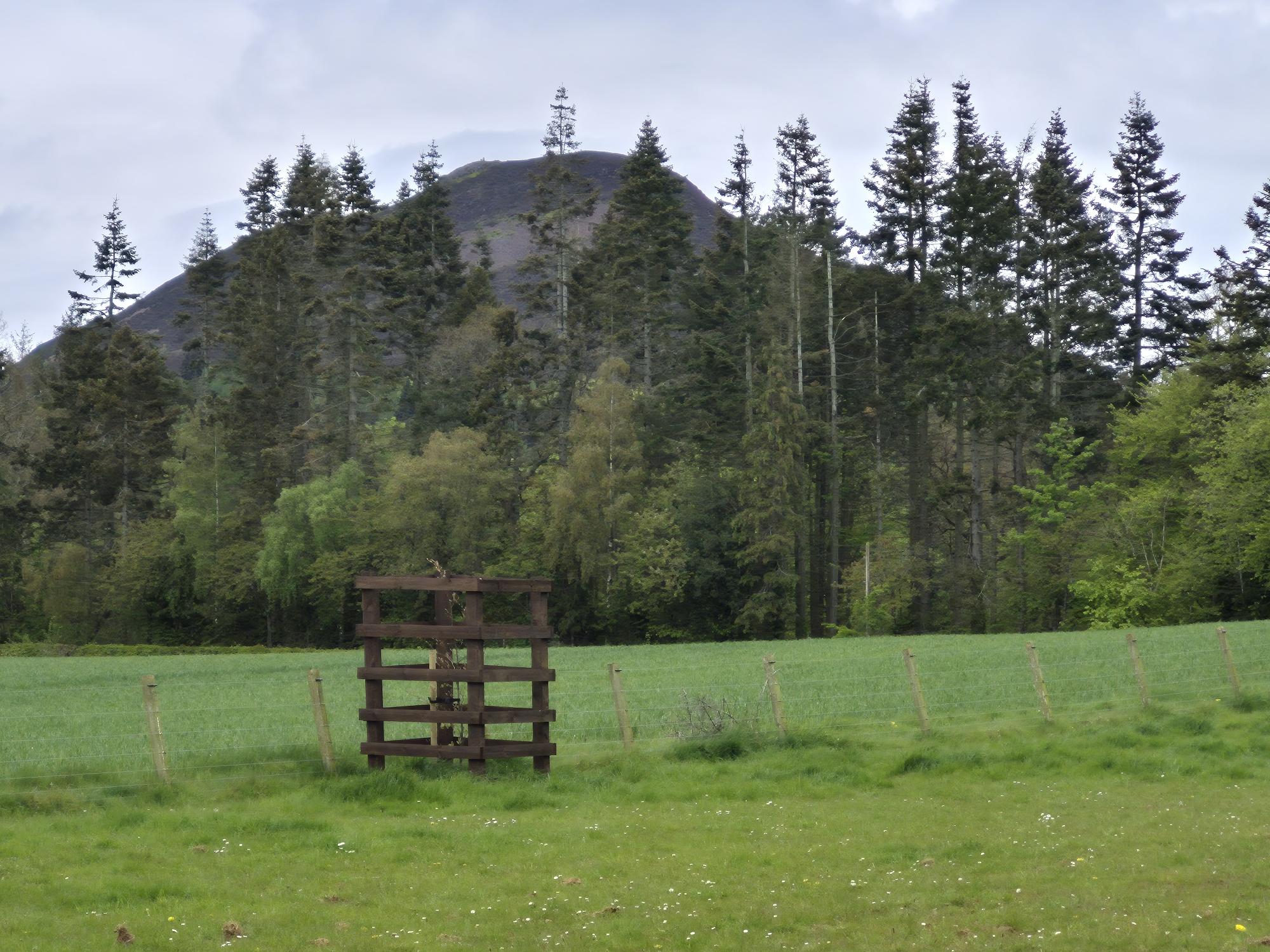
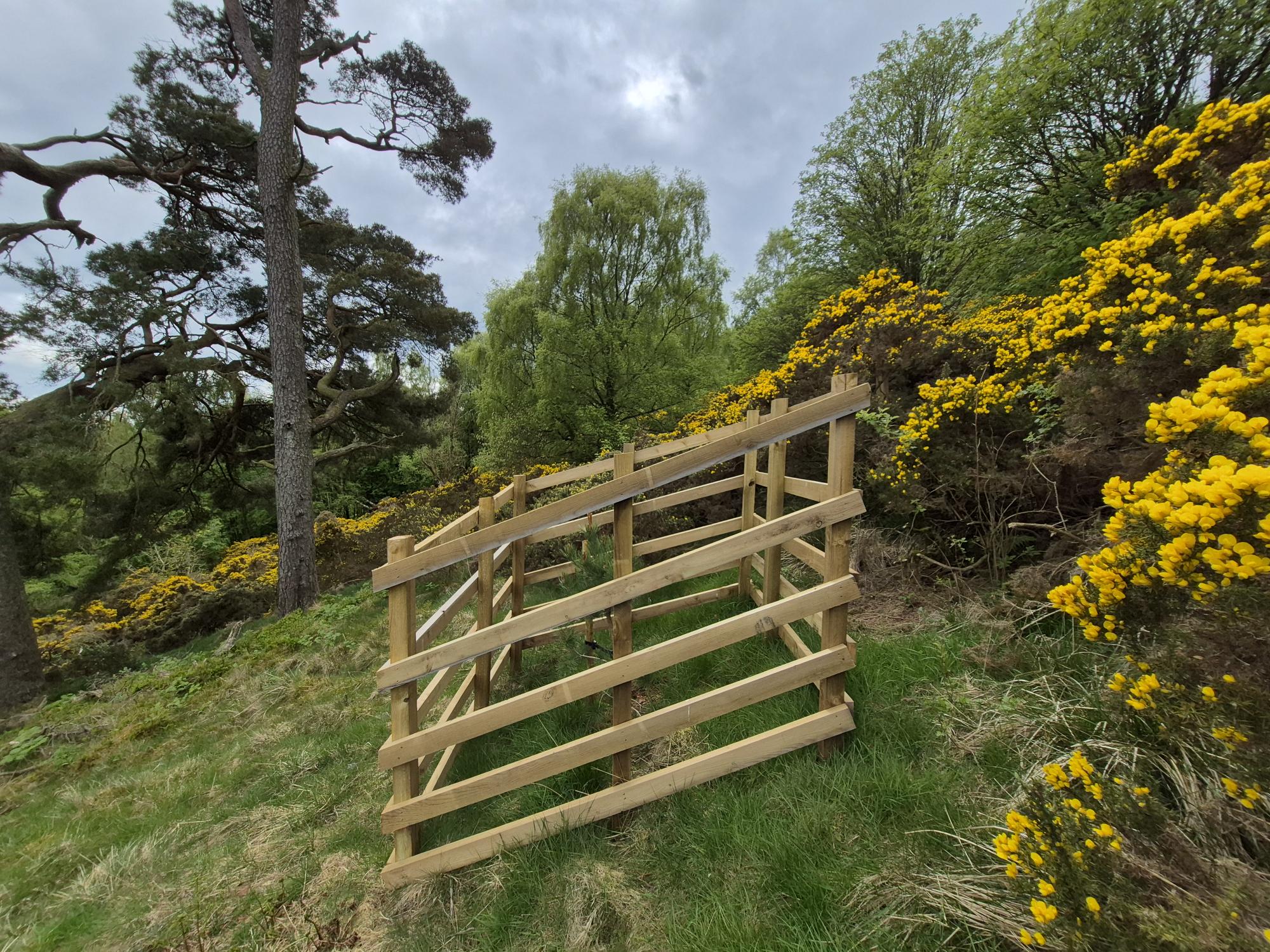
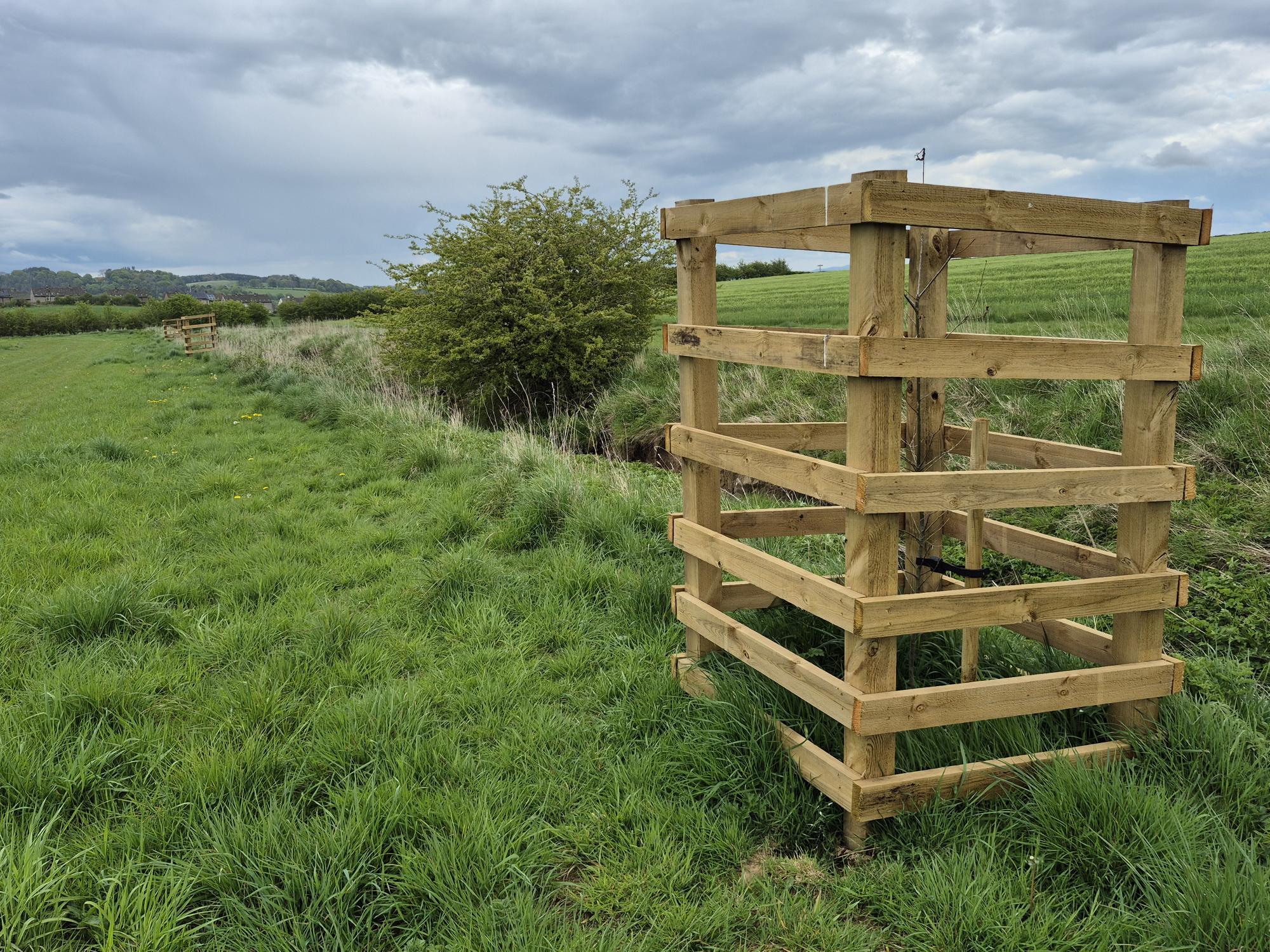
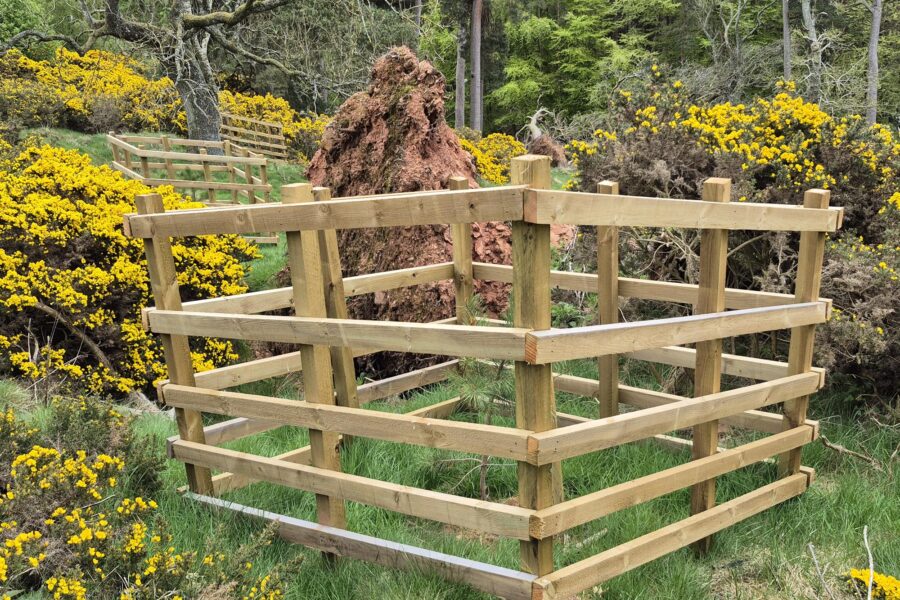
Working with the estate, Project Facilitator Derek Robeson helped map the significant historic landscape to identify where to enhance the key Designed Landscape features. 45 parkland trees were planted in wooden tree boxes, across 6 sites to replace lost trees and structures such as a horseshoe shaped woodland feature on the hill, consisting of 9 Scots Pine.
Tree Planting Summary
45 Parkland trees including Beech, Lime and Oak
Long Term Impact & Benefits
The landscape surrounding the Eildon Hills is very special. The planted trees will help sustain this important historic landscape made famous by the Romans, Thomas the Rhymer and Sir Walter Scott. Tourists flock here in their thousands every summer to enjoy this landscape. The Eildon’s can be seen from all four corners of the Scottish Borders. This is partly why the Romans decided to locate their main fort north of Hadrian’s Wall, here. Scott built Abbotsford here on its northern slopes.
This is a National Scenic Area prized for its landscape quality. There is a considerable range of different wildlife habitats on and around the Hills. This diversity attracts an equally diverse range of wildlife. The planted trees will provide landscape features of note, for years to come, when seen from the myriad of footpaths criss-crossing the landscape.
The Designed Landscapes project is funded by National Lottery Heritage Fund Scotland, Fallago Environment Fund and private contributions.