Designed Landscapes – Fairnilee Estate
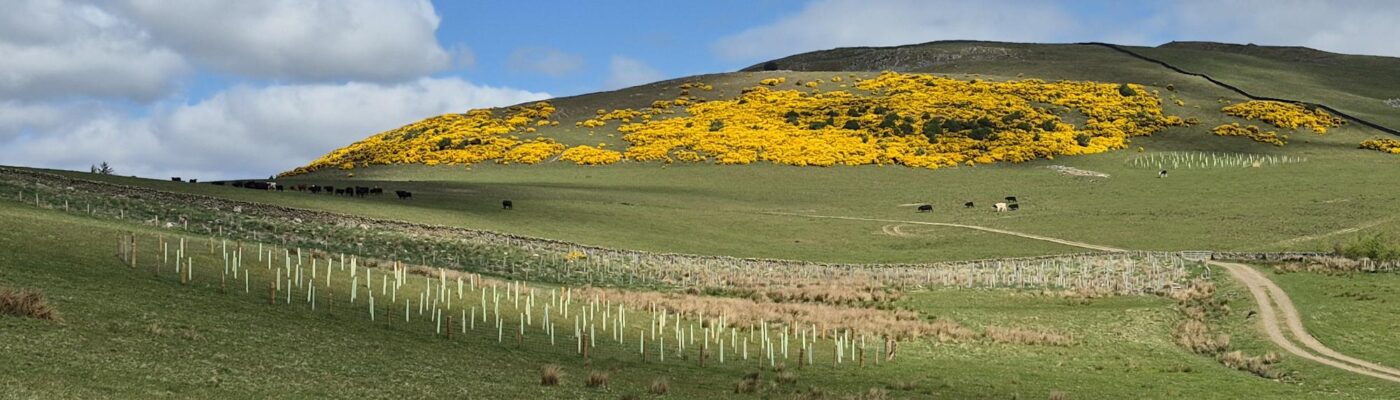

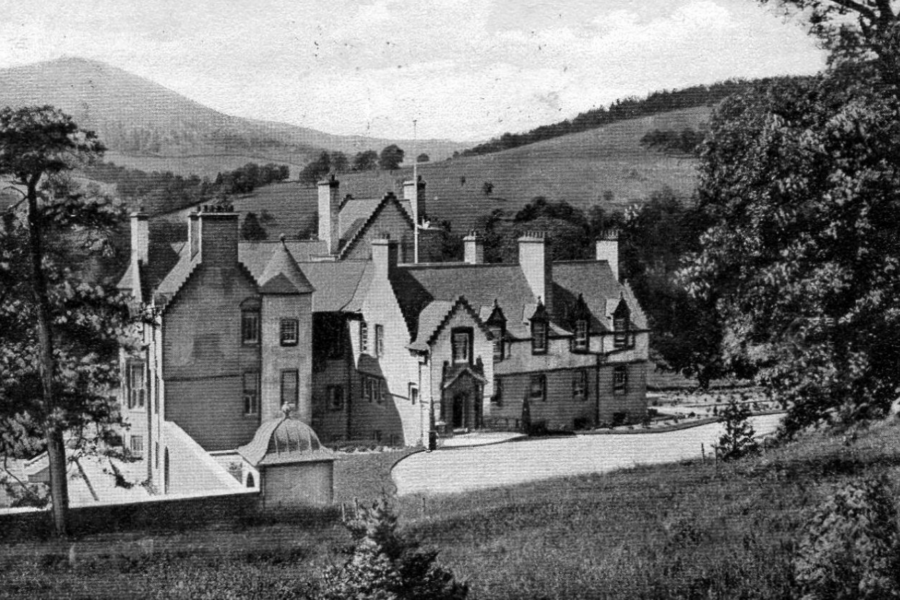
Fairnilee House occupies a site of historic significance within the Tweed valley near Galashiels.
Background
The estate is first recorded on Blaeu’s map of 1654 as Fernyly, accompanied by extensive woodland, including the Wood of Fairnyly and Catoog Wood to the east, with further woodland extending north and west towards Blakupphaugh. This early mapping suggests an established and well-wooded estate of some importance.
By the mid-18th century, Roy’s map depicts a landscape that had become more intensively managed, with cultivated and tree-lined fields, areas of grazing, and a large walled enclosure. Woodland at this time appears reduced and fragmented, particularly to the north and west. These features are thought to relate to Old Fairnilee, described by Cruft (2006) as a small Renaissance mansion dating from around 1600, formerly a house of great significance within Selkirkshire.
Written accounts reinforce this evolving landscape. Tourist John Stoddart noted in 1801 that Fairnilee was “pleasantly situated in the midst of plantations,” while the New Statistical Account of the 1830’s records mixed broadleaf and coniferous planting in the parish, along with particularly fine specimens of ash and plane within the Fairnilee estate.
The present Fairnilee House dates from 1904, representing a later phase of Edwardian (Arts & Crafts period) development that overlays a landscape shaped by centuries of settlement, cultivation and woodland management.
Tree Planting Activity
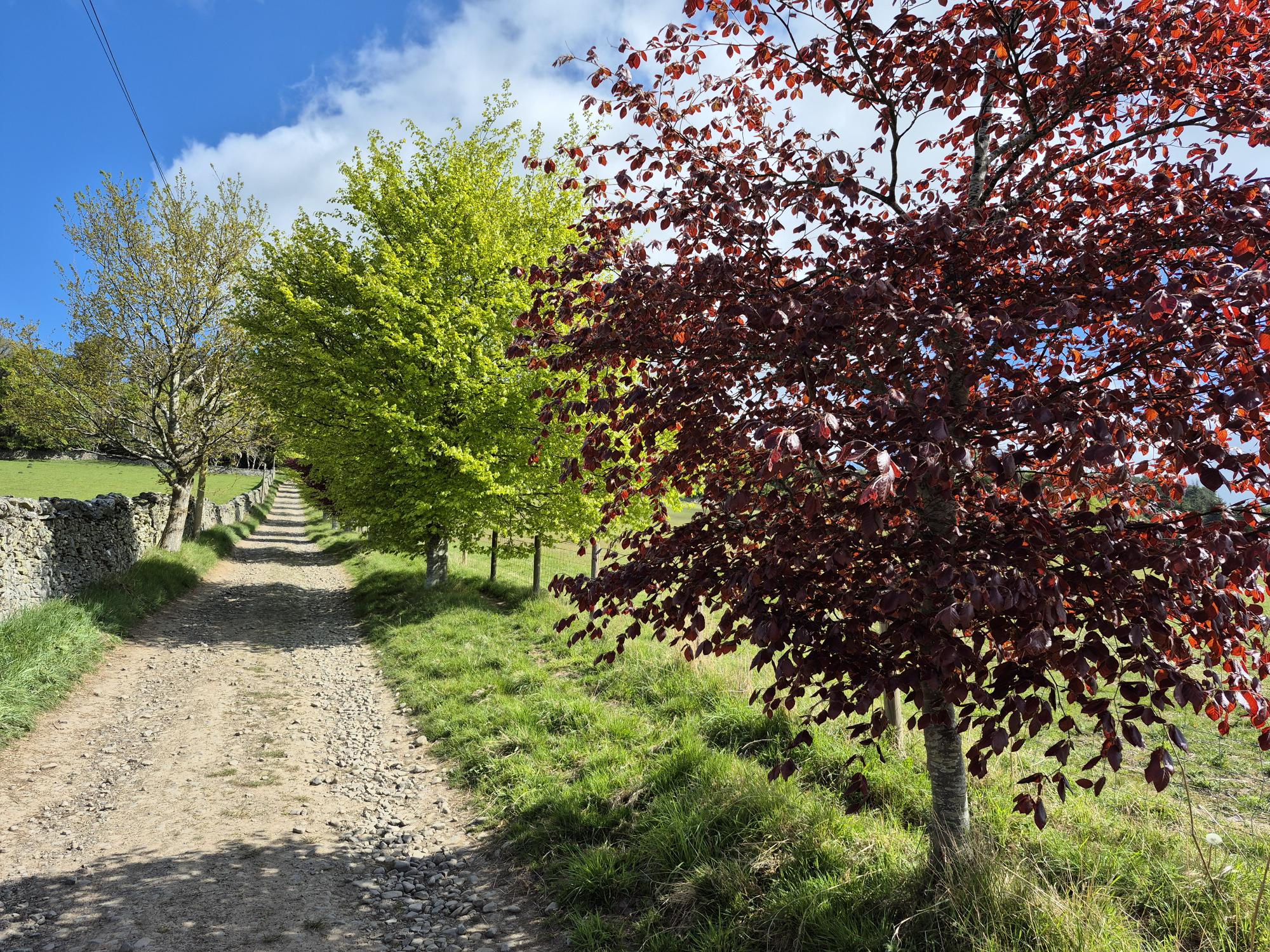
This is a loosely structured designed landscape which combines naturalistic woodland on the western hill slopes above the river and A707, with more formal woodland, shelterbelts and field‑boundary planting to the east around Fairnilee Farm and Yair Bridge.
The landscape includes areas of haugh parkland on either side of the farm, with scattered parkland trees, a roundel, and largely restocked planting. Mixed conifers dominate, complemented by mature broadleaves such as beech, alongside well‑maintained drystone field boundaries. Estate buildings, including farmhouses and cottages, are set within mature planting.
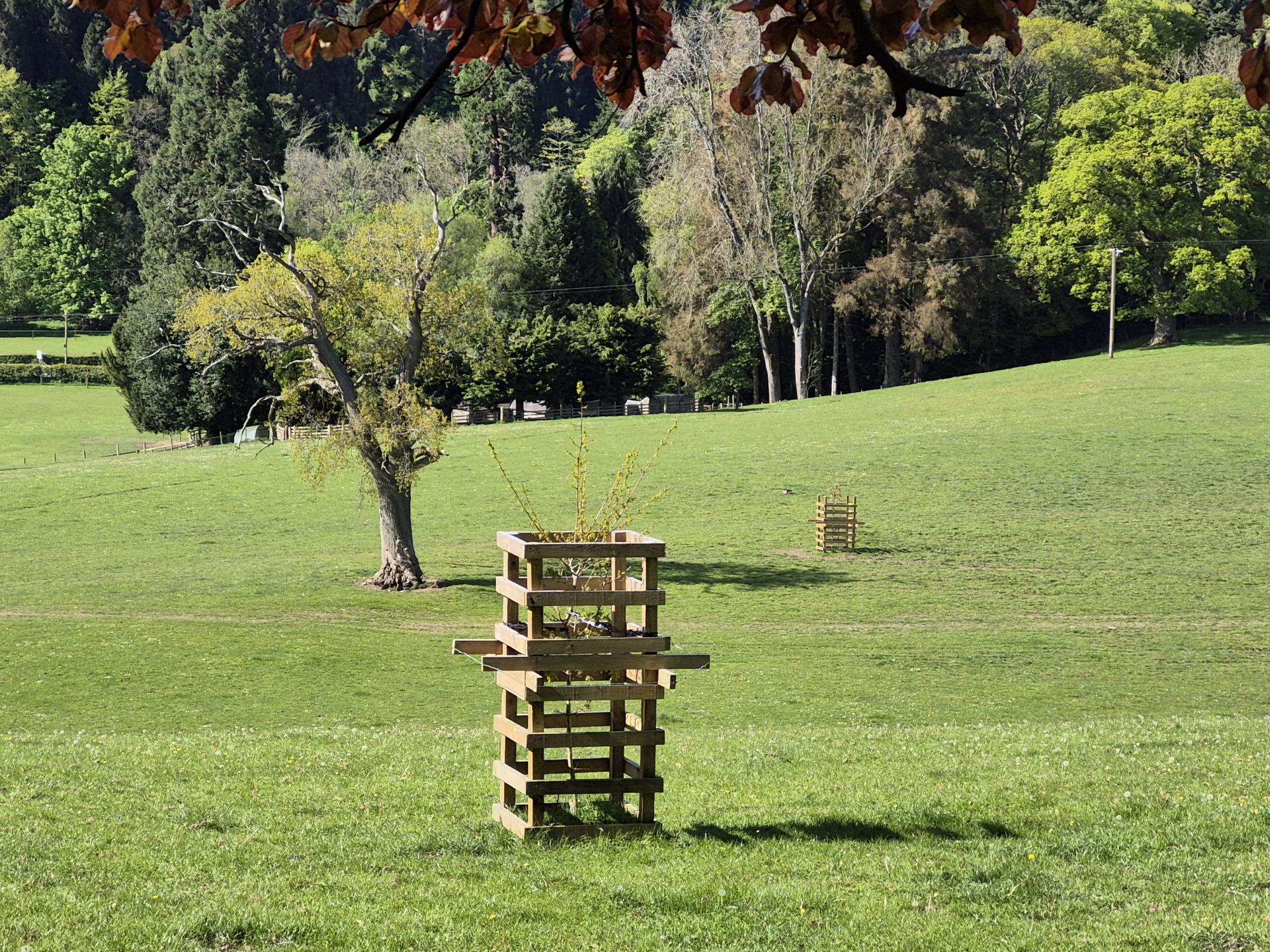
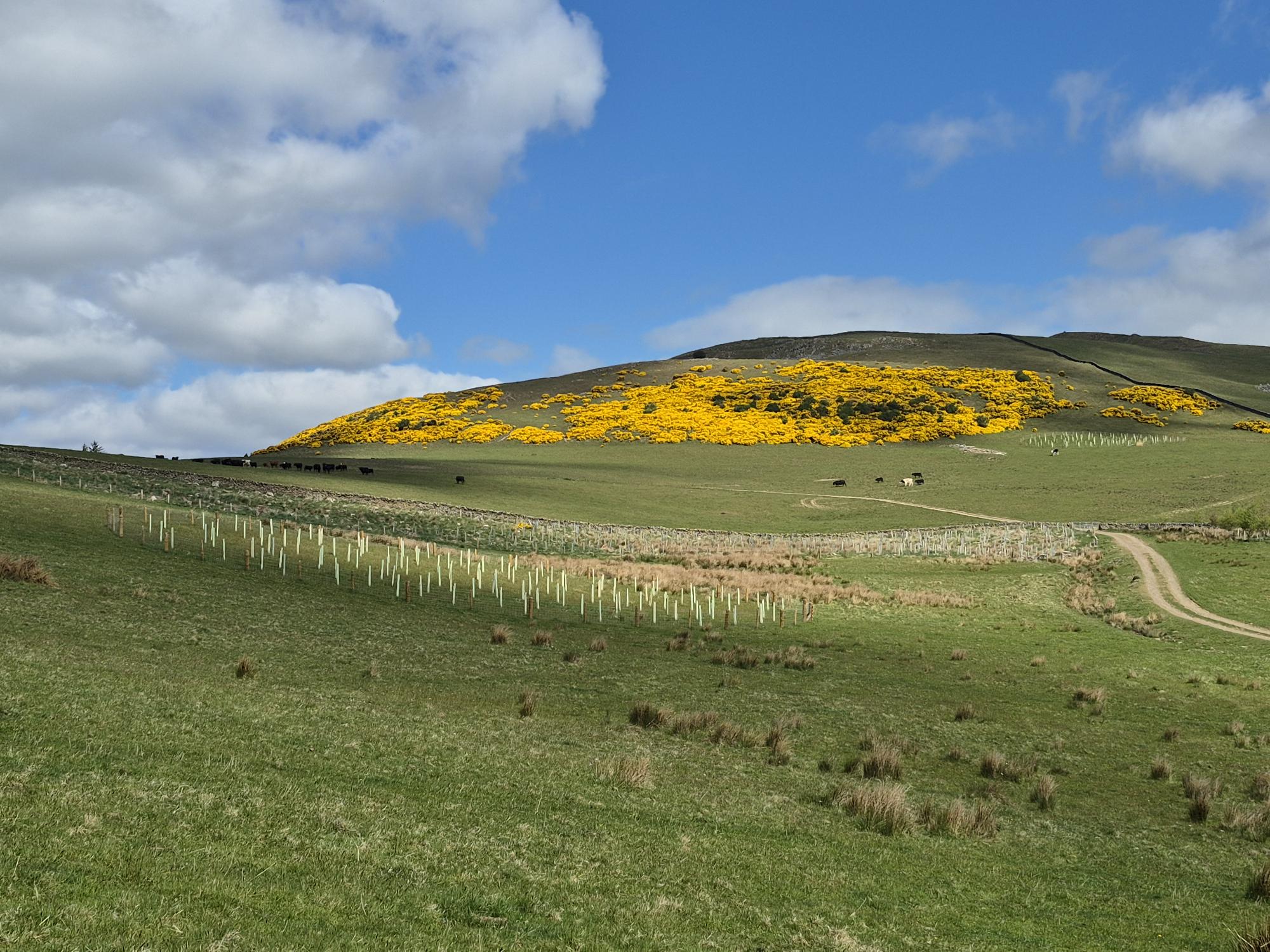
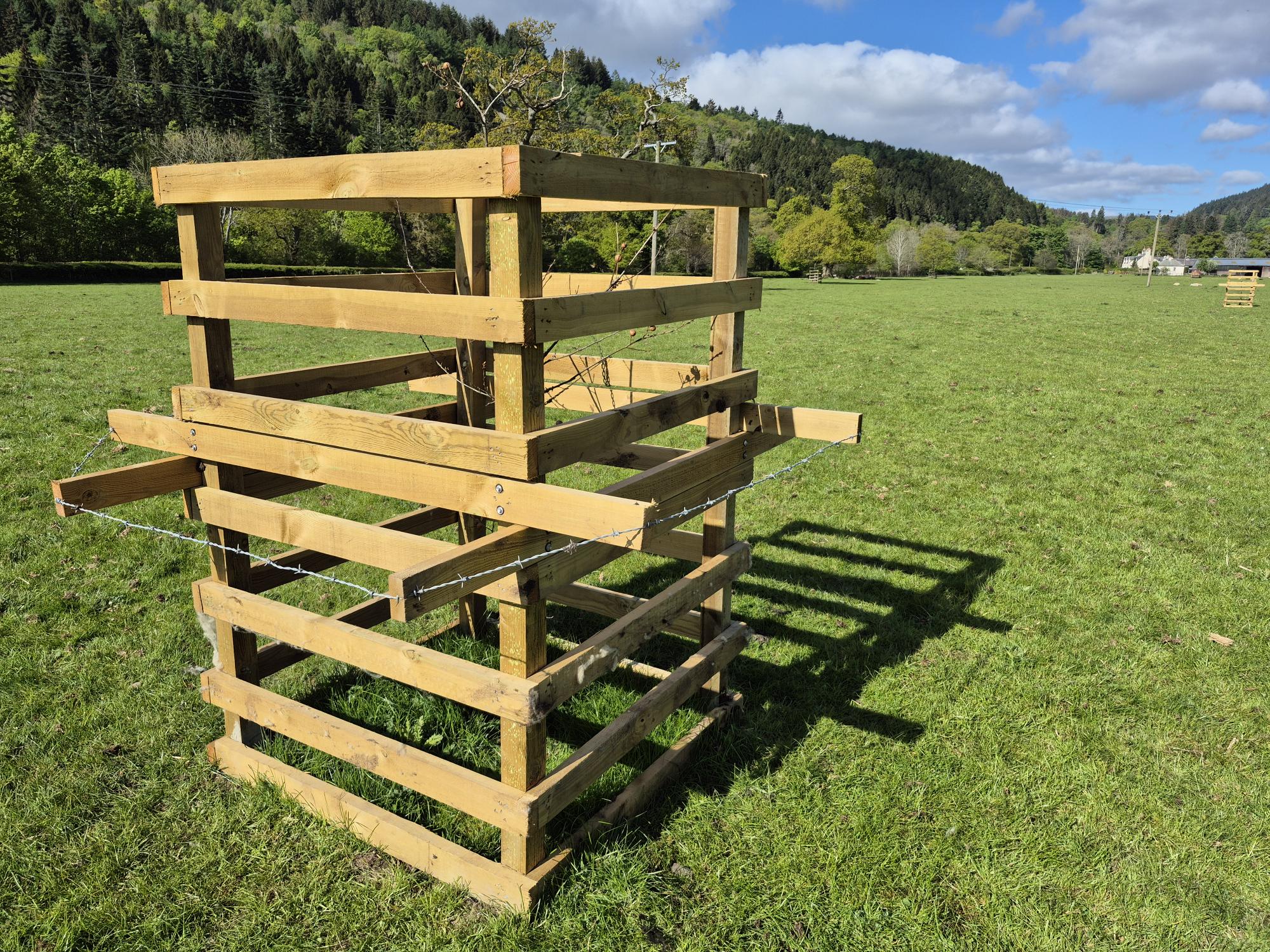
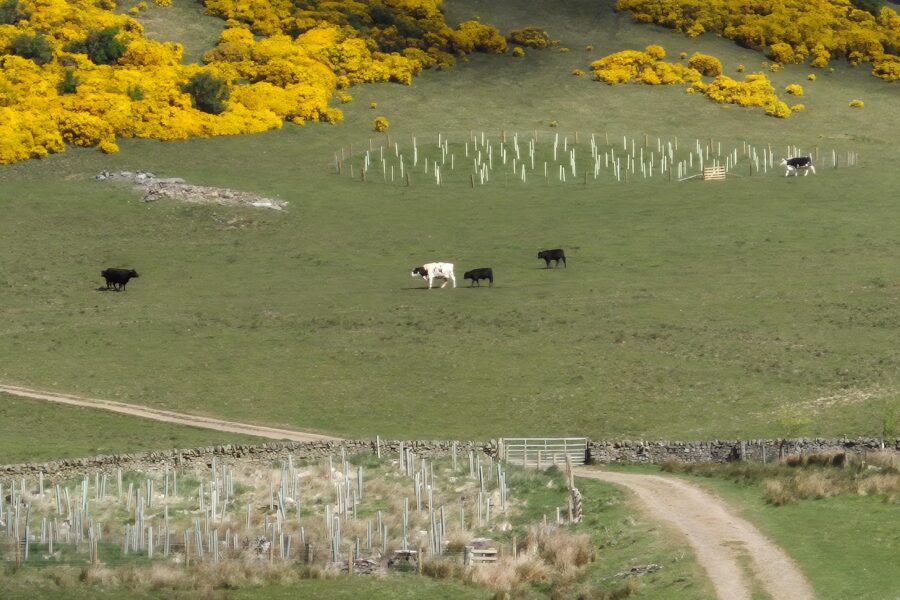
Designed Landscapes Project Facilitator, Derek Robeson, worked with Fairnilee Estate to map historic planting on this regionally significant parkland. A total of 371 trees were planted across 8 discrete sites, in a mix of parkland areas and fenced off Copse’s.Tree Species included: Oak, Lime, Rowan, Cherry, Hazel, Alder and Birch.
Tree Planting Summary
21 parkland trees
350 trees in 3 fenced off Copses
TOTAL: 371 INDIVIDUAL LANDSCAPE TREES PLANTED
Long Term Impact & Benefits
The parkland and driveways at Fairnilee have been enhanced by landscape tree planting. Further out, the planting of new roundels and small copses have been used to great effect. Roundels and small copses are often sited where multiple paths and axes cross. They act as a hinge around which the eye pivots to anchor an otherwise sprawling and open space. Landscapes rely on rhythm and pacing. A roundel provides a clear logical node that encourages a visitor to pause. This moment of stillness enhances the overall experience by allowing the transition from one distinct view to another quite different view.
These small woodlands are also multifunctional. They create ecological stepping stones, frame scenic views, provide shelter for livestock and create micro- climates. These ‘pocket’ woodlands create edge habitats that support abundant wildlife (especially birds, insects and flowering plants) which in turn, improve both human well-being and land and climate resilience. Research has shown that small clumps of trees may store more carbon per unit area in the top soil, than older and larger woodlands. Their intense biological activity allows the soil to absorb organic matter at a faster rate. Small woodlands also help define landscape character.
The Designed Landscapes project is funded by National Lottery Heritage Fund Scotland, Fallago Environment Fund and private contributions.
Back to Designed Landscapes project page