Designed Landscapes – Floors Castle
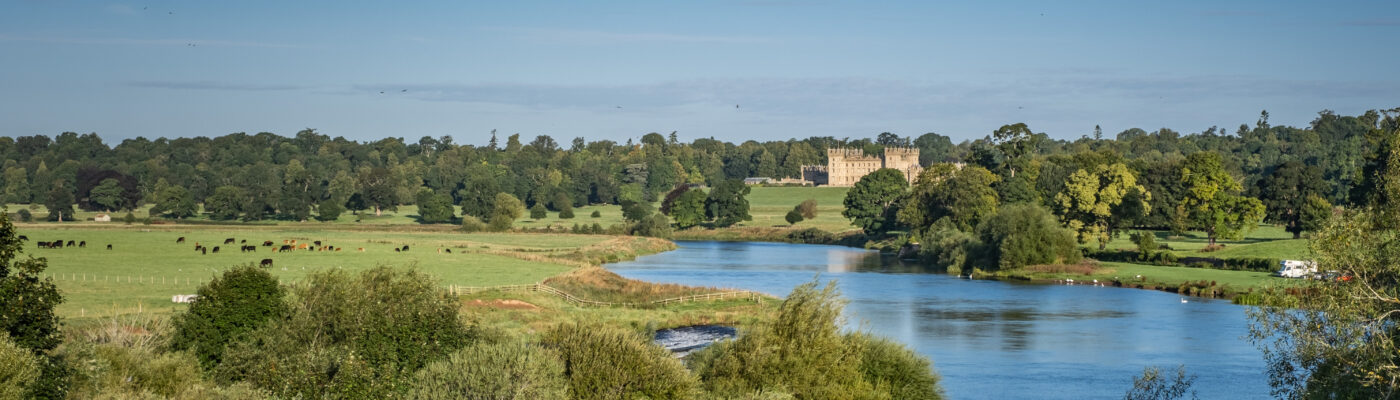

Floors Castle, nestled on the banks of the River Tweed near Kelso, is Scotland’s largest inhabited house and a striking example of 18th-Century and Victorian architecture.
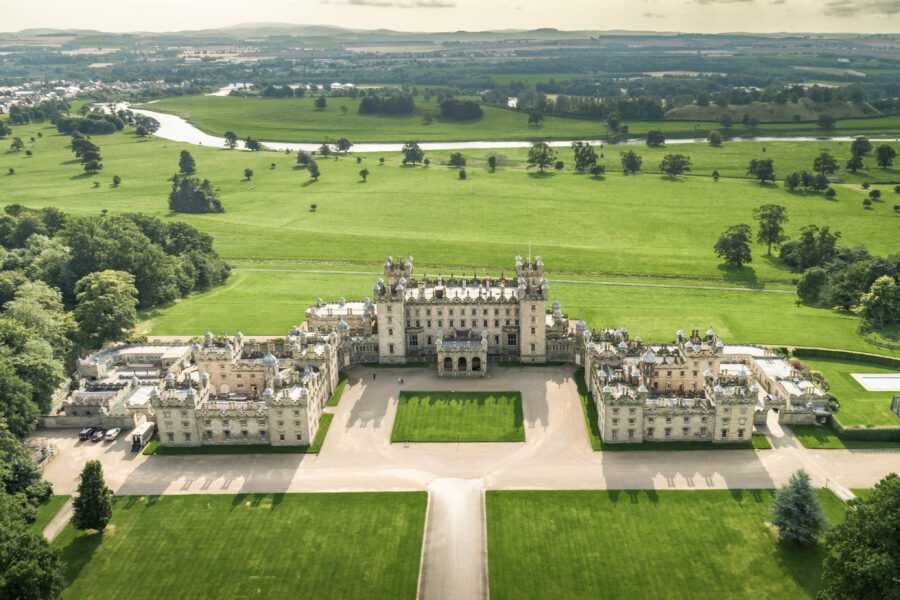
Background
Floors Castle is the ancestral home of the Dukes of Roxburghe. Despite its name, it is not a fortress but a grand country house, built in the early 18th century.
The castle was commissioned by John Ker, 1st Duke of Roxburghe, and designed by the renowned Scottish architect William Adam, between 1721 and 1726.
The name “Floors” may derive from the French word fleurs (flowers) or from the terraces (“floors”) on which the house is built. It was constructed on a natural terrace overlooking the River Tweed, possibly incorporating an earlier tower house on the site.
In the 19th century, the 6th Duke of Roxburghe hired William Henry Playfair, a leading Edinburgh architect, to remodel the plain Georgian structure. Playfair added dramatic turrets, battlements, and other flourishes, giving the castle its distinctive fairytale appearance.
Today, Floors Castle is a Category A listed building and a popular visitor attraction. Within the ‘Borders Designed Landscape Survey of 2009’, by Peter McGowan, Floors Castle is recorded as being of National and Outstanding significance. The gardens at Floors Castle are a vibrant and historic part of the estate, featuring one of Scotland’s finest Victorian Walled Gardens.
Tree Planting Activity
The Designed Landscape tree planting work, covered the immediate parkland policies around the Castle and the neighbouring unit of Stodrig, as a western extension of the formal designation. Part of the larger Floors Home Farm business, land use is predominantly a mix of Parkland grassland, arable crops and mixed amenity woodlands.
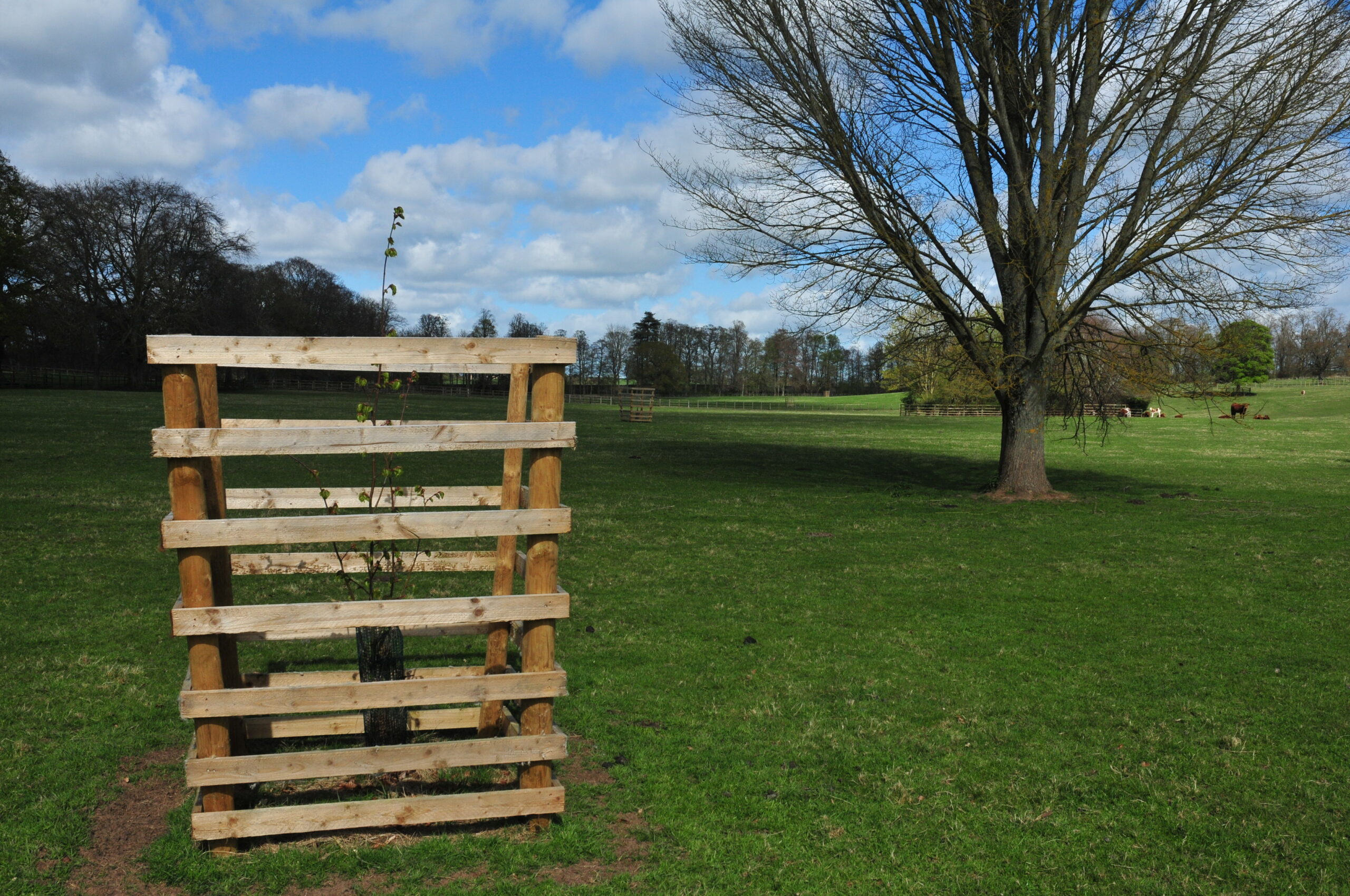
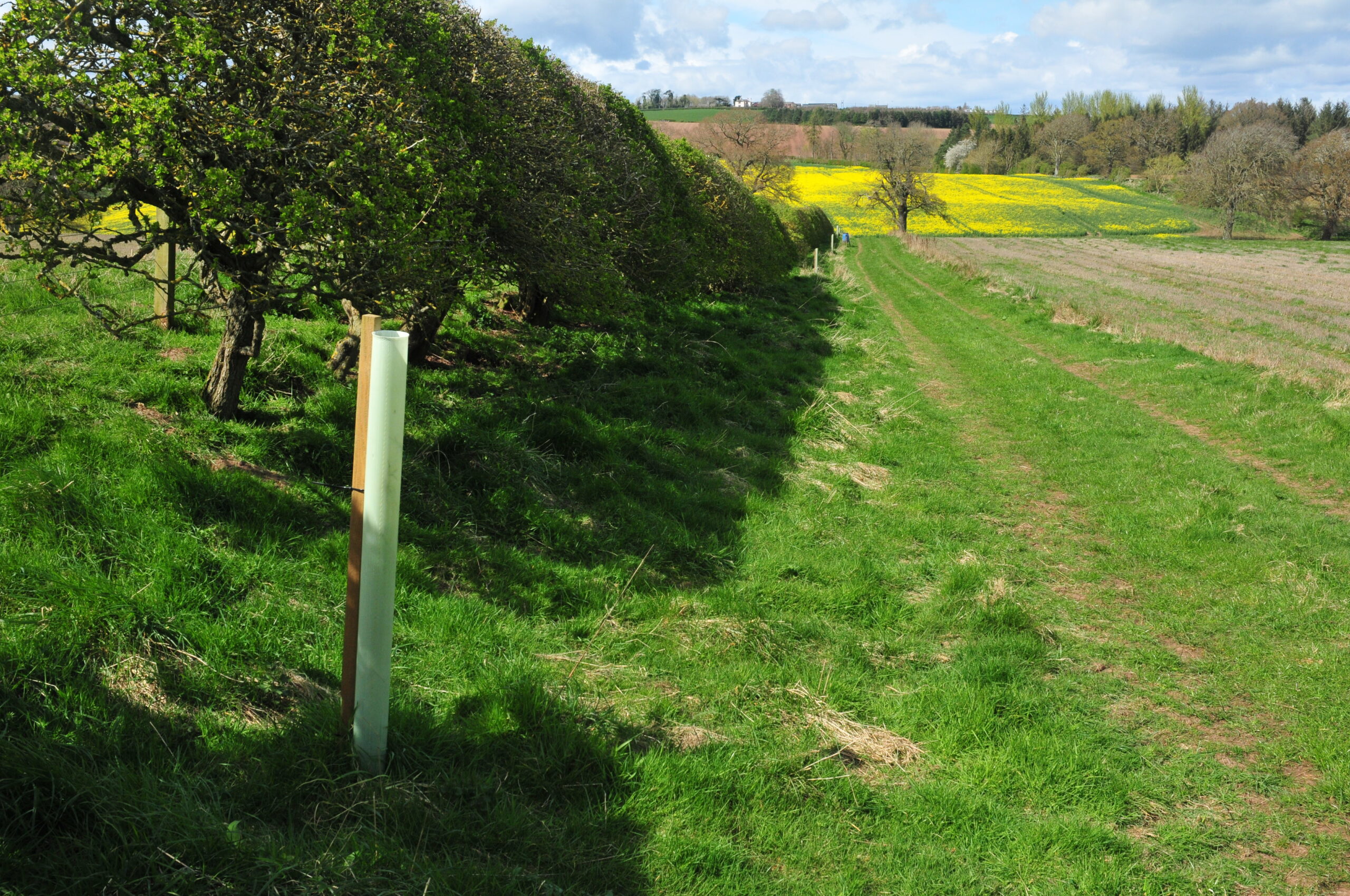
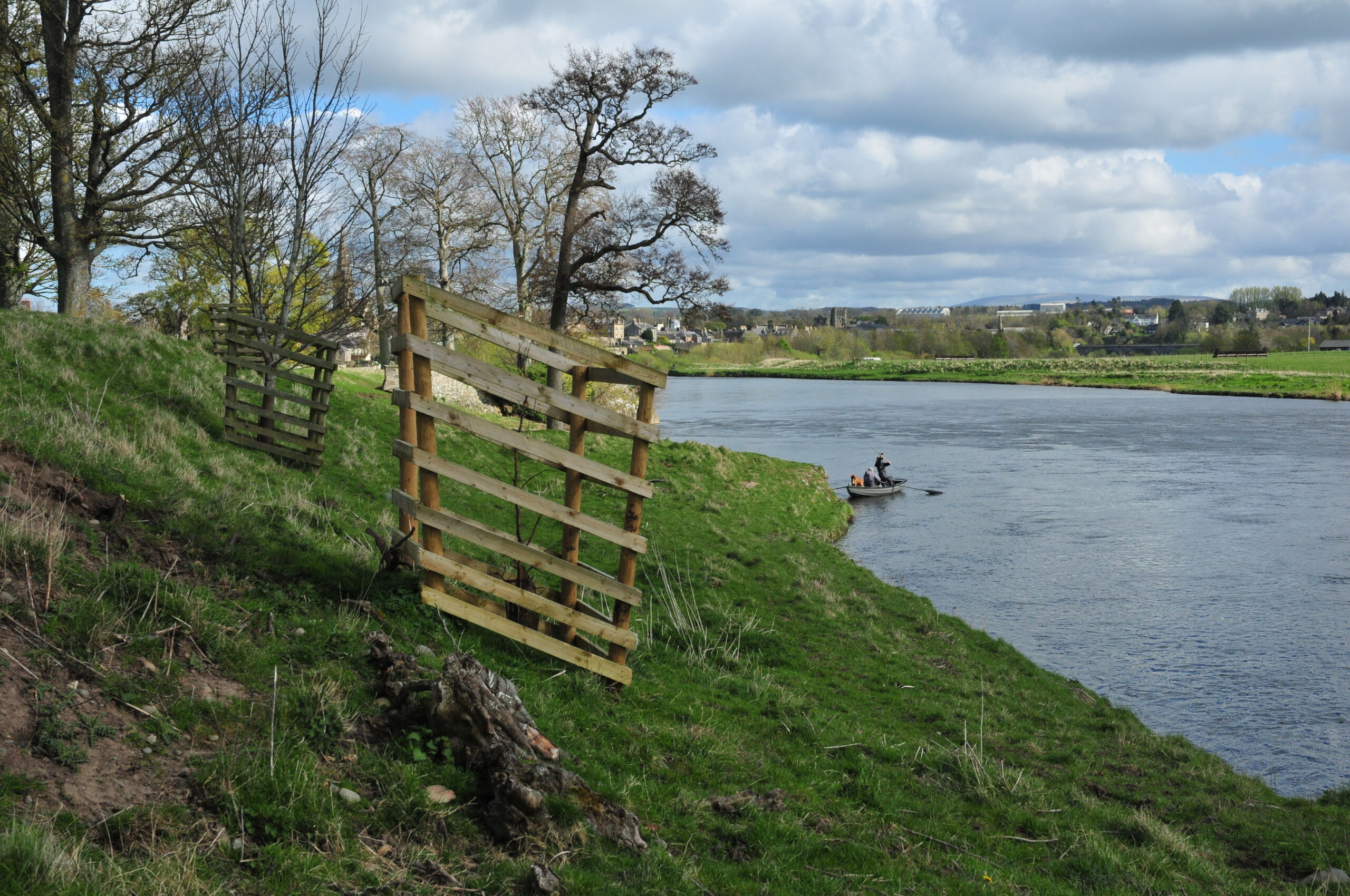
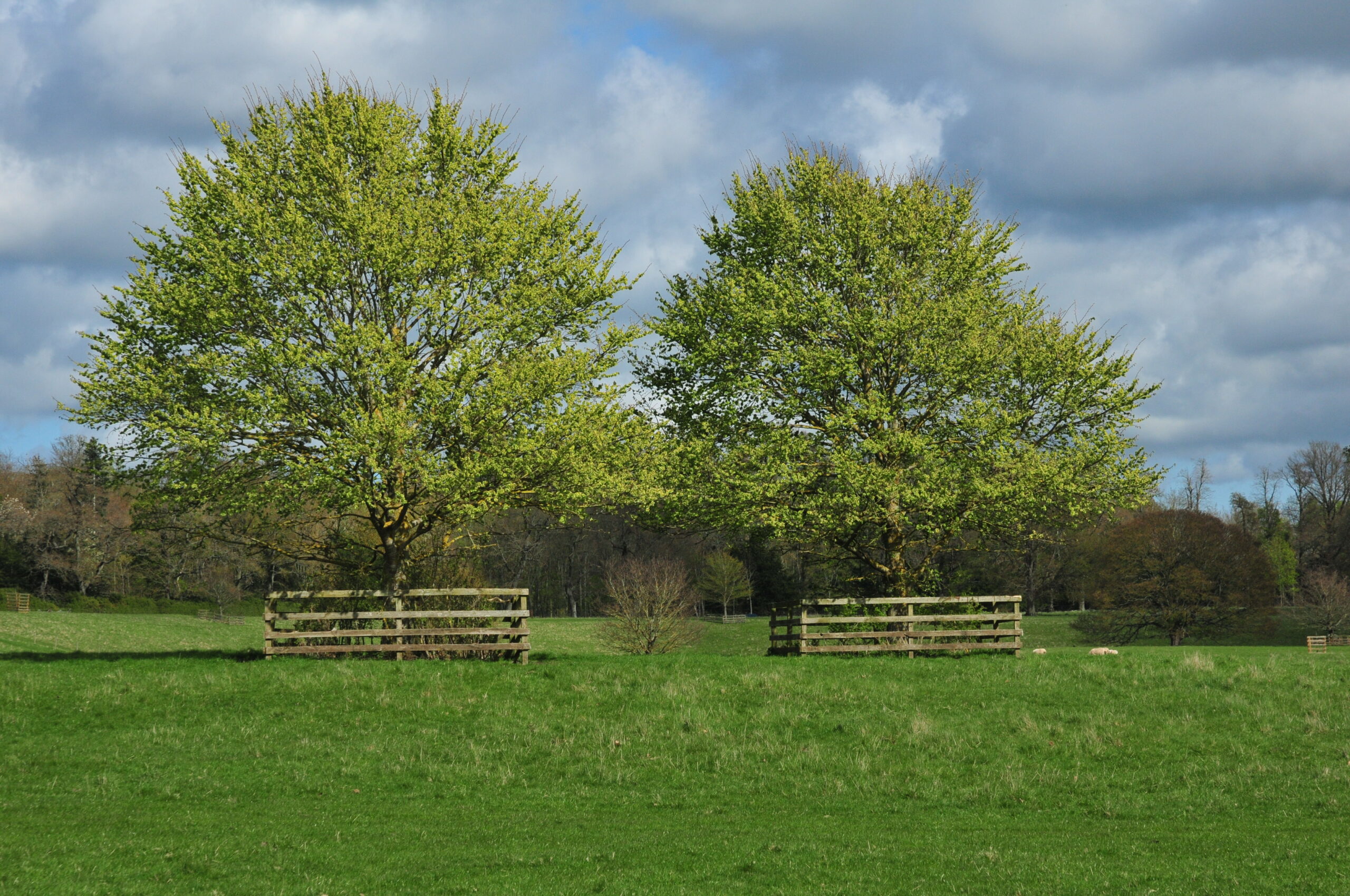
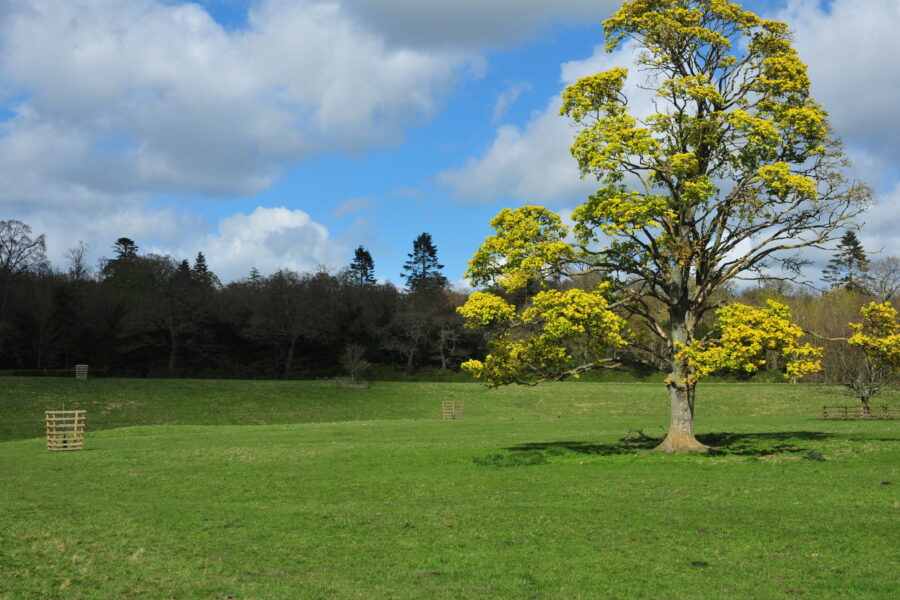
Project facilitator Derek Robeson, has been working with Floors Estate, to help facilitate the planting of the next generation of parkland and landscape trees. Most of of the individual parkland trees are protected from livestock- cattle, sheep and horses by placing them within post and rail enclosures made from wood. Small clusters of parkland trees and roundels are protected by stock fencing whilst hedgerow trees are protected by mesh net guards to give them the best chance of flourishing.
In total, 194 individual trees were planted. These were a mix of: Oak, Sycamore, Lime, Green beech, Copper beech and Giant redwood.
Tree Planting Summary
70 individual parkland trees were planted
124 trees were planted in hedgerows
TOTAL: 194 TREES PLANTED
Long Term Impact & Benefits
Floors Castle sits in one of the most dramatic landscapes in Britain. It was here that early writers such as Sir Walter Scott and James Thomson drew their inspiration for storytelling and poetry. It was here that their minds could engage with the sheer beauty surrounding them. What these early landscape architects were doing, when they laid out these parklands 300 years ago, was to create their ideal vision of what a utopian landscape should look like. These estates were at the forefront of building what was to become- The Romantic Movement. It is good that they did…as we can enjoy them today.
The trees planted within this programme will ensure the legacy of these early and formal landscape designers, will live on. Locals and visitors alike will be able to view and walk amongst these trees each summer, for generations to come.
The Designed Landscapes project is funded by National Lottery Heritage Fund Scotland, Fallago Environment Fund and private contributions.