Designed Landscapes – Haystoun
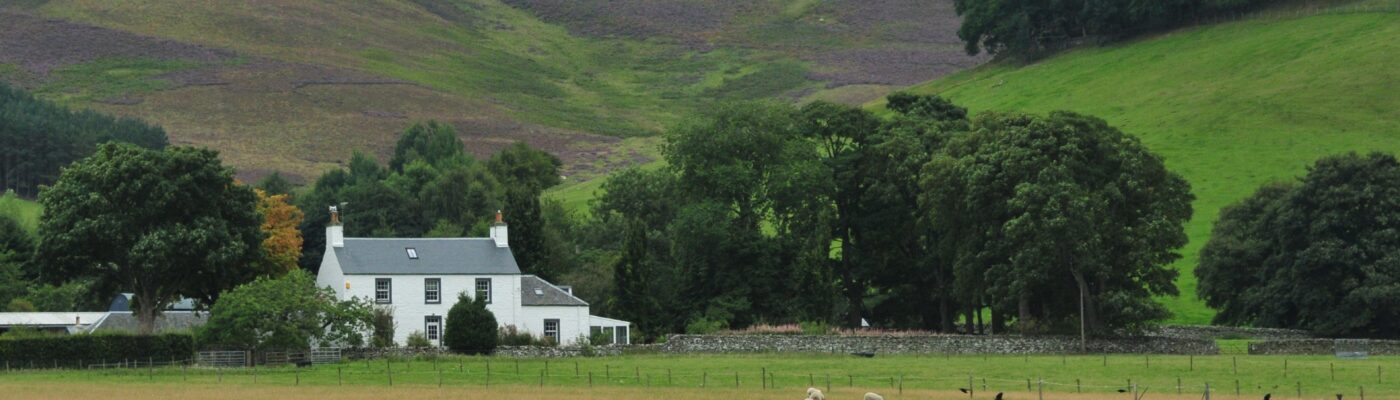

Occupying a prominent position on the southern edge of Peebles, Haystoun Estate, exemplifies the changing story of the Scottish Borders agricultural and architectural heritage.
Background
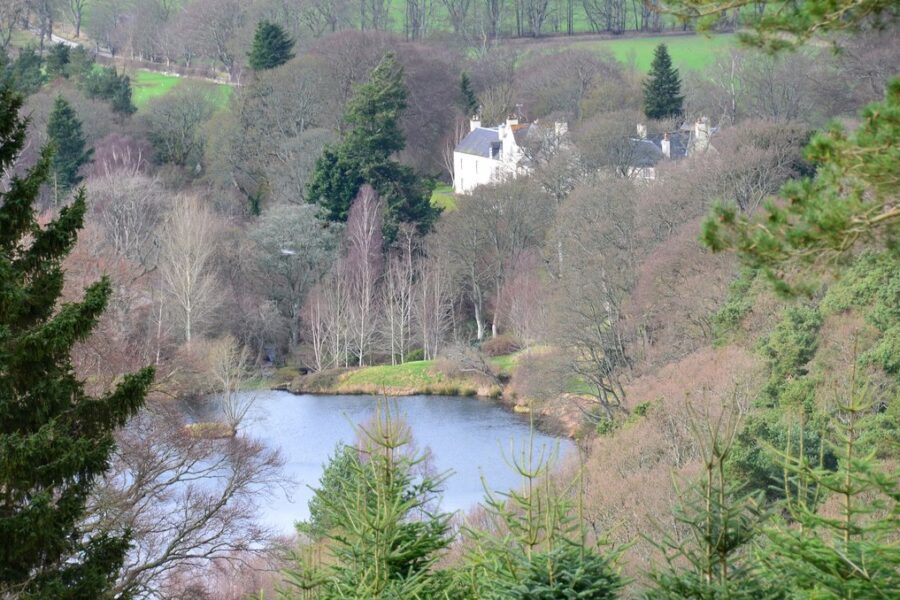
The estate takes its name from Haystoun House, a historic residence that evolved from a fortified Borders tower into a substantial country house and was associated with the Hay family for centuries. Over time, the building was expanded and adapted to meet changing fashions and needs, with significant additions made in 1660, further enlargements during the 18th century and extensive remodelling in 1925. These successive alterations transformed the original fortified dwelling into the elegant country house seen today, while retaining elements of its earlier character and history.
The Hay family played an important role in the development of both the estate and the wider Tweeddale area. Their long association with Haystoun helped shape the surrounding landscape through agricultural improvement, estate planting and the creation of formal gardens and policies.
Recorded in Roy’s map c.1750, a series of walled and tree lined enclosures and two small plantations are shown between the Haystoun Burn and Haystoun Craigs. Towards the end of the 18th century, Sir John Hay planted over 300 acres with his son carrying on this work. The 1850 OS map shows significant extension of planting onto the nieghbouring hillsides and as narrow belts separating fields in the valleys.
Apart from the slight encroachment along its northern edge by the south expansion of Peebles, there has been little change to the Estate’s layout since the 19th Century. Today, the historic character of Haystoun can still be seen in its courtyard buildings, walled garden and mature parkland.
Tree Planting Activity
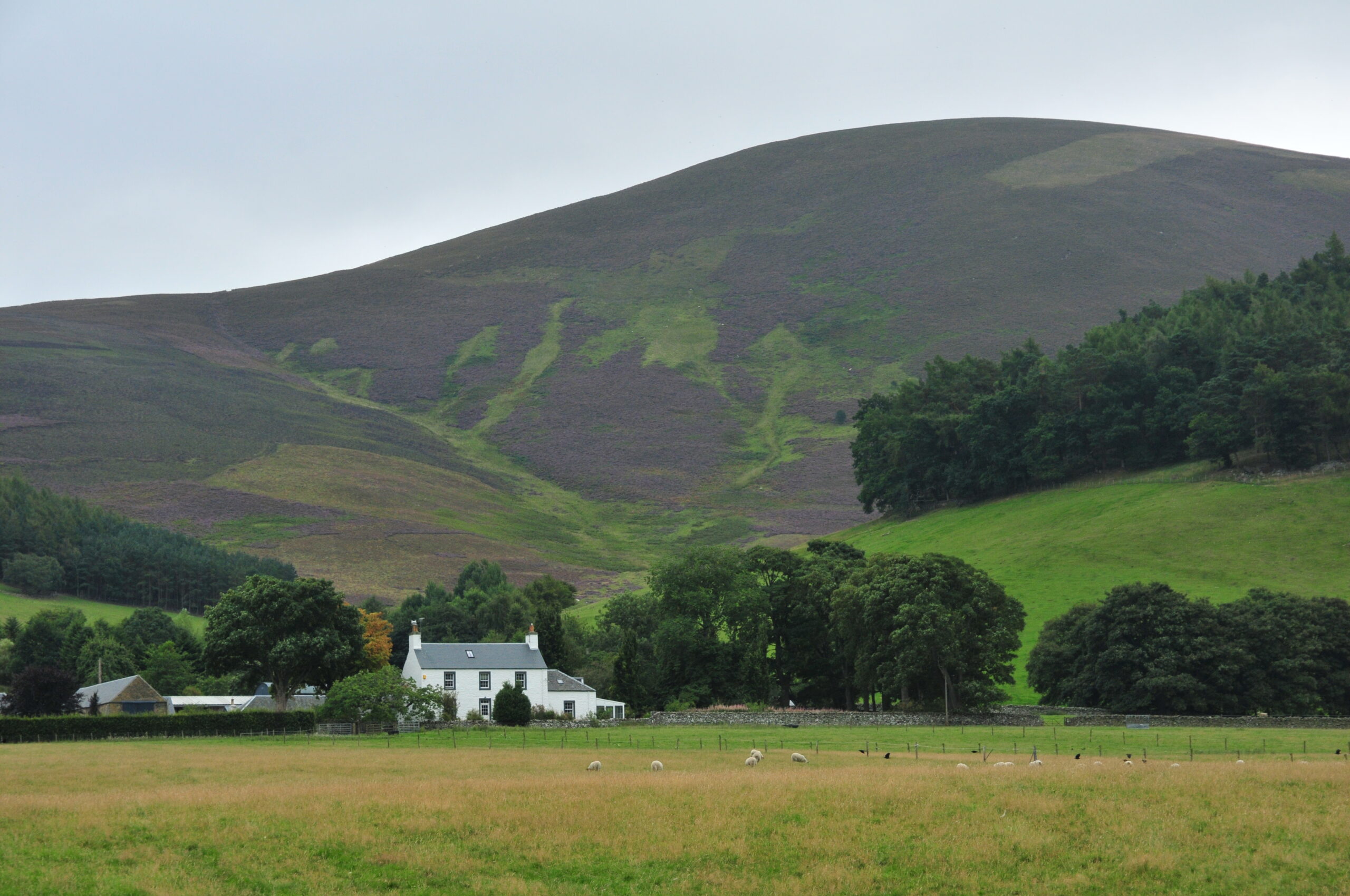
Haystoun has a beautiful setting amongst pastoral fields surrounded by amenity woodlands. Many of the individual landscape trees survive along the roadsides with some additional parkland and landscape tree planting undertaken in the past 30 years. The Designed Landscape works aims to complement this work by planting the next generation of young landscape and parkland trees on the estate.
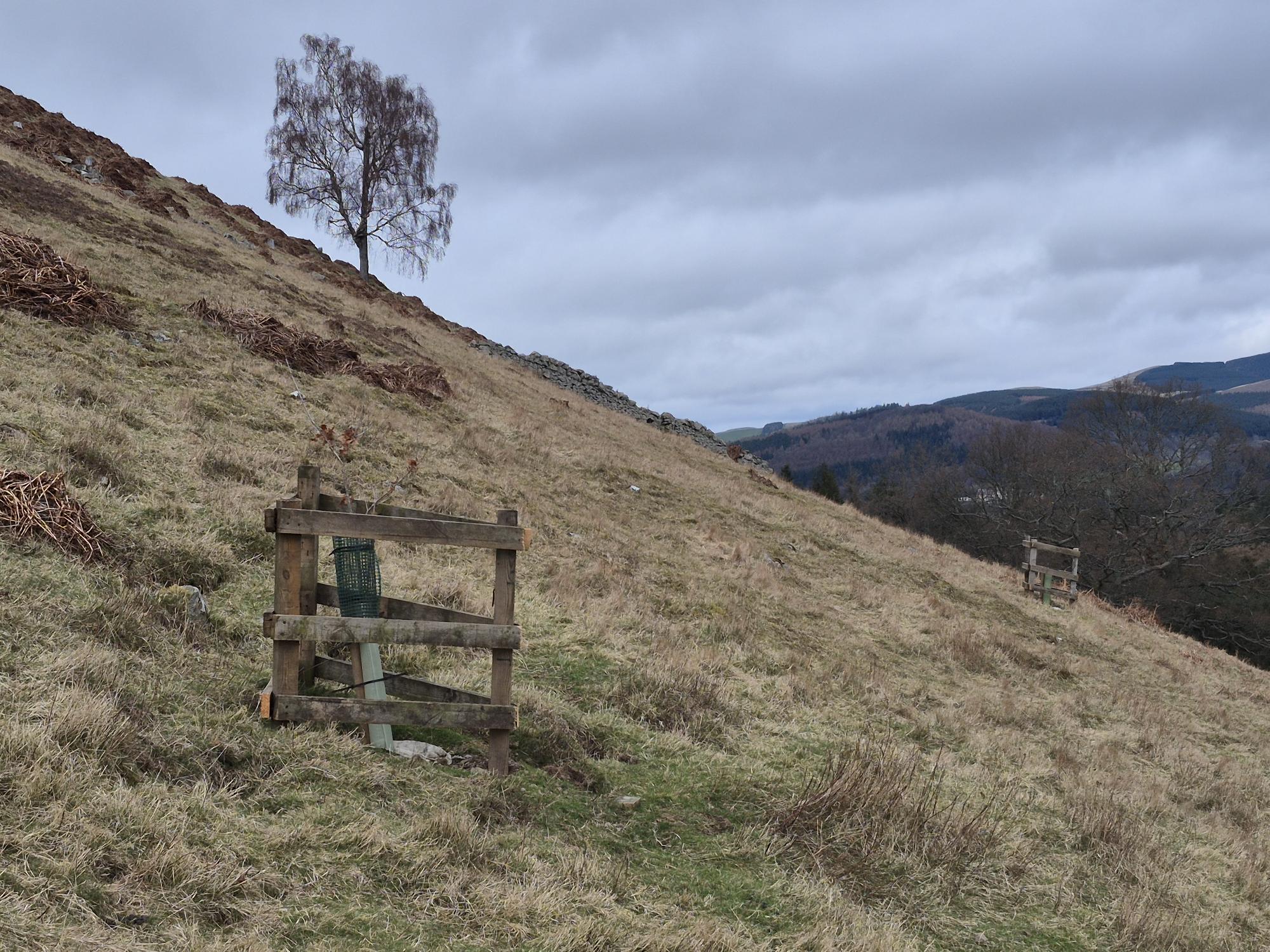
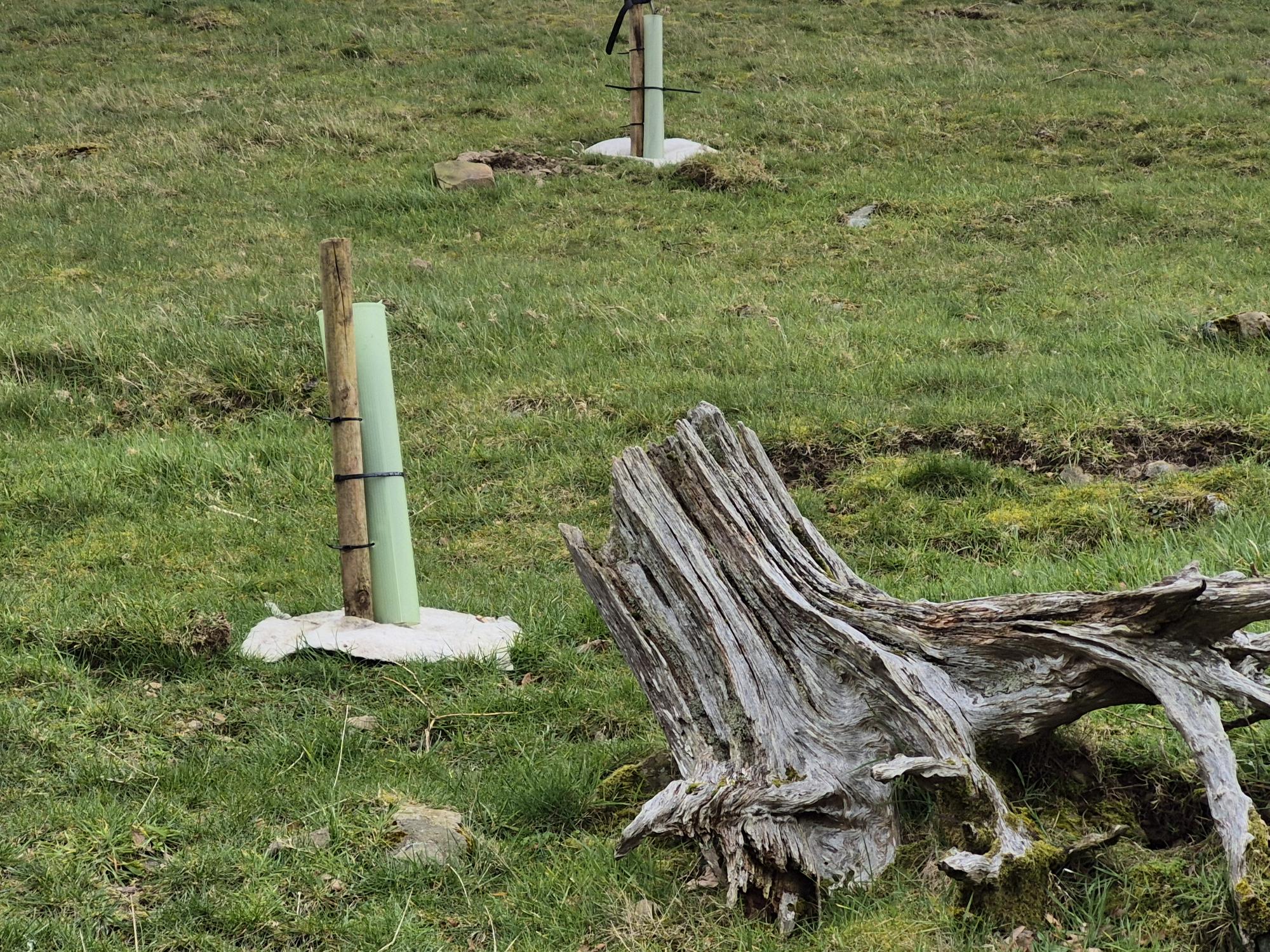
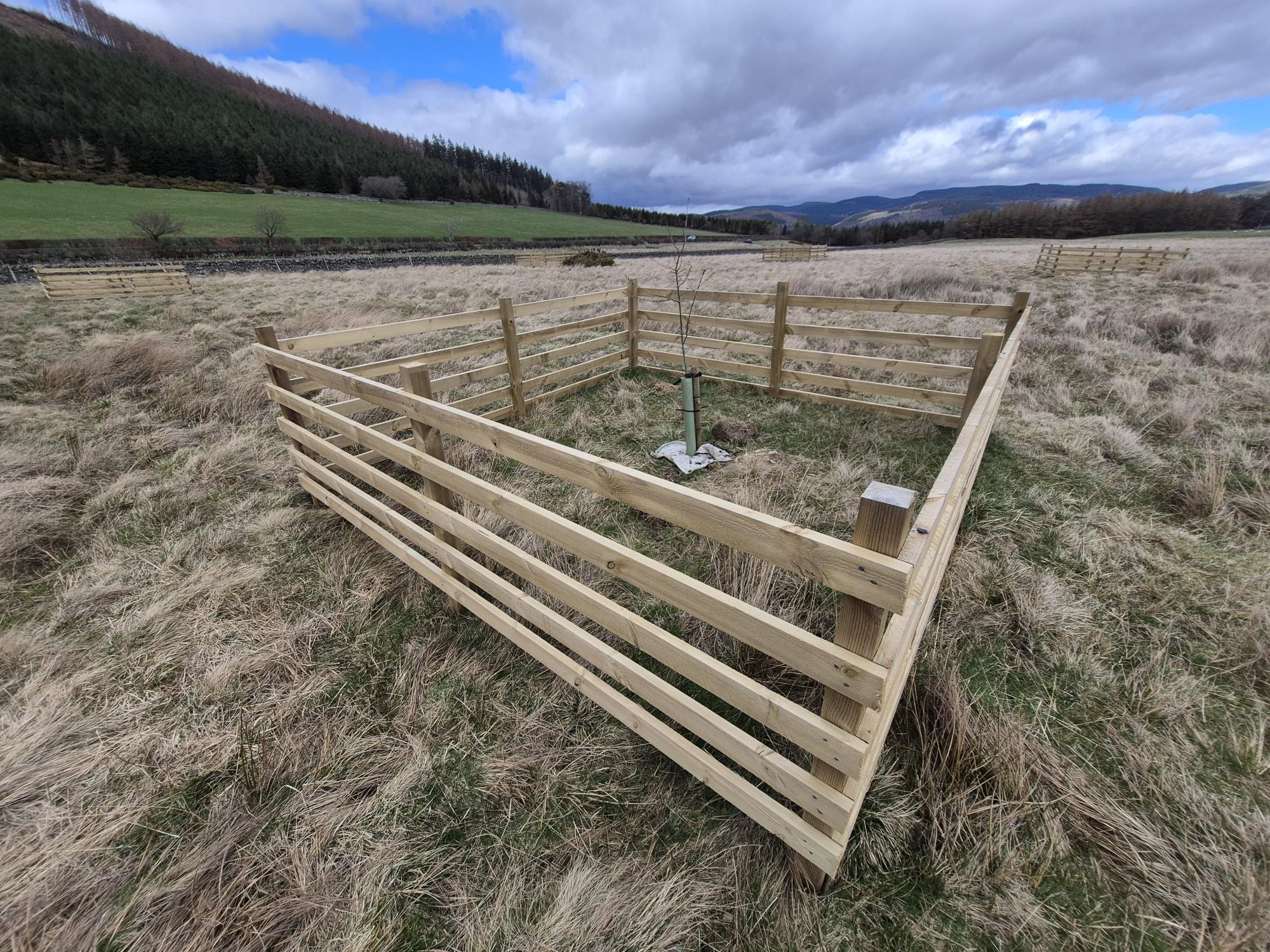
Project Facilitator Derek Robeson, helped the Estate to establish a plan to plant 57 landscape trees with a mix of Oak, Beech, Sycamore, Douglas Fir and Scots Pine.
Tree Planting Summary
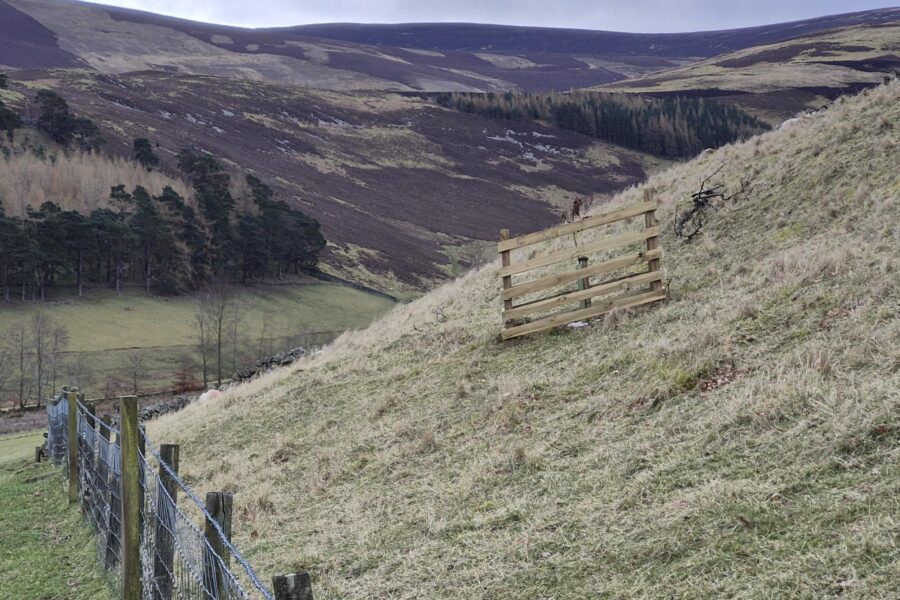
New Broadleaved Parkland Trees planted in permanent pasture fields and Douglas Fir Trees planted on the hillside
TOTAL: 57 LANDSCAPE TREES
Long Term Impact & Benefits
The trees planted at Haystoun will provide a range of colours which will complement the seasonally changing natural colours of the hills beyond. The rough texture of tree bark when seen up close, will make a noticeable contrast with the more delicate foliage and winter silhouettes. Landscape trees in shifting light patterns provide dappled shade and deep shadows that add depth and movement to the overall view. These trees will help preserve the original aim of the 18th Century Designed Landscape movement.
The Designed Landscapes project is funded by National Lottery Heritage Fund Scotland, Fallago Environment Fund and private contributions.