Designed Landscapes – Kailzie Estate
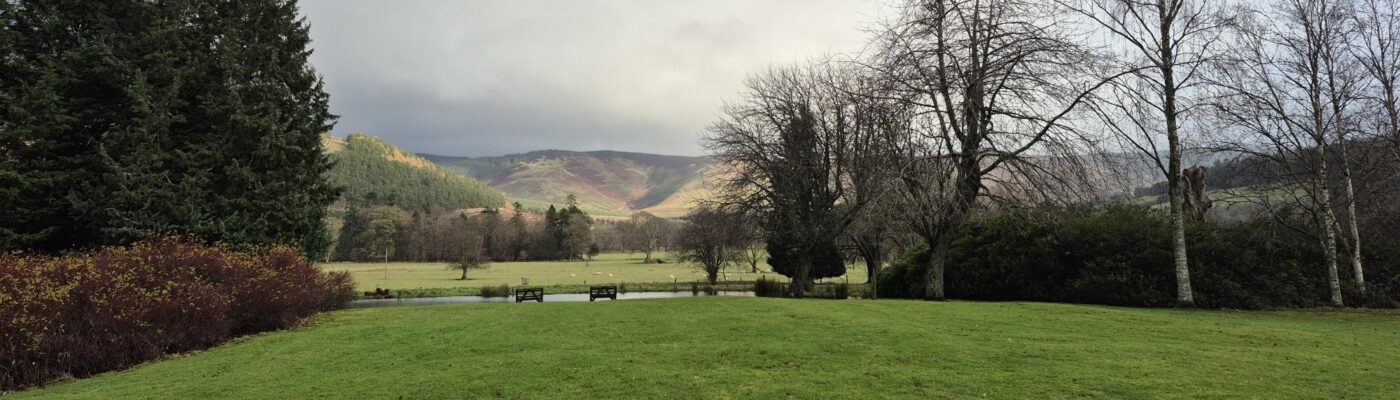

The Kailzie Estate, located just east of Peebles in the Tweed Valley, has witnessed more than seven centuries of history along the River Tweed and is best known for its celebrated gardens, fishing beats and Designed Landscape.
Background
The earliest recorded references to the Estate date from the 13th Century, when the lands were known as Hopkailzie or Hopkeiloc. Over the centuries ownership passed through several prominent Borders families, including the Tweedies, who held the Estate from the 14th century, followed by the Stewarts of Traquair, the Burnetts, Balfours, and Plenderleiths. Each family left its mark on the Estate through building works, landscape improvements and woodland planting.
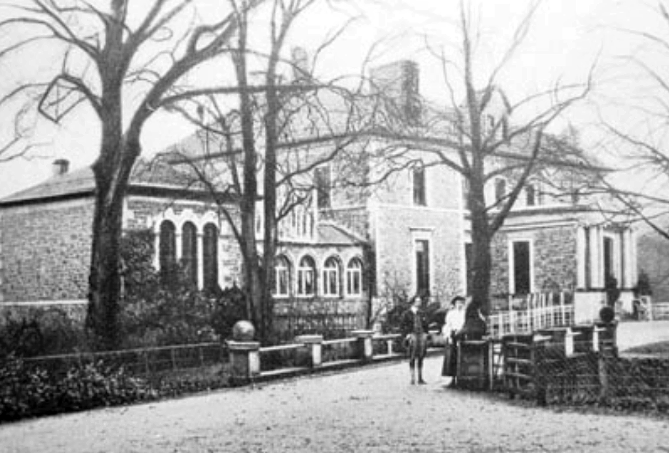
Historical records from the 17th Century refer to the Tower, Fortalice and associated buildings at Kailzie. Around 1700 the Tower was replaced by a more comfortable Country House, reflecting the growing stability of the Borders.
The Estate underwent significant development during the 18th and early 19th centuries. One of its most notable historic features is the Kailzie Larch, planted in 1725 and regarded as one of the oldest surviving European larches in Scotland (and the United Kingdom). Around the same period, parkland tree planting and landscape improvements began to shape the Estate’s character.
The original Kailzie House became a substantial classical mansion during the 19th Century, although the house was unfortunately destroyed by fire in 1962 and subsequently demolished in 1966. Despite the loss of the main house, many estate features survived, including the historic walled garden, arboretum and the 17th century dovecot, which remains an important landmark within the estate.
Today, Kailzie encompasses approx. 220 acres of gardens, woodland and riverside landscape, including a private stretch of the River Tweed. The Estate’s nationally significant arboretum contains a number of champion trees, while the restored gardens attract visitors from across Scotland and beyond.
Tree Planting Activity
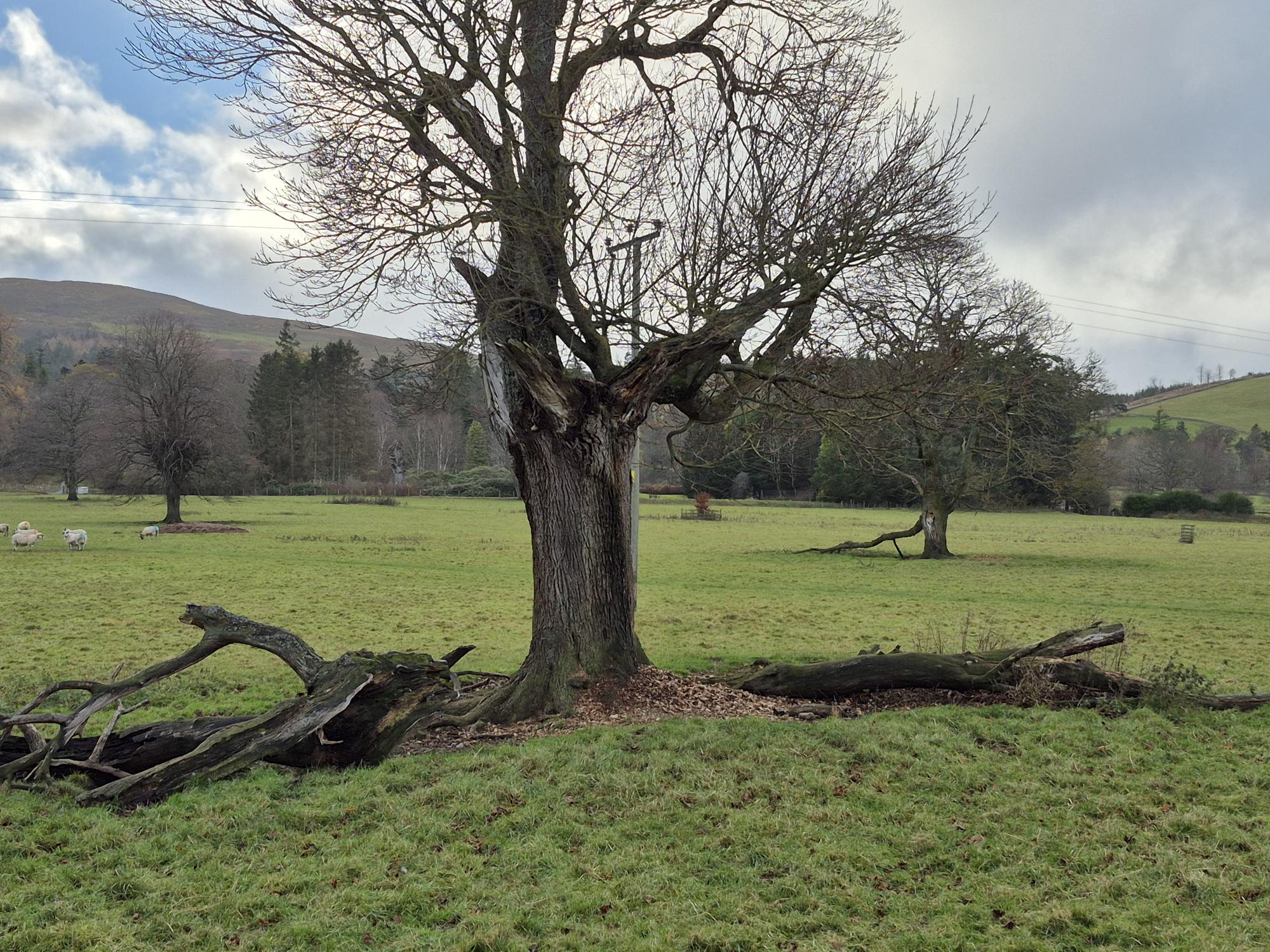
Kailzie constitutes a landscape with high regional significance with many surviving historic features. Much of the woodland structure seen today was established by the mid-19th century, although severe storms in 1968 and 1981 led to the loss of many mature trees and subsequent replanting.
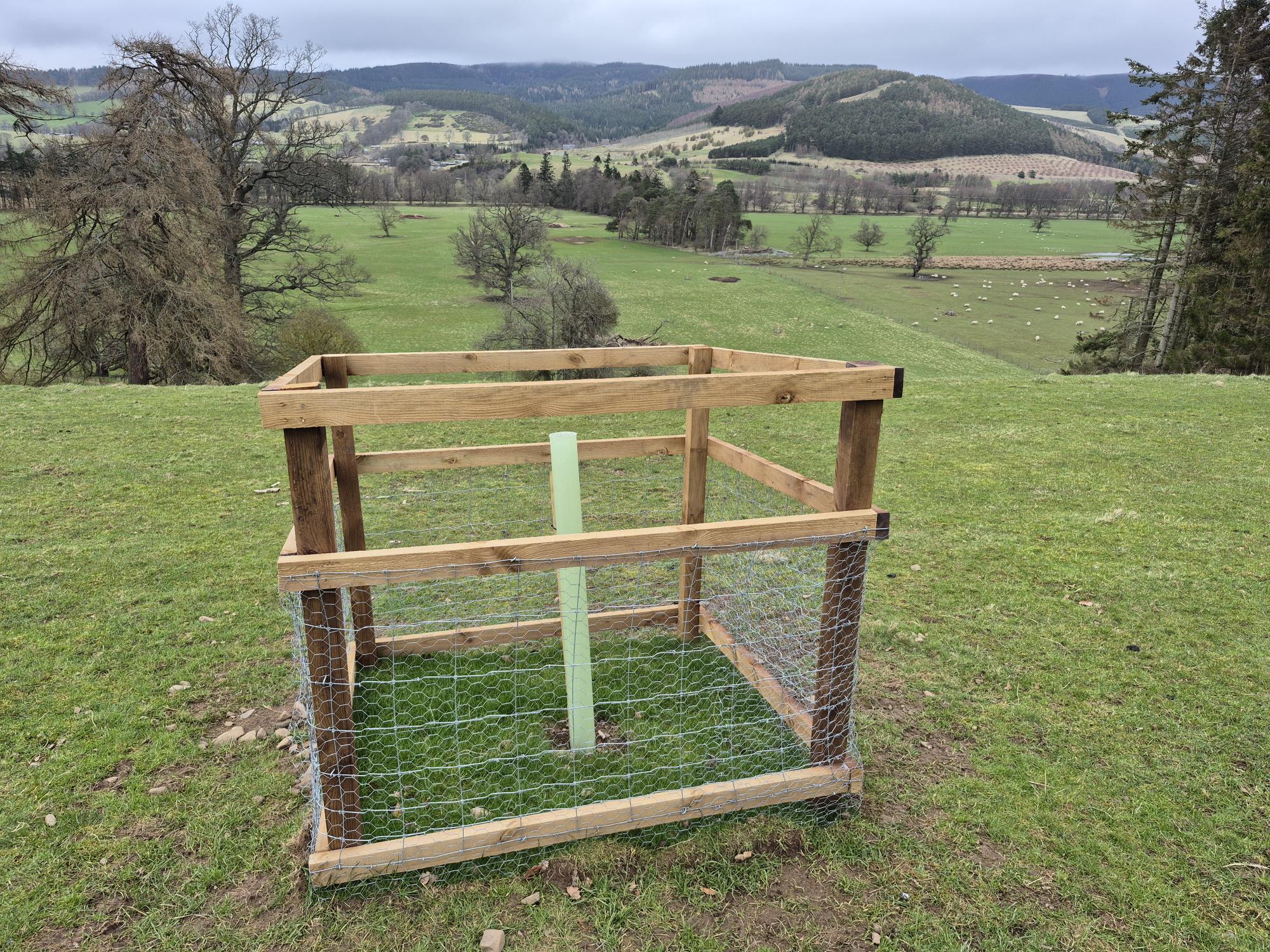
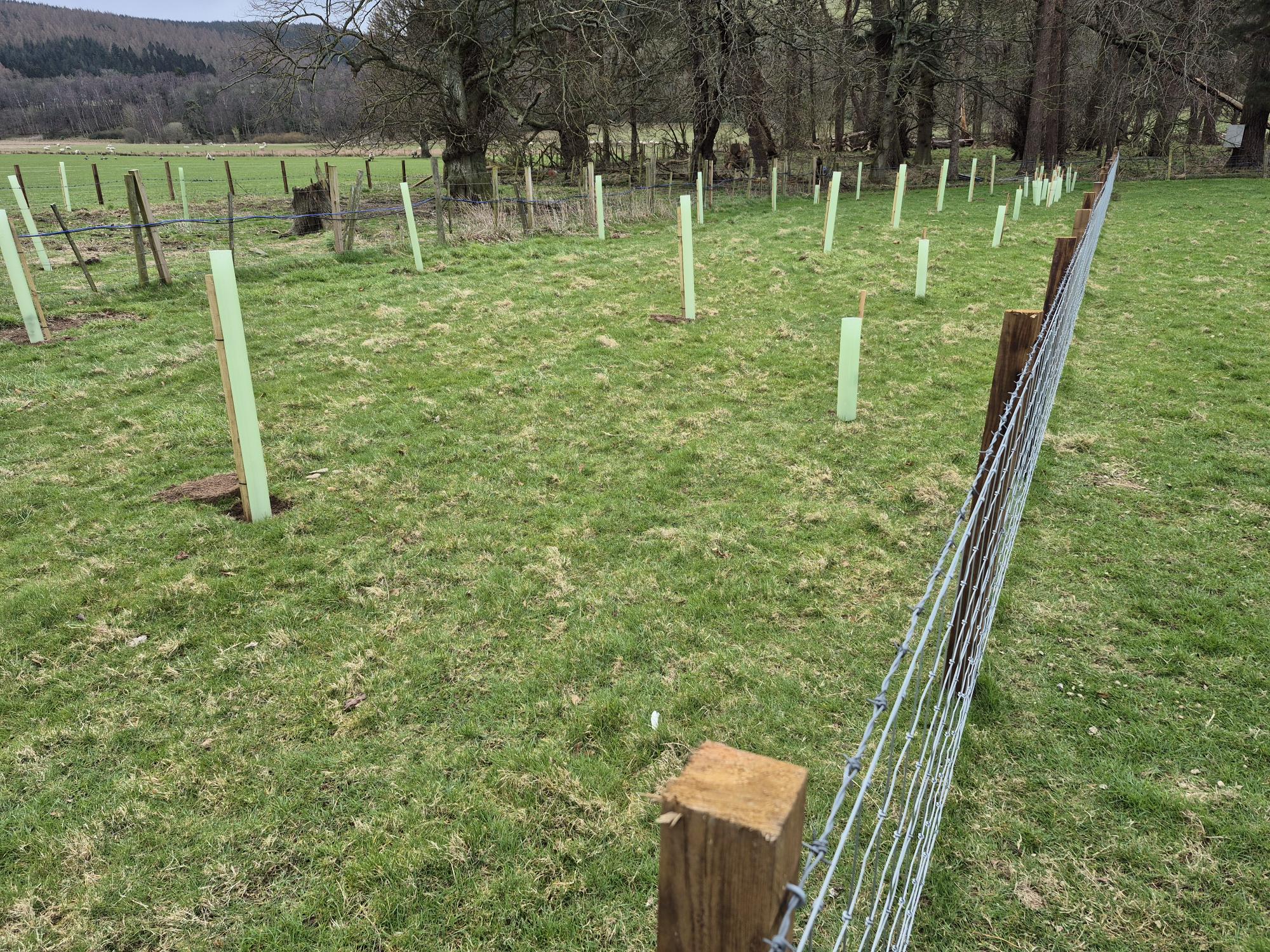
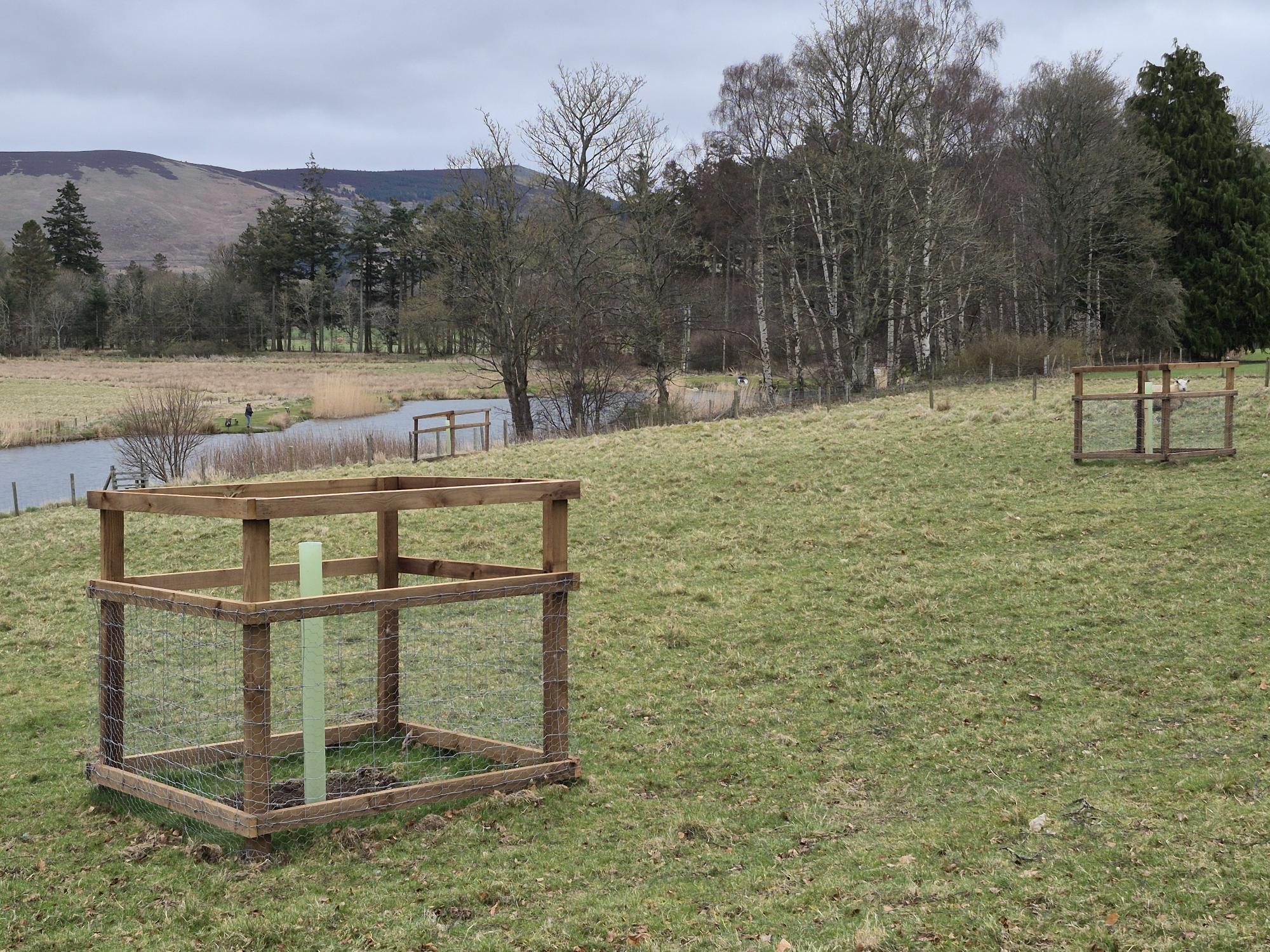
Project Facilitator Derek Robeson, worked with the estate to establish a plan to plant 93 landscape trees including Cherry, Willow, Oak, Sycamore, Green Beech, Aspen and Rowan. These were planted as individual parkland trees across the estate, on the trackside and in a roundel.
Tree Planting Summary
56 individual Parkland trees
32 trees in a roundel and habitat corridor
TOTAL: 93 LANDSCAPE TREES
Long Term Impact & Benefits
Kailzie is a lovely welcoming family Estate. The grounds are much visited by tourists and locals alike. The landscape trees planted through this project will have lasting benefits to people and place. The human wellbeing aspect of trees is well known. Walking amongst old trees can help reduce stress and anxiety. The green canopy acts as a natural restorative mechanism which helps reduce cortisol levels and helps lower blood pressure and mental fatigue. Medical practitioners are increasing prescribing walks in the countryside for those suffering mental illness. It has been shown that communities lacking adequate trees suffer higher rates of respiratory illness and poor mental health.
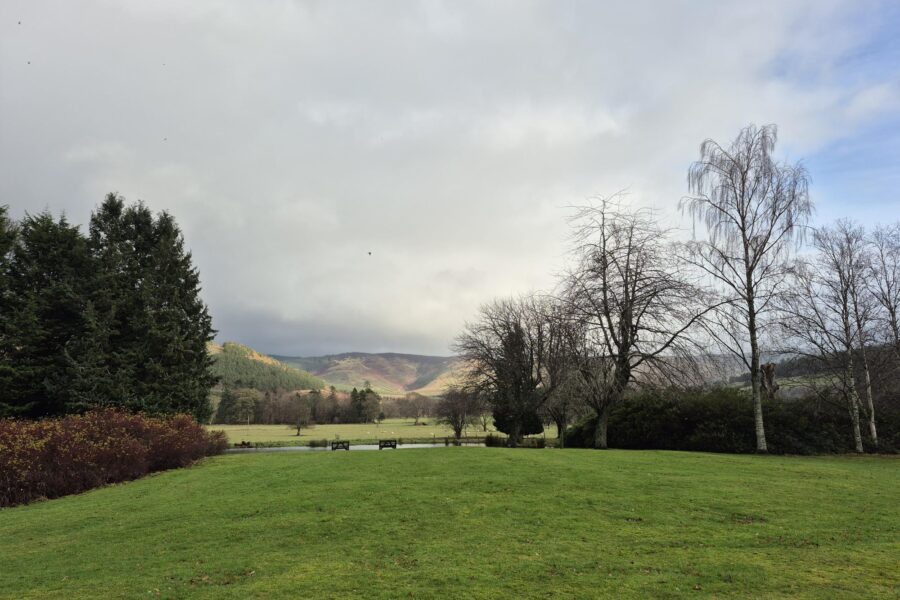
There is a profound ‘Sense of Place’ when you enter the grounds at Kailzie. It is there to be enjoyed.
The Designed Landscapes project is funded by National Lottery Heritage Fund Scotland, Fallago Environment Fund and private contributions.