Designed Landscapes – Milne Graden
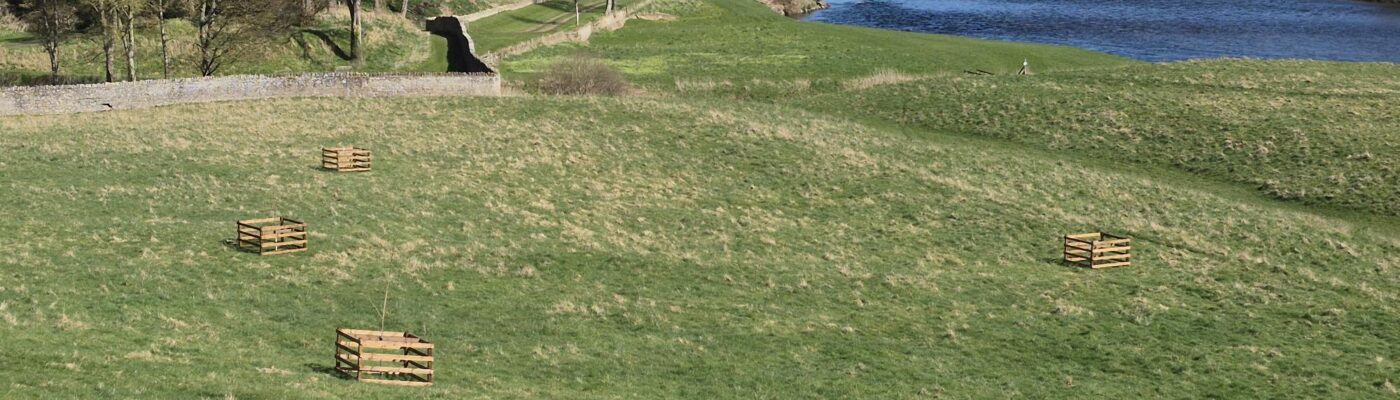

Milne Graden Estate, situated just northeast of Coldstream on the River Tweed, is a notable example of Regency-era estate development in the Borders.
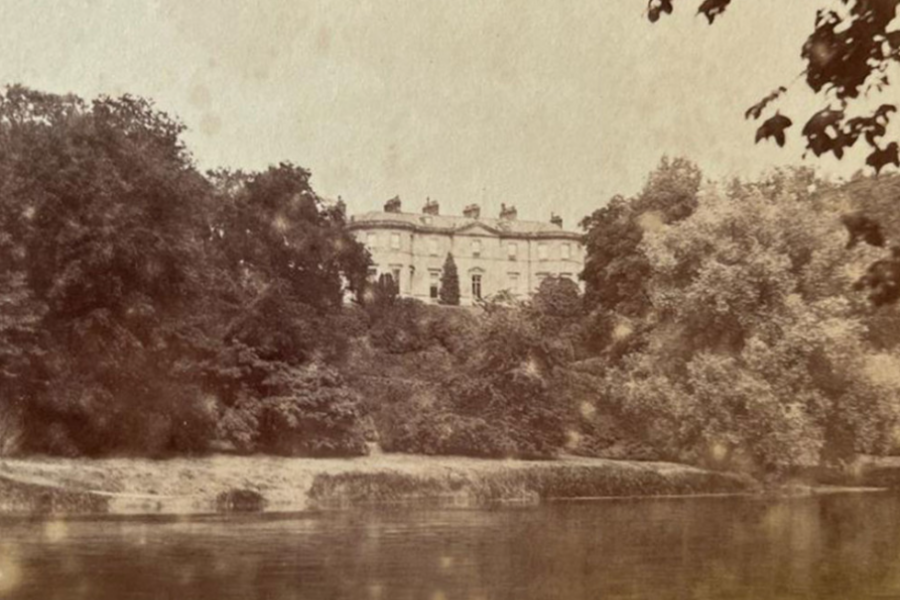
Background
Milne Graden first appears on Blaeu (1654) as ‘Gradenn’ with a few trees around it. It was later renamed Kersfield, in the 18th Century, with a walled garden and encircling plantation, with two long rectangular parks to the north. In 1819, Admiral Sir David Milne purchased it and the adjoining woods of Snook, for £35,000, recognising its potential as both a salmon fishingretreat and a gentleman’s residence.
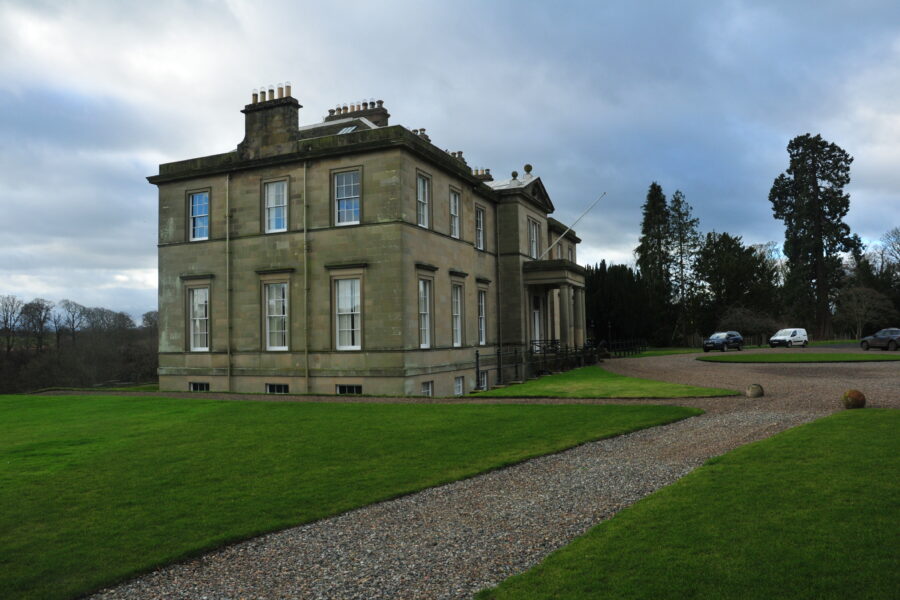
In 1822, Milne commissioned prominent architect James Gillespie Graham to build Milne Graden House. The foundation stone was laid 3 April 1822, and the Milne’s moved in late 1823. The resulting mansion is a classically inspired, two-storey ashlar building with a basement, pedimented facades, and fine sash windows, representing early 19th-century Regency architectural taste.
Milne also added estate features such as stables, a lodge, and decorative iron gates. His son, David Milne‑Home, inherited Milne Graden and further linked the estate to the nearby Paxton House through marriage, cementing familial and territorial unity.
By 1840, the house was renamed Milne Graden with large Oak, Beech and Elm trees on the Estate. Over the past two centuries, (and until only very recently) Milne Graden remained in continuous occupation by the Milne‑Home family.
Tree Planting Activity
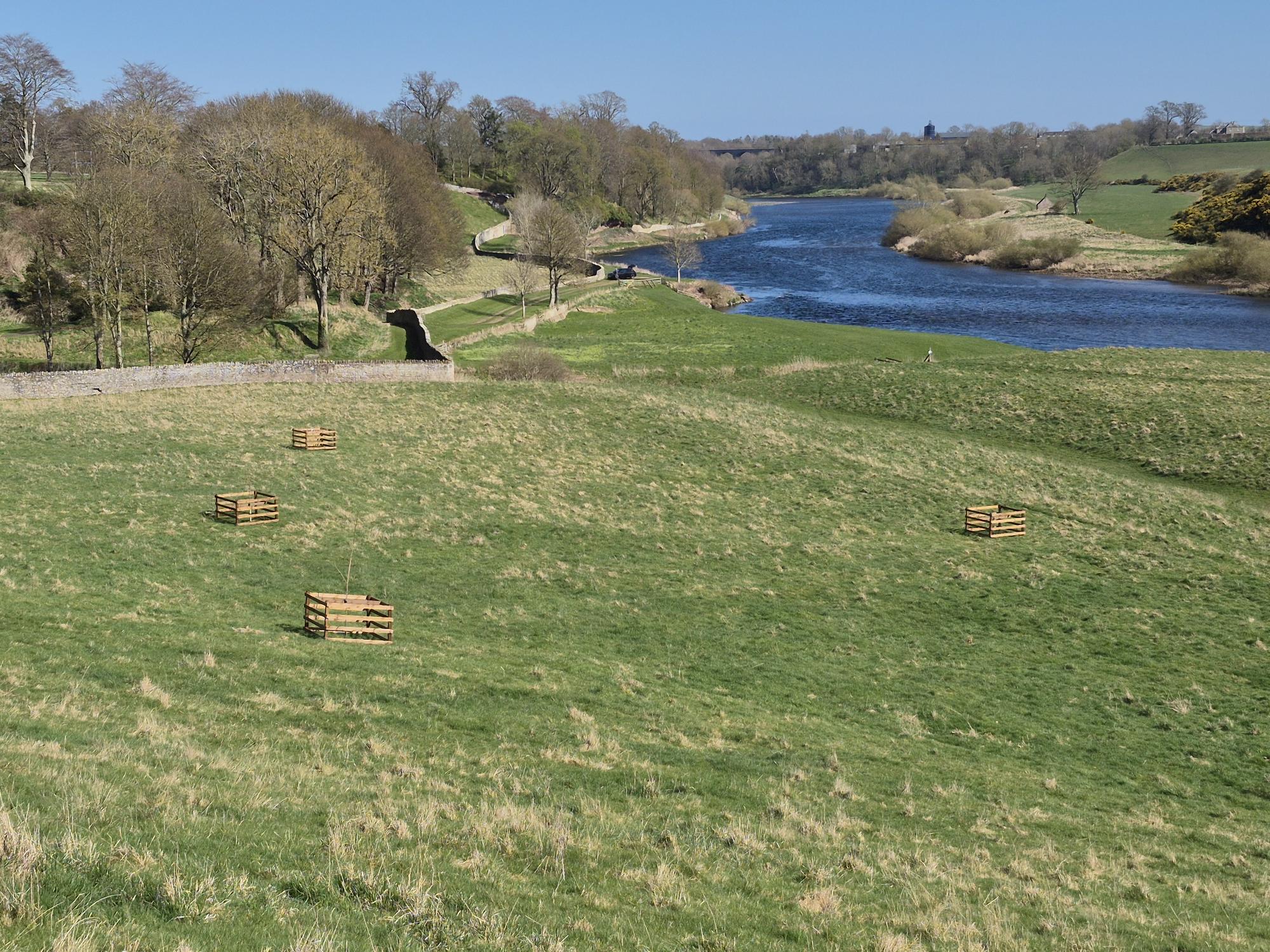
Milne Graden is a moderately sized designed landscape that blends formal elements with a more naturalistic setting. Unlike estates such as Ladykirk, it is defined by low walls and half-dykes rather than substantial boundary walls. To the north, the rectangular parkland areas show evidence of earlier efforts at replanting, while a long avenue of trees extends westward behind the wrought-iron entrance gates. On the western side of the estate, mixed woodland creates a softer, informal character. To the south, the landscape opens out into a naturalistic riverside setting, with views across the River Tweed, at the point where the Graden Burn joins it.
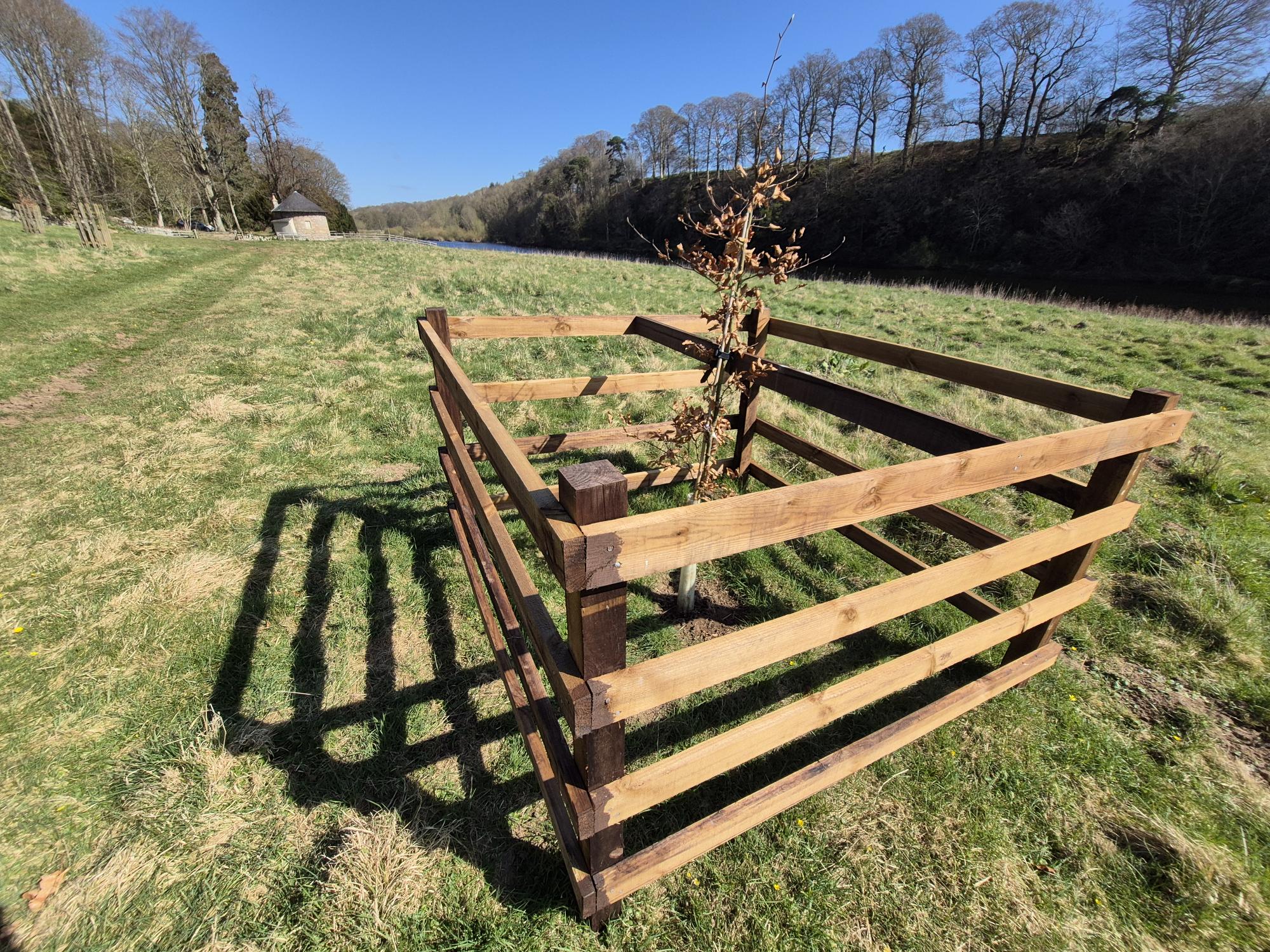
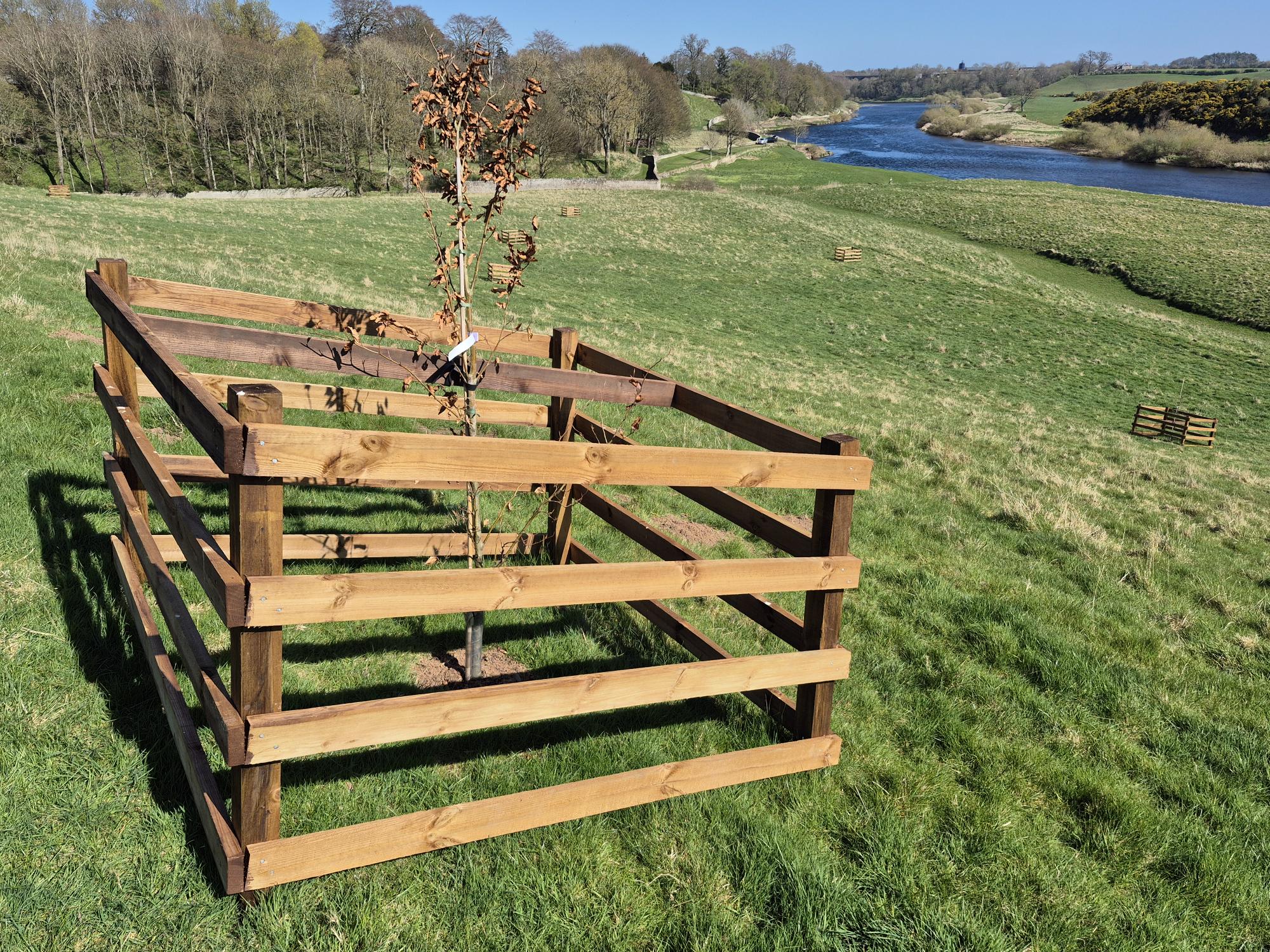
As part of the Designed Landscapes project, Derek Robeson, working with Milne Graden Estate, surveyed the parkland and developed plans to enhance the parkland tree planting. 30 parkland trees were planted in wooden post and rail tree boxes with rabbit netting over the base to protect and encourage tree growth. Specimen trees included Oak, Green Beech, Lime, Norway Maple and Horse Chestnut.
Tree Planting Summary
30 parkland trees
Long Term Impact & Benefits
Milne Graden occupies a dramatic setting on the north bank of the River Tweed. Extensive refurbishment is taking place within the house and grounds. The new parkland tree planting programme enhances the conservation works already undertaken. Apart from their highly visual and aesthetic appeal, parkland trees deliver multiple benefits such as Carbon sequestration. Large open growth trees with large crowns, can be very effective carbon sinks. Mature trees stabilise the soil, help prevent erosion and provide shade and shelter for grazing livestock. Trees in such settings are living through shifting climates and are increasingly susceptible to prolonged droughts and pest infestations. Most of the Borders veteran trees are to be found on old estates. Because of their age, ancient parkland trees contain genetic material dating back centuries, acting as vital repositories for local provenance.
The Designed Landscapes project is funded by National Lottery Heritage Fund Scotland, Fallago Environment Fund and private contributions.