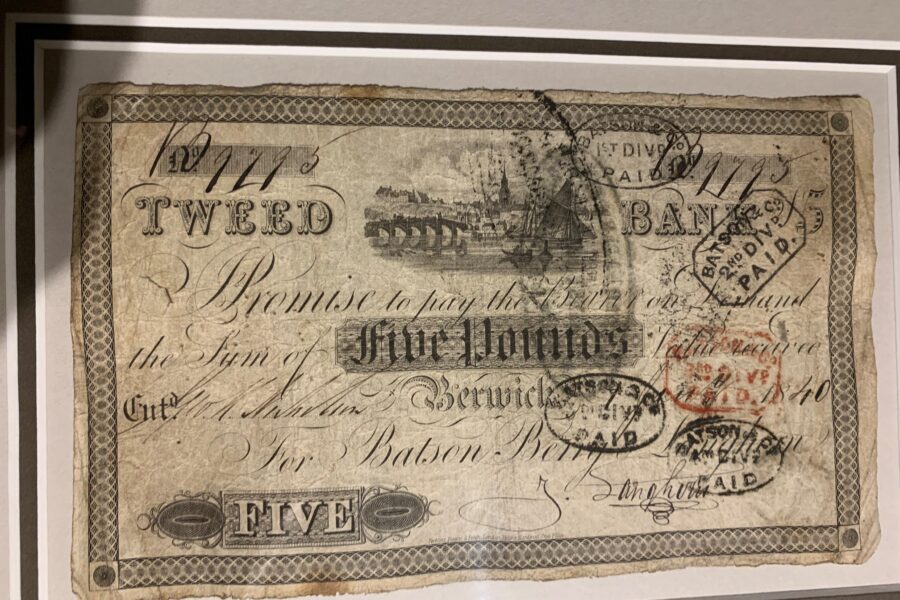
This is a Tweed five pound note!
Until the middle of the 19th century, privately owned banks in Great Britain and Ireland were free to issue their own banknotes. Paper currency issued by a wide range of provincial and town banking companies, including the Tweed Bank of Berwick, could be used for payments.
After the Bank Charter Act of 1844, exclusive powers were given to the central Bank of England. No new banks could issue notes, and the last private English banknotes were issued by a long-established bank in Somerset in 1921. However, some parts of the 1844 Act only applied to England and Wales. To this day, three retail banks in Scotland retain the right to issue their own notes.
This Tweed banknote belongs to David Welsh, a local historian and River Tweed enthusiast. He is keen to encourage discussion on the communities of the Tweed and their impact around the world. If you have any more information on this story, please get in touch with us at info@destinationtweed.org so we can add to the story of the river.
Find out more about Pound Sterling Banknotes here and see more examples of Tweed banknotes in the British Museum collection here.