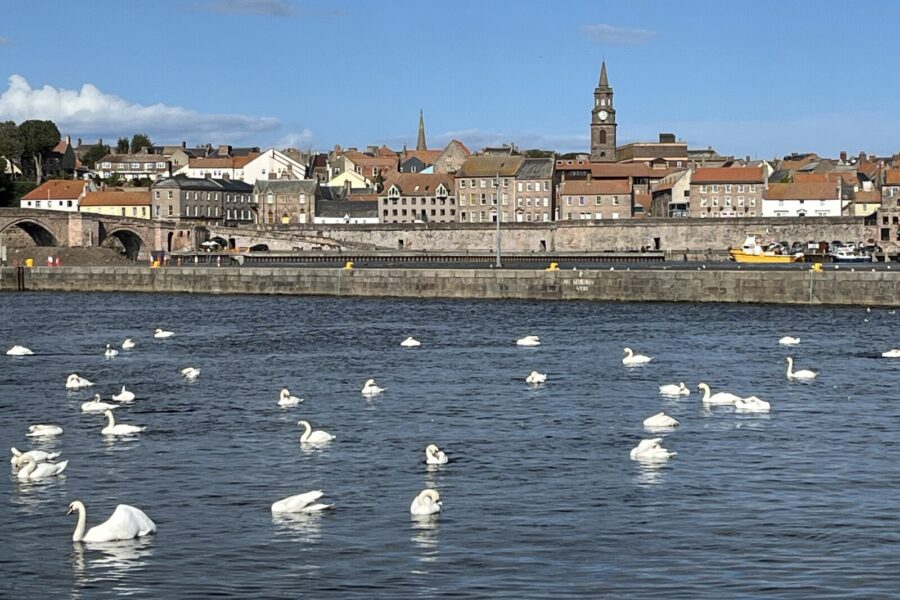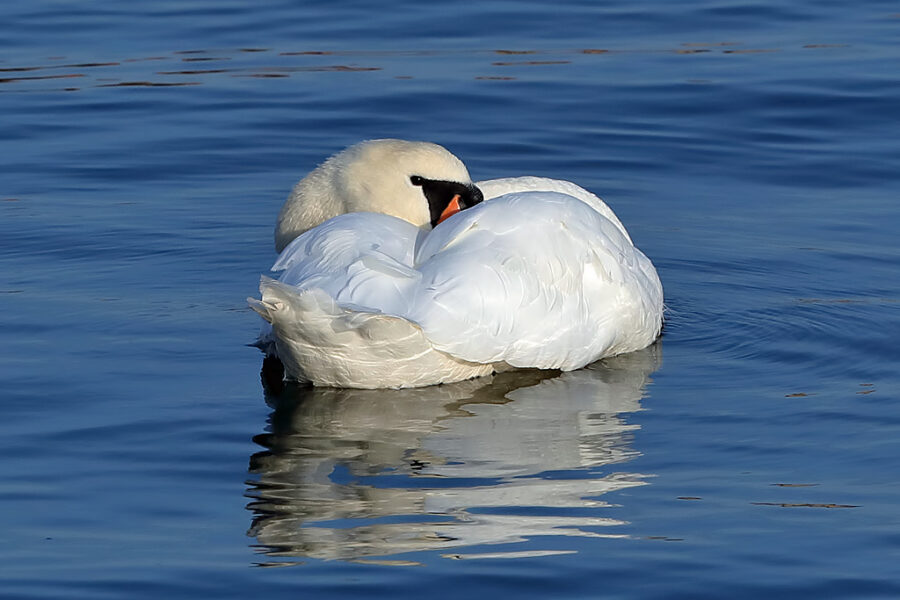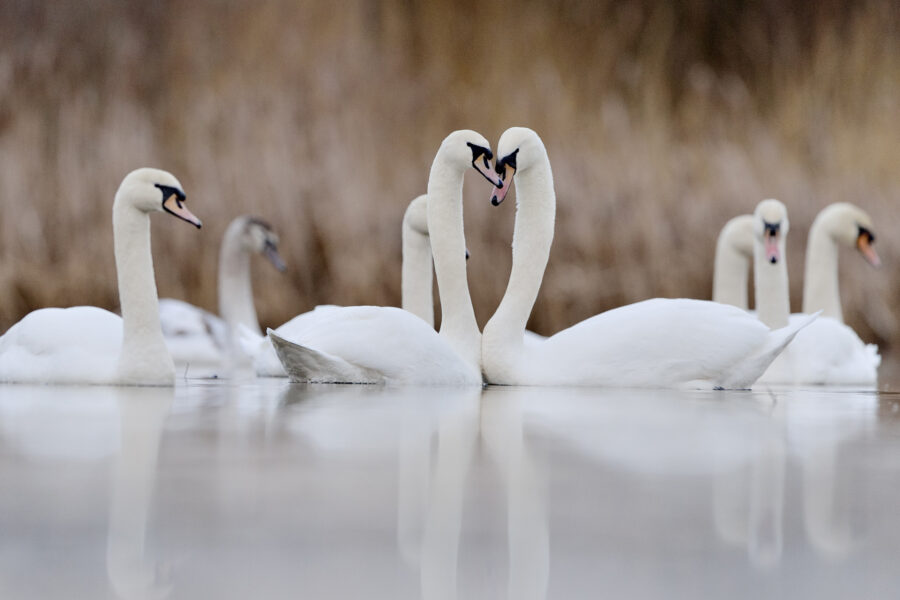
Historically, Mute swans were recognised as ‘royal birds’ and many were bred and kept in captivity either as status symbols or for food. Now no longer eaten or held in ‘swanneries’, our native Mute swans are found across the Tweed in all available habitats. For many years, the estuary of the Tweed at Berwick has been an important site for Mute swans. Indeed, in the past there have been counts of over 800 birds there in Autumn, though this figure has much reduced in the last 20 years. This is partly due to improvements to water quality, following major investment by Northumbrian Water to improve treatment of waste water immediately upstream, and partly due to the cessation of the disposal of waste grains into the dock from the old maltings – on which the swans used to feed. These birds are part of the wider Tweed population, migrating locally to Berwick to moult each autumn, whilst nesting pairs are to be found in many lochs and rivers across Tweed.
The estuary was attractive primarily as a safe site with ample food where swans could gather to undergo their annual moult, as swans become flightless during this period of some 3-4 weeks. More widely, the banning of the use of lead weights in angling and changes in agricultural practices, notably the introduction of autumn sown wheat and, especially oil seed rape, had led to increases in their population across the whole of the Tweed. However, since 2021 there has been a marked decline country-wide in Mute swan populations which have been very hard hit by avian flu, with winter numbers nationally now at their lowest levels since the late 1990s.
Read more about the swans of Berwick here.
Image credit below:
- Mute Swans in the Docks at Berwick upon… © Jennifer Petrie :: Geograph Britain and Ireland (Photo © Jennifer Petrie (cc-by-sa/2.0))
- A resting mute swan at… © Walter Baxter cc-by-sa/2.0 :: Geograph Britain and Ireland (Photo © Walter Baxter (cc-by-sa/2.0)