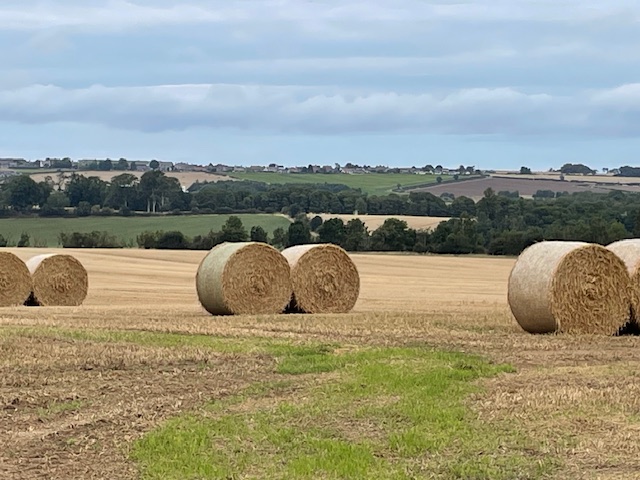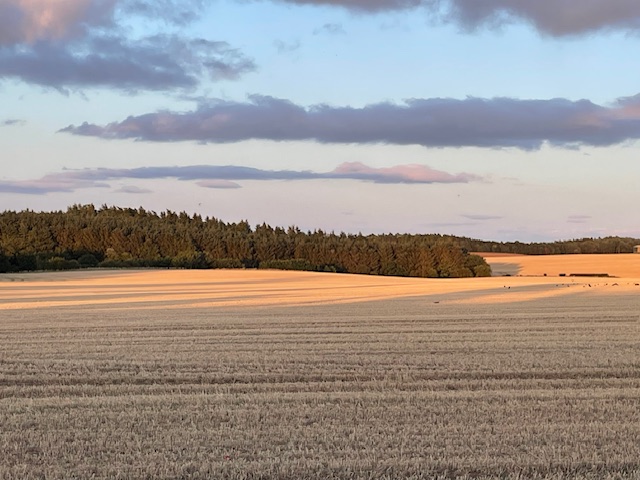
We arrived in Berwickshire, in the wide valley of the River Tweed and its tributary the Whiteadder, for our stay in Allanton. All around were huge combines, tractors and trailers cutting, winnowing, baling and carrying off barley and specialist wheat.
This is a land of big estates and large farms. The population is much sparser now than it would be in the pre-machine agrarian age. It’s extraordinary that great figures of the Scots enlightenment were born and grew up right here, including moral philosopher David Hume, geologist James Hutton and botanist and tea plant populariser, Robert Fortune.
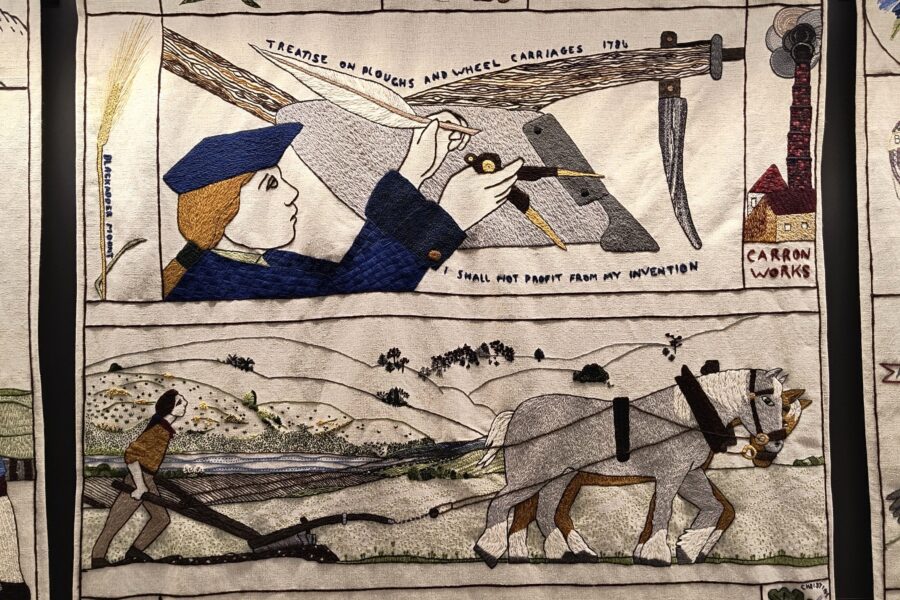
Most touching is the story of the least known of these worthies and the revolutionary device he freely gifted to agriculture, which helped fashion the arable landscape around us today. In the 1770’s local engineer James Small used mathematics in an Allanton smithy to produce his improvements on the ‘Rotherham’ cast iron swing plough. Previously many men were needed to work teams of oxen to pull a flat wooden plough, while Small’s only required a pair of shire horses and a single ploughman. Small even demonstrated his invention to ‘Farmer’ George III. His ‘Scots Plough’ was rapidly copied and developed by others, as he did not wish to profit from his invention by taking out a patent, and Small sadly died in 1793 of overwork and poverty.
Modern-day embroiders have honoured his memory, as James and the plough feature in a panel in the wonderful Great Tapestry of Scotland in Galashiels. Read more here.