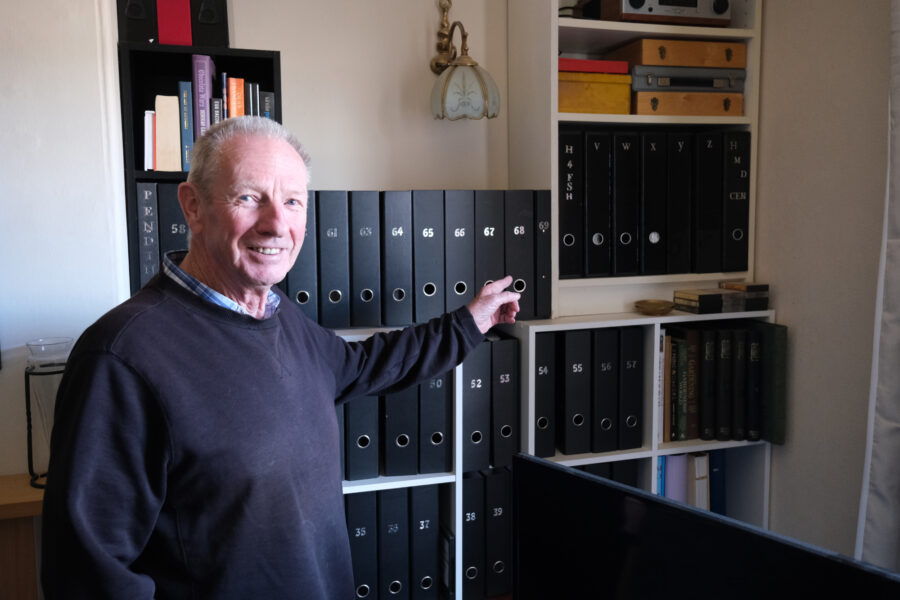
Ralph Holmes has a assembled a unique history of salmon net fishing on the Tweed. As part of the Tweed Stories project, oral historian, Harry Henderson interviewed Ralph about his family’s fish merchant business, Ralph Holmes & Sons, founded in Berwick the mid-1800s. Ralph explains the company’s relationship with the net fishermen on the River Tweed.
Below is an extract from the interview. In the video he explains some of the techniques and methods employed.
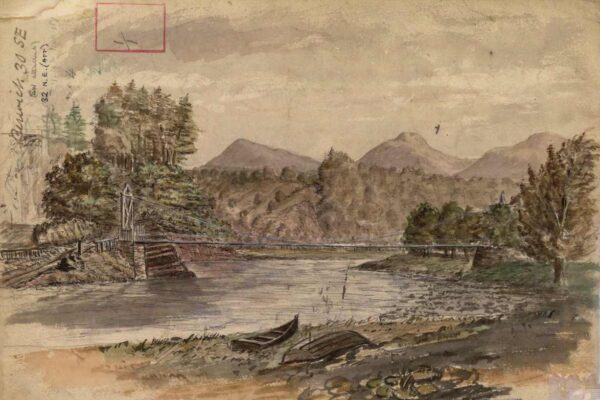
There were two businesses in Berwick, the Berwick Salmon Company that concentrated at the mouth of the river and us, Holmes and Sons. We had other fisheries including one at Scotch New Water at the Chain Bridge that was divided into 16 shares. Somebody would have three sixteenths; somebody would have two sixteenths. It was the same at Horncliffe and other fisheries. There were in excess of 100 netting stations that I know of on the river, That’s what supplied an awful lot of jobs over the years.
The arrangement was that we collected the fish and marketed them and we paid the fishermen a wage every week, no matter how much fish they’d caught. So if they’d only caught, say, four salmon, their wives were going to get upset that he was a salmon fisherman and he wasn’t making any money. At the end of the season, we had a share out. So half the value of the fish went to the fishermen.
If you’re going back to the 1800s, and 1900s, it’s like a wave. You get good years, really good years, then poor years, then bad years and so on. Depends on the weather, it depends on the rain, and it also depends on the salmon – when they decide to swim up the river. Most of the fish went down to North Shields and our fish went to all the Midland markets. Before the First World War, hell of a lot of fish out of Berwick went to Paris and Boulogne. And in my time in the 70s we sent a lot of fish, believe it or not, to Russia.