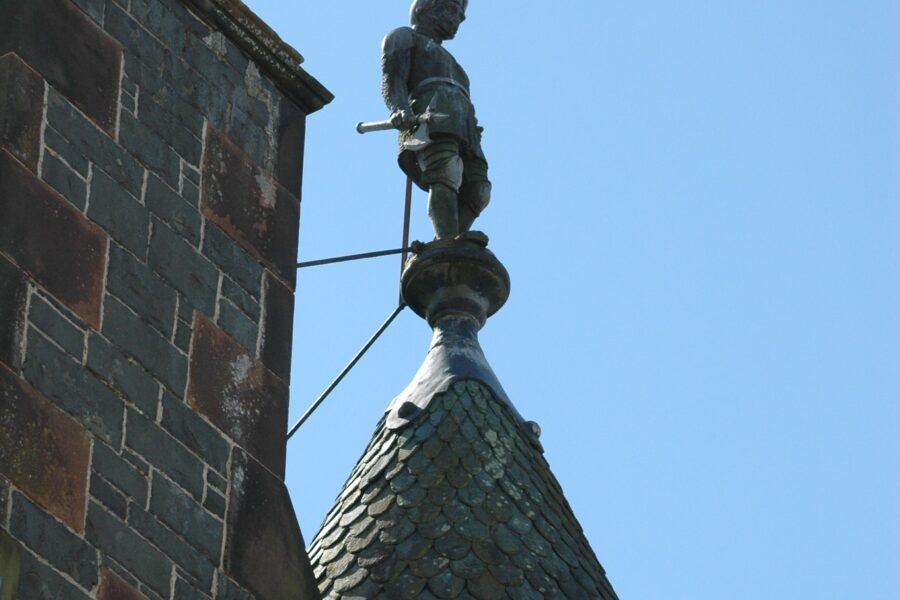
When you’re in Well Street, in Moffat, don’t forget to pay your respects to King Robert the Bruce.
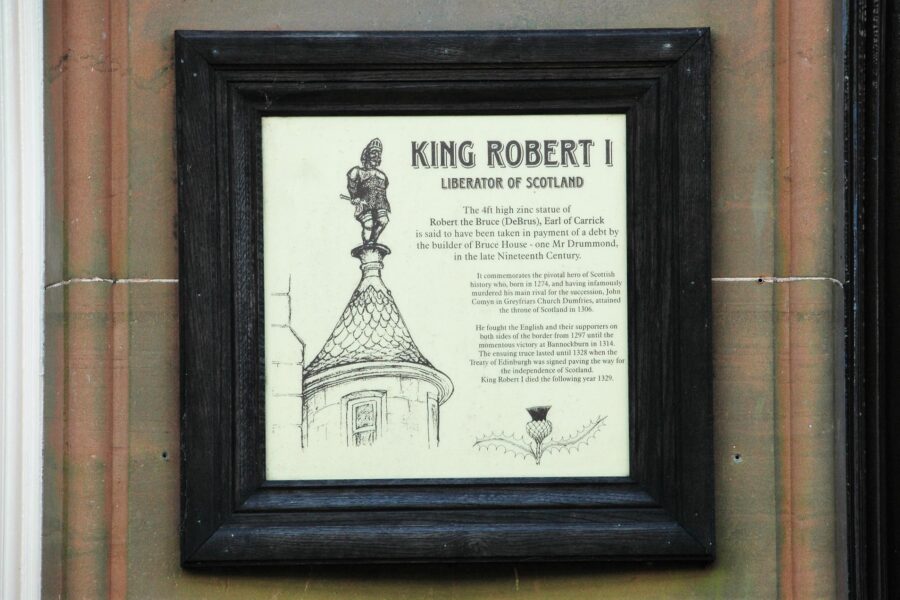
Robert I, born in 1274, was King of Scots from 1306. He led Scotland against England during the First War of Scottish Independence and successfully fought for Scotland to be an independent kingdom.
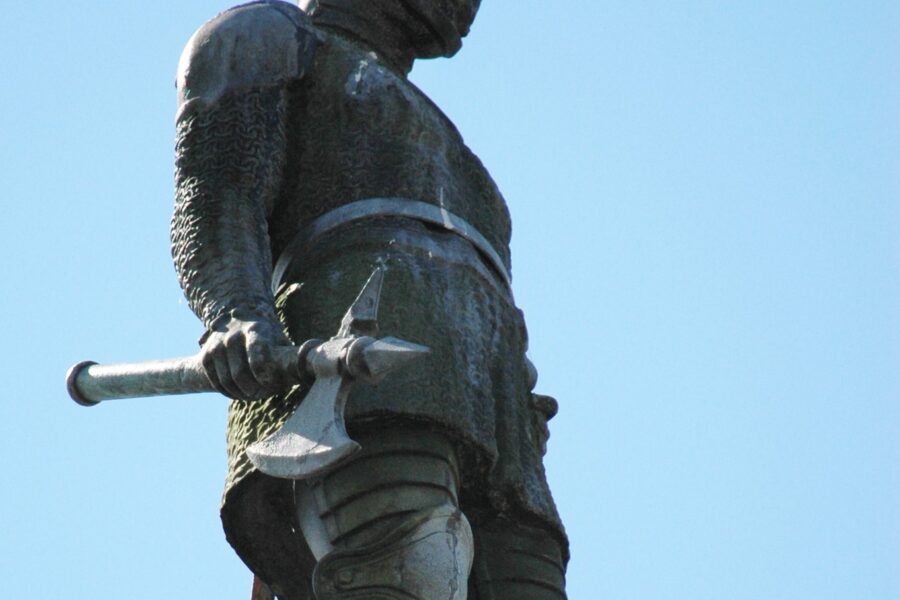
The statue above Well Street has Bruce holding an axe. This is because, at the battle of Bannockburn in 1314, an English knight, Sir Henry de Bohun, saw Bruce riding alone in front of his line. Seeking fame and glory, the English knight spurred on his great war horse, thinking that Bruce, on his little pony, would have no chance against him. But Bruce waited calmly and, when de Bohun was almost upon him, he suddenly turned his pony aside, rose in his stirrups, and brought his battle-axe crashing down on the knight’s head. The steel helmet was shattered by the mighty blow, de Bohun fell to the ground dead, and his frightened horse dashed riderless away. The Scots cheered, but all Bruce would say was ‘I have broken my axe, I have broken my good axe.’ He then led the Scots in a famous victory over a much larger English army.
Robert died in 1392 and, as he had requested, his heart was taken on a tour of the Holy Land, presented before God at Jerusalem’s Church of the Holy Sepulchre and then buried at Melrose Abbey, which you will see on your journey.