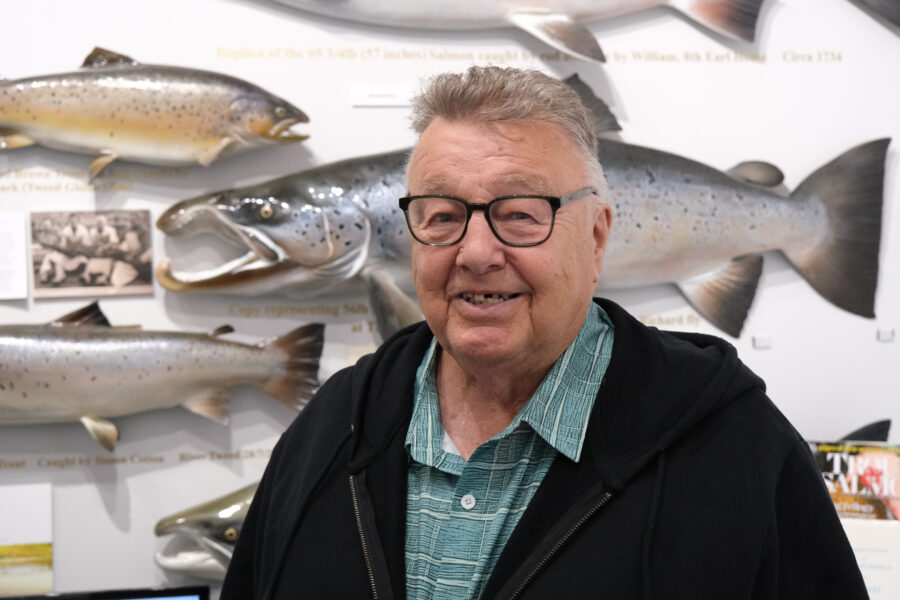
Extract from an interview with Maurice Kukk who volunteers three days a week at the River Tweed Salmon Fishing Museum in Kelso. As part of the Tweed Stories project, oral historian, Harry Henderson recorded Maurice at the museum.
Maurice was born in Coldstream in the early 1950s and brought up on a farm just over the Tweed at Wark Common in North Northumberland. No running water in the house, pump outside, toilet at the top of the garden. He remembers his younger years by the river.
When I was eight- or nine-year-old, we would be down playing by the river. We used to go in the summer, swimming. There was a weir. When we were younger, we would take bars of soap down because we could have a bath. Honestly, because we didn’t have running water in the houses. The school was this side of the remains of the castle tower and we always had our games in the field which was a football field. Wark had two football teams, but there was a big problem because they would only have a couple of footballs and if they went into the river and we couldn’t get them back out the game was abandoned.
We didn’t fish the river, we fished all the little streams that run into it, because the river was a bit big for us. We learned how to gurdle: tickle fish. Then we got another method, make a landing net, with a hoop on it. You frightened the fish that went under the bank and you prodded from the top of the bank and the fish turned, ran into the net – home with some fish. And when the river had flooded and it went back, it always left pools full of fish and we’d be in there chasing the fish and running about. I remember taking home a twenty-five pound salmon.
There’re no small burns now, they’ve all dried up or they’re grown over. If you go to see the Duddo, which is at Cornhill, it’s completely grown over. Fish can’t get up it now.