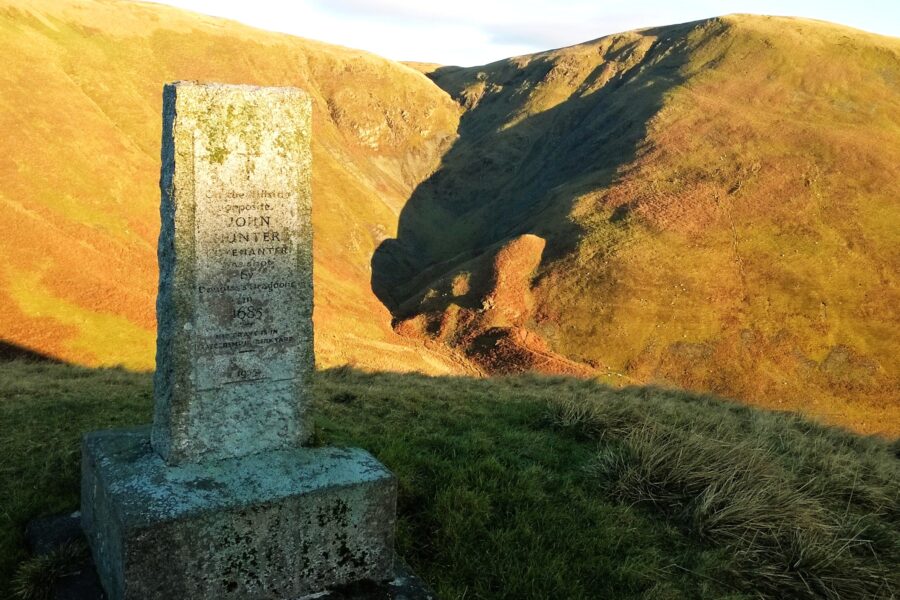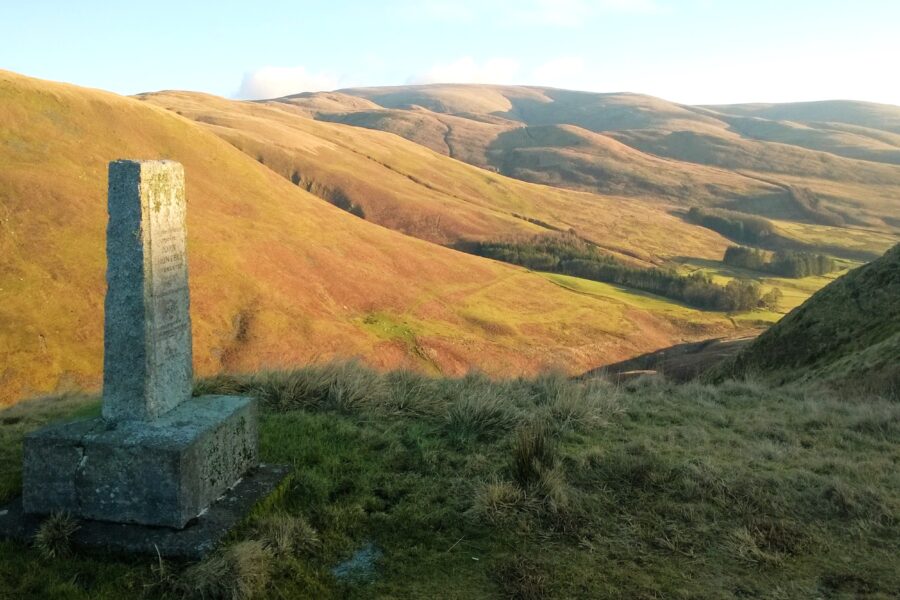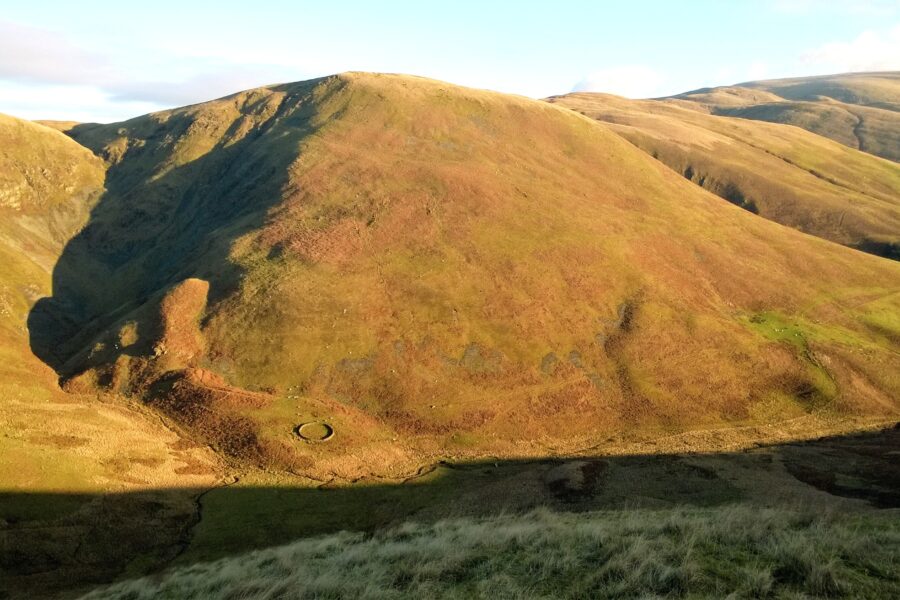
The Devil’s Beef Tub is a dramatic, 150 metre deep, hollow, about 5 miles north of Moffat on the A701. It is formed by four hills: Great Hill, Peat Knowe, Annanhead Hill and Ericstane Hill, and is one of the two main sources of the River Annan.
The Beef Tub was used by the Border Reivers, particularly the local Johnstone family (known by their enemies as devils), to hide cattle stolen from other families.
The reivers emerged between 1350 and 1450, operating along both sides of the Anglo-Scottish border. They were infamous for raiding, blood feuds, demanding protection money and taking hostages. Today, whenever we use the word bereaved, we remember them. Eventually, when James VI of Scotland became James I of England in 1603, he moved hard against them, dealing out stern justice. Although the Border Reivers vanished following James’ suppression, violence, feuding and organised criminal activity persisted in parts of the borderlands into the early reign of George III, in the 1750s.
A monument to John Hunter stands on the rim of the Beef Tub. Hunter was a Covenanter, a 17th-century Scottish religious and political movement, who supported a Presbyterian Church of Scotland. John Graham of Claverhouse, known as Bloody Clavers, had the task of suppressing the Covenanters. A patrol of his dragoons found Hunter hiding in the Beef Tub and, when he tried to escape by running up the steep side of the Beef Tub, they shot him dead. He is buried in Tweedsmuir kirkyard.