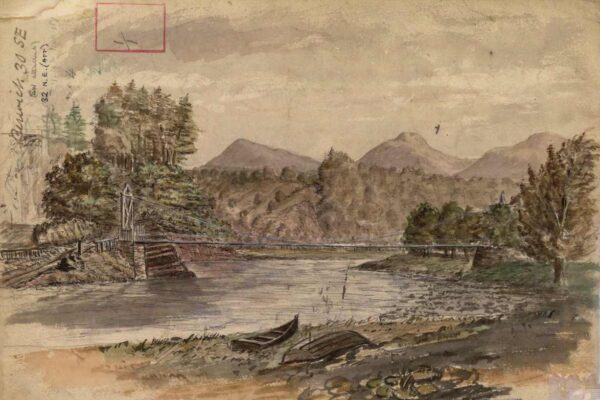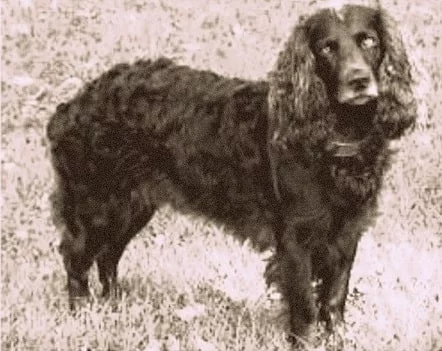
Among Britain’s many working dogs, few have a history as intriguing – and as short‑lived – as the Tweed Water Spaniel. This sturdy, tawny‑coated dog lived along the River Tweed and the nearby coastline, where salmon nets, cold surf, and rocky shores shaped it into a powerful and reliable water worker.
One of the earliest descriptions comes from Stanley O’Neil, an authority on Flat‑coated Retrievers. In a letter, he recalled watching fishermen haul salmon while a wavy‑coated dog worked beside them. The men told him it was a Tweed Water Spaniel, a breed believed to have developed from crosses between local water dogs and the now‑extinct St John’s Water Dog. O’Neil noted that the dog looked more like a retriever than a spaniel, its coat bleached by salt and spray—perfectly suited to the harsh coastal environment.
Earlier still, in 1816, writer Richard Lawrence observed that water dogs along the Tweed had gained strength through crosses with Newfoundland dogs, making them capable of the “arduous difficulties and diurnal perils” of coastal work. These were dogs built for endurance, cold water, and rugged terrain.
Yet the Tweed Water Spaniel’s greatest contribution ultimately led to its disappearance. In 1865, Lord Tweedmouth bred a yellow retriever named Nous to Belle, a Tweed Water Spaniel. Their pups became the foundation of the Golden Retriever. As the new breed flourished, the old one faded. Without dedicated preservation, the Tweed Water Spaniel vanished by the late 19th century—but its legacy endures every time a Golden Retriever splashes joyfully into water, echoing the rugged river dog that helped shape it.