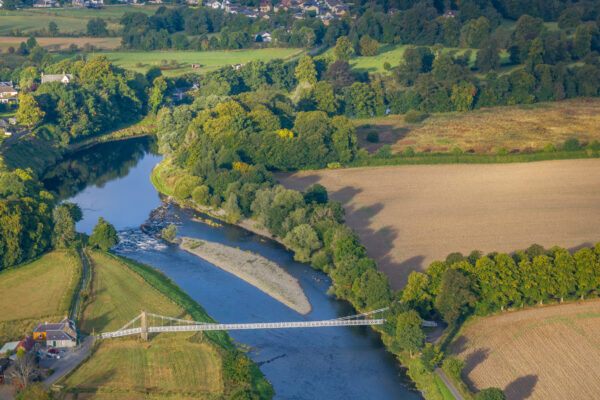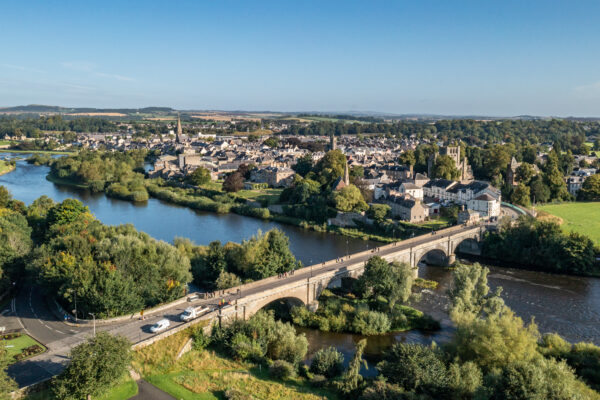
Once upon a time (and until the Division of Wark Common in 1799) the Anglo-Scottish Border between the parishes of Sprouston in Scotland and Carham in England was one of those uncertain places – spoken of at the time as ‘Threap’, ‘Batable’ or ‘Debatable’ lands.
The tenants of Sprouston, Redden and Hadden in Scotland, and those of Carham and Wark in England, ‘debated’ access to the ground which lay between them from at least the 12th century. The ‘debate’ at times became heated and even violent, involving the movement of sheep and cattle from one country and its legal jurisdiction to the other – often during the hours of darkness by people who were not necessarily their owners.
The plain fact of the distinctly different Scottish and English legal jurisdictions – with their different laws, rules, regulations, processes and procedures – led inevitably to a profitable trade in illicit goods. And at least part of that trade took place across what is now known as Wark Common.
As a result of the English authorities imposing a tax or duty on distilled liquors, the 18th century packhorse men who made a living dragging coal in creels (panniers) up the Tweed valley from collieries just over the border in England soon discovered a profitable ‘side hustle’. They loaded their empty coal panniers on their return journey to England with whisky! This was distilled illicitly but nevertheless discretely in unfrequented places where the winds might easily disperse the smoke and the smell.
Illicit stills are more commonly associated with the Highlands but were known in the south of Scotland too. There’s one on NTS’s estate at Grey Mare’s Tail, not far from Moffat. Find out more at www.trove.scot/place/320771.
These stories were submitted from the collection of David Welsh, a local historian and River Tweed enthusiast, to encourage discussion on the communities of the Tweed and their impact around the world. If you have any more information on this story, please get in touch with us at info@destinationtweed.org so we can add to the story of the river!