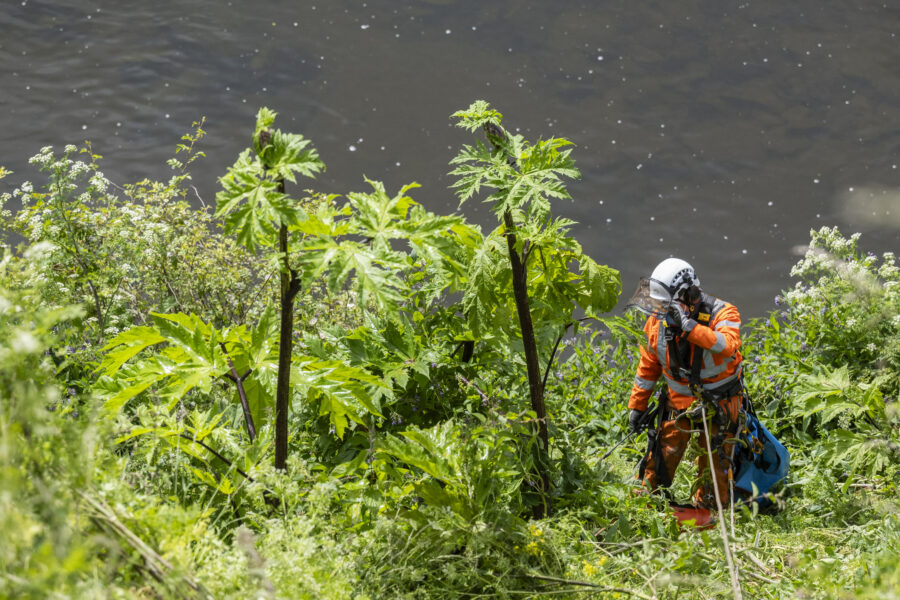
Environmental charity, Tweed Forum has launched a new Tweed Catchment Biosecurity Plan (2026-2031) setting out how partners across the catchment will work together to prevent, detect and control invasive non-native species threatening the River Tweed.
The River Tweed is internationally-recognised for its outstanding beauty, rich biodiversity and status as the UK’s most prolific salmon river. It is a Site of Special Scientific Interest (SSSI) and Special Area of Conservation (SAC), with a 5,000 km2 catchment that includes major tributaries such as the Teviot, Till, Whiteadder and Gala and Leader Waters as well as many smaller watercourses.
Like other rivers in the UK, the River Tweed faces increasing pressure from invasive species that damage habitats, reduce biodiversity and disrupt the river ecosystem. Invasive non-native species now cost the British economy nearly £1.9 billion each year* and threaten the country’s ability to respond to climate and nature crises.
Tweed Forum’s new Biosecurity Plan provides a clear, coordinated framework for action across the entire catchment that brings together land managers, fisheries, local authorities, environmental organisations, businesses and communities on both sides of the Scotland -England border. Partnership working is central to the strategy as without coordinated action, invasive non-native species can spread rapidly through interconnected waterways, making management more difficult and costly over time.
The Biosecurity Plan identifies terrestrial and aquatic invasive non-native species present within the Tweed’s catchment and the adjacent Eye Water such as Japanese knotweed, giant hogweed and American signal crayfish, and sets out practical ways to tackle these threats. This actions range from prevention, early detection and rapid response through to long-term control, management and partnership working.
The Plan also identifies horizon species not yet established but which are seen as a potential threat, with global interconnectivity increasing the probability of the introduction, establishment and spread of additional non-native species, parasites and diseases across Scotland and the UK.
Tweed Forum’s latest Plan also highlights the importance of encouraging citizen science initiatives to empower river users and communities to play an active role in safeguarding the catchment by conducting community monitoring and reporting schemes. Schemes such as the Check, Clean, Dry and Be Plant Wise campaigns are encouraged as a way of normalising high standards of biosecurity for anyone using the river.
Tweed Forum has been tackling Invasive Non-Native Species in the catchment for over two decades. Tweed Forum Invasives Project Manager, Emily Iles, said;
“A healthy river system supports not only wildlife but also local communities and economies, from fishing and farming to recreation and tourism. Invasive non-native species can have a huge negative impact on the river environment, damaging natural habitats, water quality and the survival of species such as Atlantic salmon. This new Biosecurity Plan sets out a practical roadmap for protecting the river and shows that by working together across sectors and borders, we can help prevent further spread, protect vulnerable habitats and ensure the Tweed continues to support wildlife and communities for generations to come.”
The Tweed Catchment Biosecurity Plan (2026-2031) has been funded by Destination Tweed, the National Lottery Heritage Fund, Life Wader, and the EU. It is being implemented by the Tweed Biosecurity Group, which comprises Berwickshire and Northumberland Marine Nature Partnership, Environment Agency, Natural England, NatureScot, Northumberland County Council, River Tweed Commission, Scottish Borders Council, SEPA, Tweed Forum and the Tweed Foundation, as well as other stakeholders.
The full plan is available on the Tweed Forum website tweedforum.org