Community Action Against Invasive Species
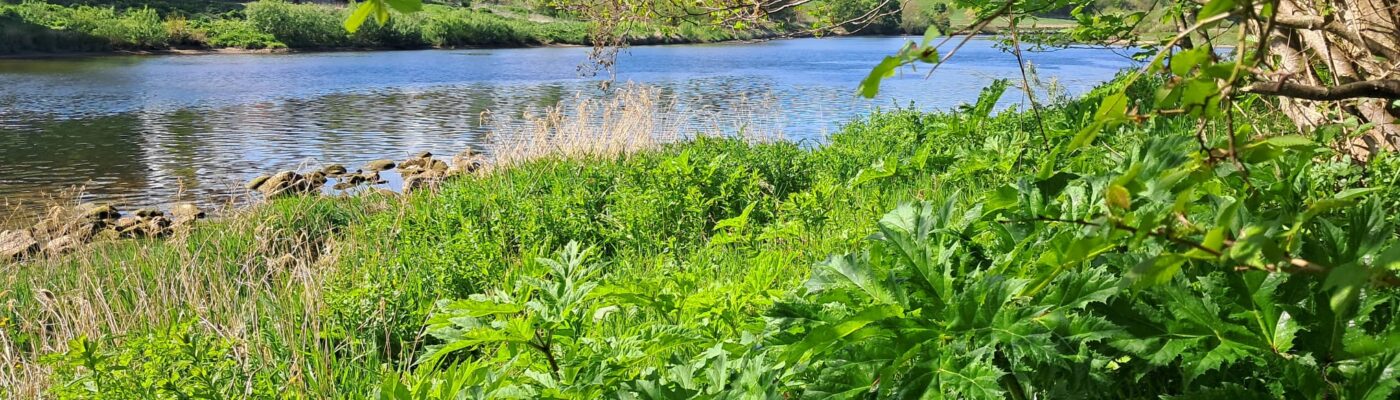

Protecting the River Tweed and its surrounding landscapes from invasive non-native species (INNS) is a challenge which Tweed Forum have been tackling for over 20 years with the help of volunteers, local communities, land managers and specialist contractors.
From identifying emerging infestations to organising volunteer action days and carrying out specialist removal work in difficult locations, this collaborative effort is making a real difference to the health of the river and its habitats.
Citizen Science: The Importance of Eyes on the Ground
Early detection is one of the most effective ways to prevent invasive species from spreading. With thousands of people using or walking beside the River Tweed and its tributaries, local knowledge significantly increases the project’s ability to monitor and respond to threats.
Walkers, anglers, landowners, farmers and local residents regularly report sightings of invasive plants such as Japanese Knotweed, Giant Hogweed and Himalayan Balsam. These observations help the project team build a clearer picture of where species are occurring and identify new outbreaks before they become established.
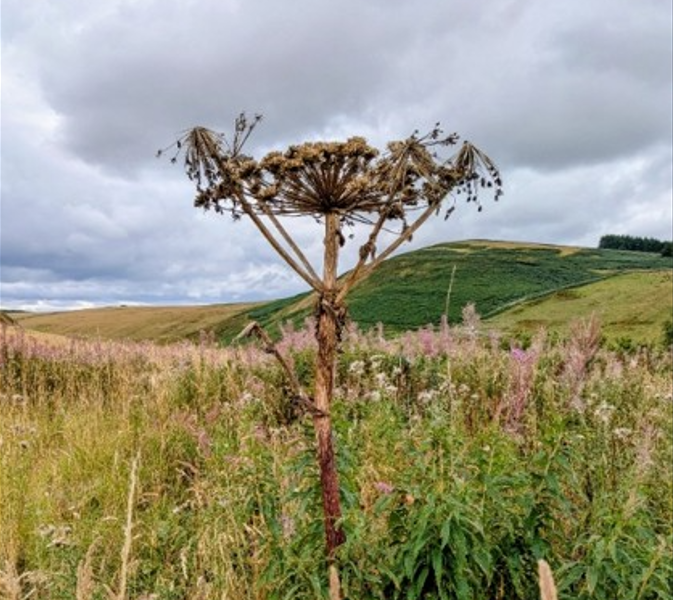
We were recently informed about a rogue Giant Hogweed plant in the Cheviot Hills, where the species would not usually be expected to grow. The team responded on the same day it was reported and the remaining seeds were disposed of safely.
Ongoing monitoring of this site will help prevent this small, isolated occurrence from developing into a larger population.
This example illustrates the importance of reporting plants so that they can be dealt with quickly, protecting the biosecurity of areas alongside established annual control. Sightings really do make a difference!
If you spot an invasive species along the river, please report it to info@tweedforum.org, including a photo, the date and location (using what3words if possible).
Volunteers Taking Action
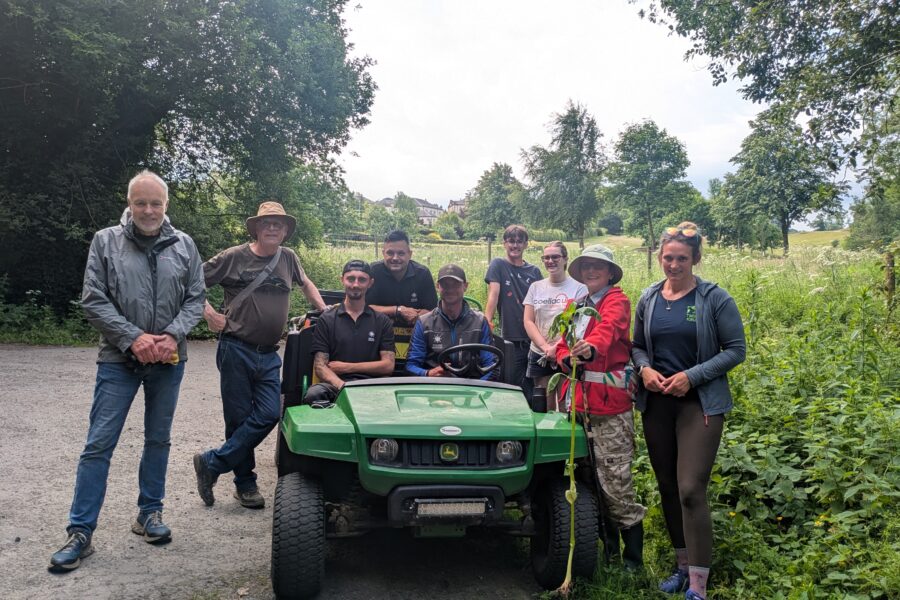
Each year, community groups, volunteers and local organisations come together to help remove invasive plants from riverbanks, footpaths and other key locations.
Volunteer pulling days targeting Himalayan balsam have become a particularly effective way of reducing the spread of the plant. For example, Invasive Species Project Manager Emily Iles, and volunteers from SHLOSS Roxburghe golf course along with members of Roxburgh village tackled some Himalayan balsam around the burns and pond area of the golf course helping to clear up their local area from a pesky plant.
These events offer benefits beyond the immediate environmental impact. Volunteers learn about invasive species identification, gain practical conservation skills and develop a deeper connection to the river and surrounding landscapes.
In addition, community action helps raise awareness among local residents, creating more opportunities for invasive species to be spotted and reported before they become widespread.
Nick, a volunteer with the project in Peebles, has gone above and beyond in supporting Himalayan balsam control by undertaking regular surveys, identifying and reporting new and remaining populations, tracing potential sources of spread and providing detailed local knowledge to help target future control efforts across the Tweed and its tributaries.
Volunteers like Nick play a vital role in the fight against invasive species. Their dedication, enthusiasm and willingness to take practical action on the ground have become a cornerstone of the project’s success.
When Specialist Support Is Needed
While many invasive plants can be managed safely by trained volunteers, some situations require specialist intervention.
Giant hogweed, for example, presents significant risks to human health. Contact with the plant’s sap can cause severe skin burns and blistering. Other invasives may be growing in inaccessible locations or environmentally sensitive sites where specialist equipment and expertise are required.

In these circumstances, professional contractors are brought in to carry out control work safely and efficiently. Their expertise is particularly important on rope-access sites, difficult terrain and areas where large-scale treatment programmes are needed.
One of these areas was on the banks of the river at Coldstream where specialist Rhys Matthews from SAS Rope & Rail, abseiled down the bank to reach and treat Giant Hogweed plants.
These plants can cause riverbank erosion and increased flood-risk and threaten the area’s native biodiversity including destroying spawning and nursery habitat for salmonid fish species.
Building Awareness Through Education
Education is another key element of the project. The project team works with land managers, communities and partner organisations to promote good biosecurity practices that help prevent invasive species from spreading between sites.
Awareness campaigns, practical guidance and seasonal events such as Invasive Species Week help share information on how to identify priority species and the actions people can take to protect the river environment. For example, using the Check, Clean, Dry method and cleaning footwear, tools, vehicles and equipment after working near watercourses can make a significant difference.
Additionally, the Tweed Catchment Biosecurity Plan (2026–2031) brings people together across the region and sets out how early detection, rapid response, and long-term control, can help to limit the spread of harmful invasive non-native species. It also looks ahead at emerging threats and highlights the growing importance of community involvement.
Read the Tweed Catchment Biosecurity Plan
This outreach work helps build long-term resilience by ensuring more people understand the risks posed by invasive species and how they can contribute to solutions.
Biosecurity Champion Recognised for Protecting the Tweed
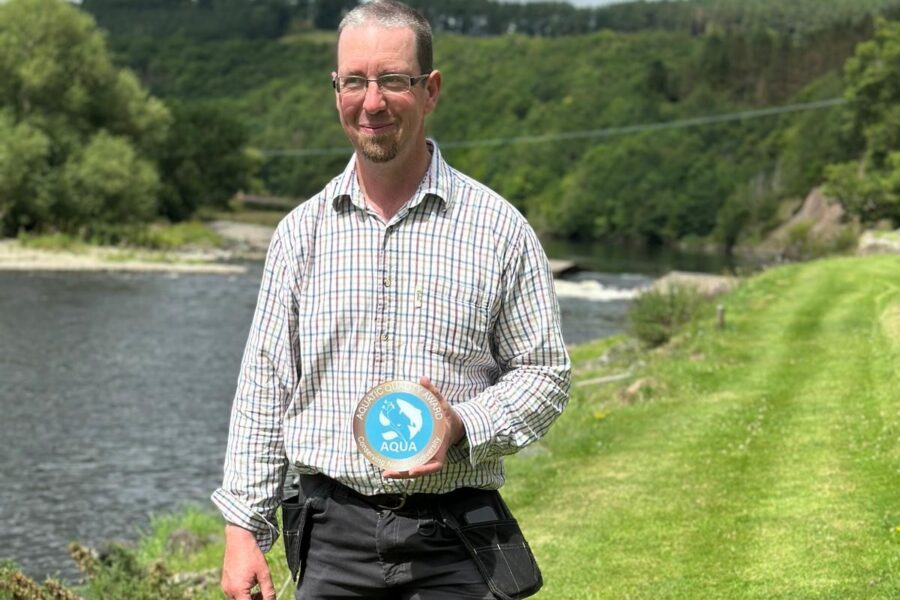
Protecting the River Tweed from invasive species relies not only on organised control programmes but also on individuals who lead by example. One such person is Craig Burmann-Duke, ghillie at Mertoun Estate near St Boswells and Scotland’s first recipient of the AQUA (Aquatic Quality) Biosecurity Award.
Nominated by Tweed Forum, Craig has made a significant voluntary contribution to invasive species management, including years of work controlling giant hogweed along the river. He also promotes biosecurity among visiting anglers, encouraging the use of wash stations, drying racks and disinfectants, while sharing guidance on the Check, Clean, Dry protocol.
Craig’s award highlights the importance of prevention as well as control. While large-scale treatment programmes are essential, simple actions taken by river users can play a crucial role in stopping invasive species from establishing and spreading.
A Shared Effort for the Future
The success of invasive species management across the Tweed catchment depends on the collective efforts of many individuals and organisations.
Whether reporting a new infestation, joining a volunteer pull, adopting good biosecurity practices or carrying out specialist control work, every contribution plays a part in protecting the River Tweed and creating a more resilient river system.
The INNS project was made possible by funding from multiple funders including National Lottery Heritage Fund Scotland, Fallago Environment Fund and the LIFE WADER project.