Improving pollinator habitats at Corehead
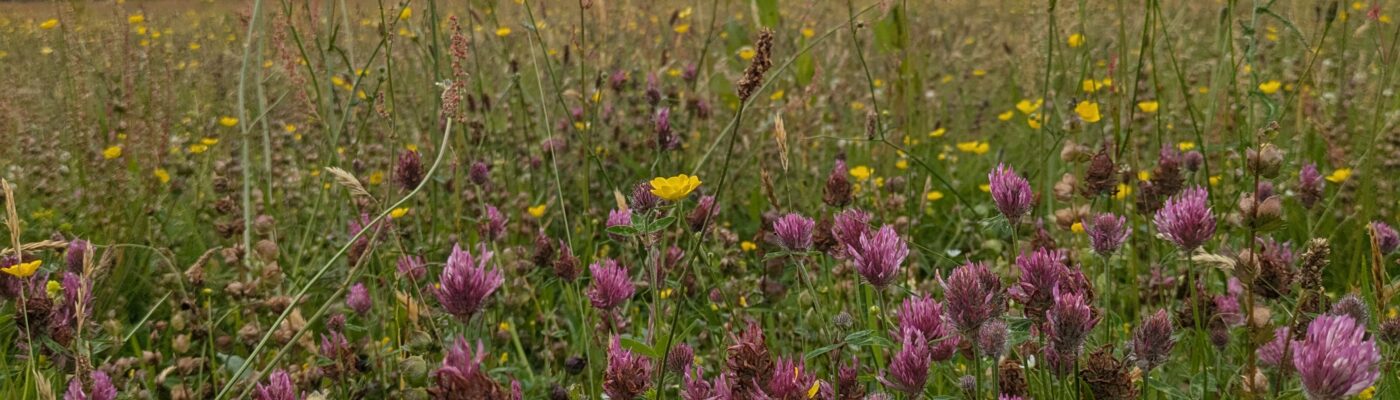

Pollinators Along the Tweed is a Destination Tweed partnership project, led by Buglife, which aims to create and restore up to 40 hectares of pollinator habitat along the River Tweed B-Line.
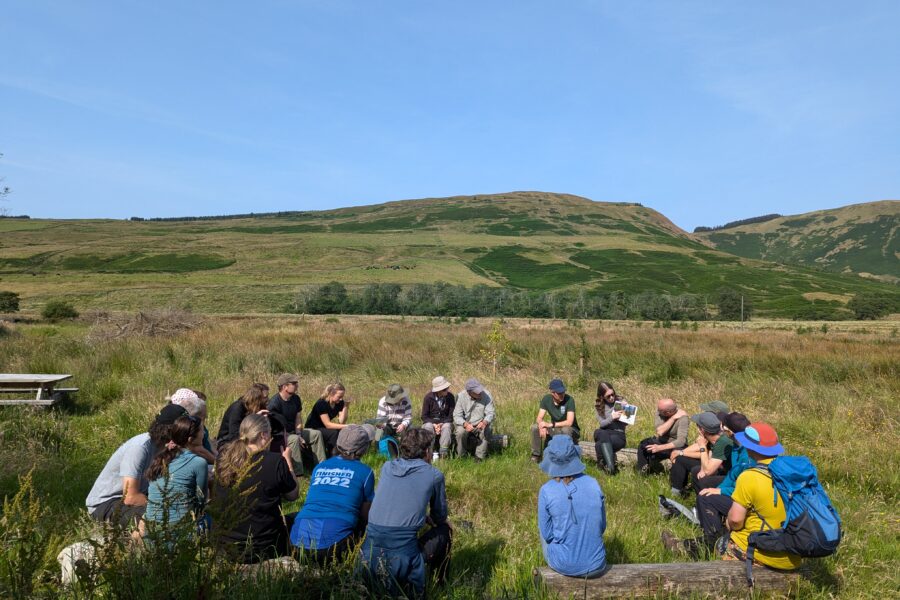
Pollinator species are facing significant declines as a result of climate change, the widespread use of pesticides, and the ongoing loss and fragmentation of suitable habitats.
These pressures reduce the availability of food sources, nesting sites and the connected landscapes that pollinators need to thrive, placing many species at risk.
One the first sites enhanced through the project was at Corehead in collaboration with Borders Forest Trust.
This site was acquired by Borders Forest Trust in 2009 with the goal of restoring a mosaic of woodland, montane scrub, wetland, heathland and species-rich grassland.
Through a combination of hay cuts and grazing the 4 hectare hay meadow, created in 2013, began to flourish with twenty-two wildflower and grass species recorded by Buglife in 2023 during preliminary site surveys.
Although already providing beneficial resources for a range of invertebrates some measures to further improve the habitat for pollinators were identified.
Firstly, summer grazing was stopped allowing early flowering species to establish within the meadow. Then, in the autumn of 2023, thanks to some fantastic volunteer efforts, 2500 plug plants of seven key species found to be missing from the site (including Wood Crane’s Bill, Meadow vetchling, Bird’s Foot Trefoil, Lady’s Bedstraw, Common Knapweed, Oxeye Daisy and Devil’s Bit Scabious) were added.
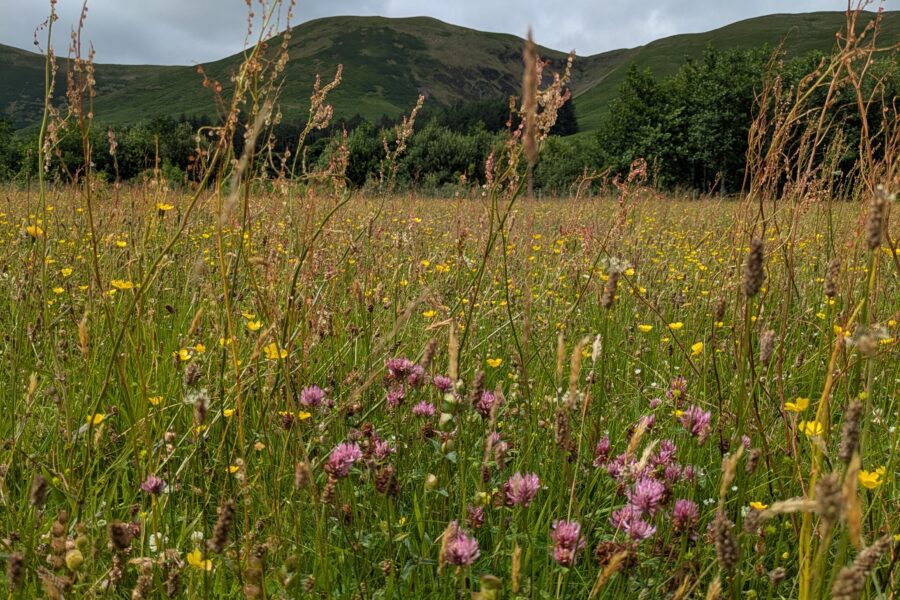
Follow up surveys from 2025 showed an increase in grassland plant diversity, with forty species recorded within the meadow.
This increase in wildflower diversity will not only prolong the flowering time, providing early to late season resources for pollinators but will also provide habitat for a more diverse array of pollinator species.
The Pollinators Along the Tweed project has been made possible with funding from the National Lottery Heritage Fund, AEB Charitable Trust, Craignish Trust, Fallago Environment Fund, J & JR Wilson Trust, Milkywire, NatureScot, Northumbrian Water Group and ScottishPower Foundation.