Beneath our feet lie geological clues about our distant past and evidence of how life evolved on Earth. In Berwickshire and north Northumberland, the most common rocks are Carboniferous limestones, mudstones and sandstones. In the lowlands surrounding the River Tweed, the bedrock is covered by thick glacial deposits of clay, silt and sand.
Embedded in these varied rocks lie the preserved remains of invertebrates, plants and fish – fossils! Most excitingly, the fossils of tetrapods, the first four-legged animals to leave the sea and breathe and walk on land were found here, along the Whiteadder Water and on the coast.
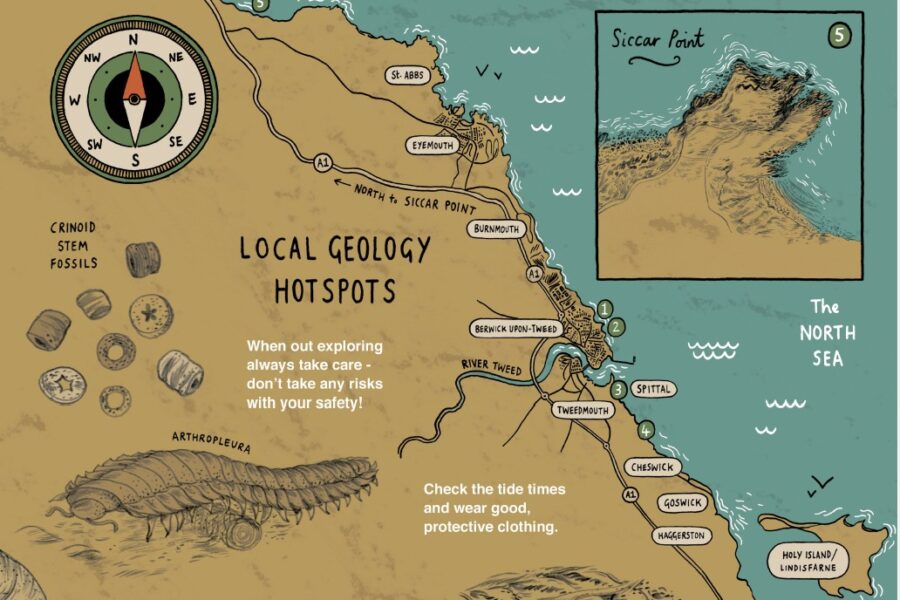
Explore Berwick Beach / Greenses Haven at low tide to see domes and basins in the folded rocks on the shoreline. Observe fossil corals, shelled invertebrates and crinoids in the curvy limestone beds, particularly near the foot of the steps. At Spittal Beach, see fossilied trees and plants in the loose boulders, left over from when the area was covered by a Carboniferous forest.
Download the project leaflet to find out more: where the best local geology hotspots are, what amazing fossils have been found locally and who our ‘Rock Stars’ (inspirational geologists) are.
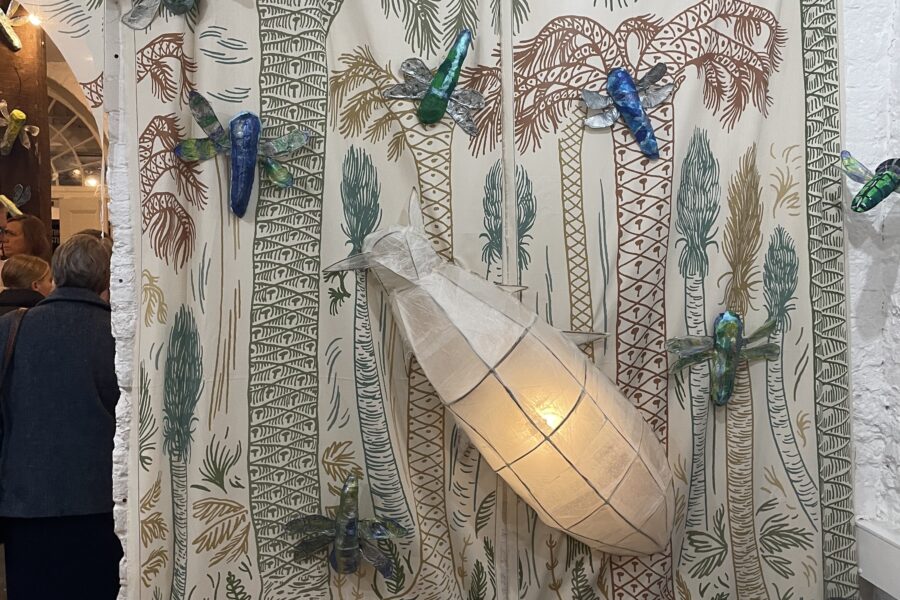
Berwick’s Carboniferous Past project was inspired by Berwick Museum and Art Gallery’s natural history collection and the geology of north Northumberland and the Scottish Borders. It featured schoolchildren, volunteers and members of the University of the Third Age who researched local fossil stories and explored the River Tweed as a rich source of geological information.