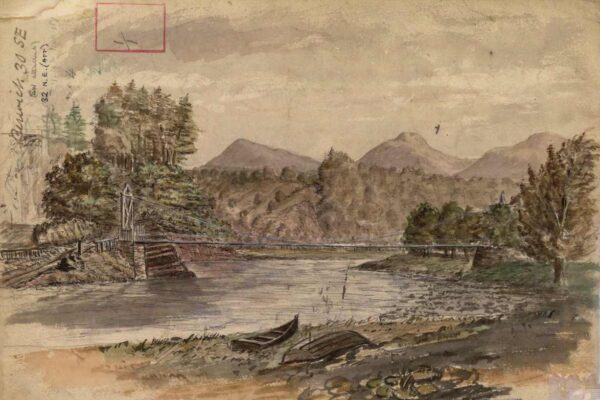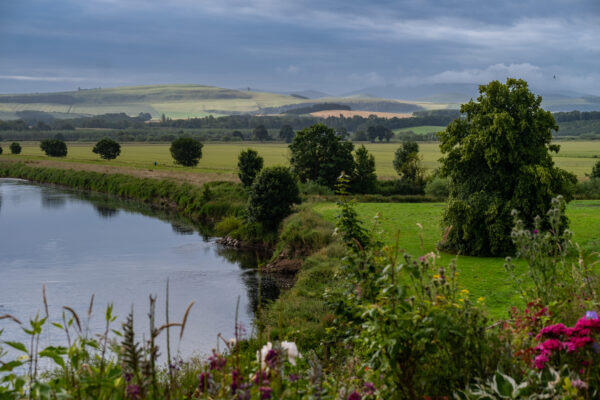
Andrew Robeson was born in Kelso in 1654. In about 1682 he sailed to America with his uncle Andro, also from Kelso. Andro purchased land from William Penn and established one of the earliest tracts of land in Philadelphia and called it Roxborough Township. He also became Chief Justice of Pennsylvania.
Andrew Robeson had a son, who moved to North Carolina. In 1740, Andrew’s grandson Col. Thomas Robeson was born there.
Col. Thomas Robeson’s part in the American Revolution
The American Revolution was principally caused by opposition to British attempts to impose greater control over the colonies and to make them repay the Crown for its defence of them during the French and Indian Wars of the 1750s and 1760s. The colonies were also increasingly unhappy about taxation without representation.
Angry with British control in the Americas, the Colonials established a Continental Congress in 1774, which ordered all 13 colonies to prepare for military action.
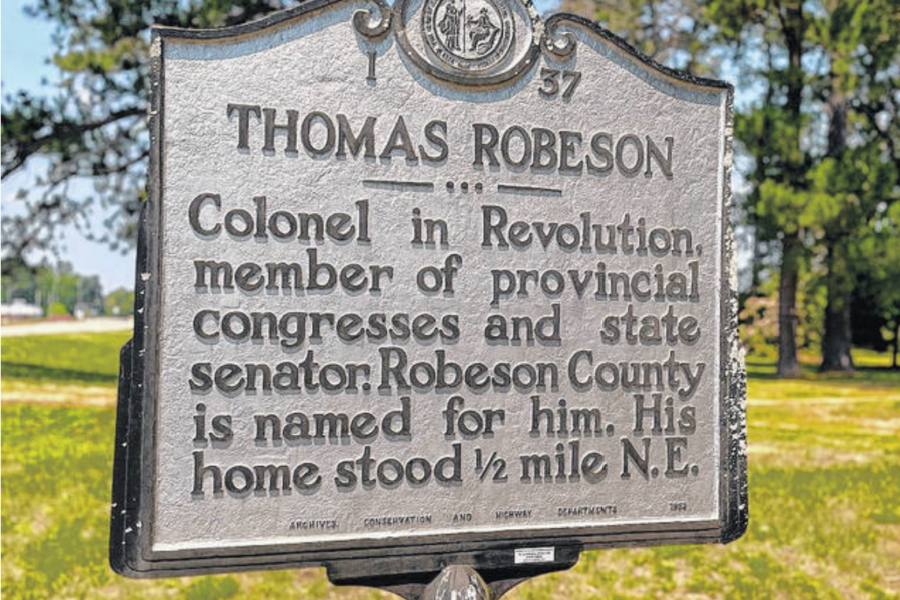
In August 1775, Col. Thomas Robeson became a delegate at the Third Provincial Congress in Hillsborough, representing North Carolina. A month later, the North Carolina Provincial Congress appointed him leader of the Bladen County Militia. Determined to fight off expanding British military presence in the Carolinas, Col. Robeson led the Militia at the Battle of Moore’s Creek in February 1776, one of the very earliest battles in the War of Independence.
The victory at Moore’s Creek was highly significant as it ended British Authority in North Carolina and bolstered Patriot morale. This gave the Patriots confidence to progress from open rebellion to outright revolution. Col. Robeson was at the Fourth Provincial Congress in Halifax two months later, when North Carolina became the first colony to vote in favour of independence from Great Britain.
The Continental Congress adopted the Declaration of Independence on 4th July 1776. Representatives from all 13 Colonies signed the Declaration.
Col. Robeson also attended the Fifth (and final) Provincial Congress in Halifax in November 1776. There they established government structure and approved the First Constitution (for any of the States) of the United States of America and the first Bill of Rights.
Col. Thomas Robeson was elected to the North Carolina State Legislature and Senate the following year. After the American Revolution, Robeson County North Carolina was named in his honour.
This story was submitted, with thanks to Dr Robeson, from the collection of David Welsh, a local historian and River Tweed enthusiast, to encourage discussion on the communities of the Tweed and their impact around the world. If you have any more information on this story, please get in touch with us at info@destinationtweed.org so we can add to the story of the river!