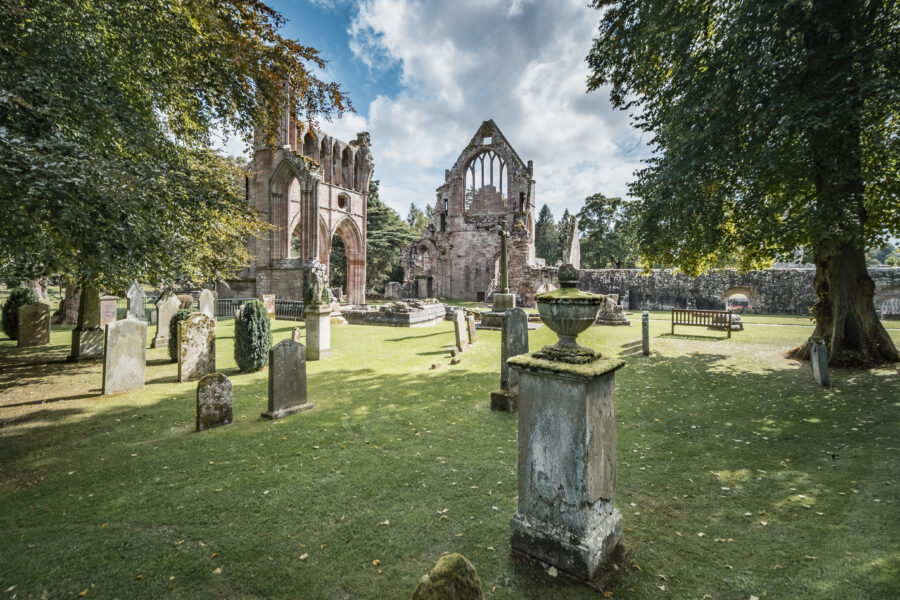
Founded in 1150 when Hugh de Morville invited Premonstratensian canons from Alnwick to settle here, their arrival marked the beginning of centuries of devotion and resilience.
The abbey endured fire and destruction during the border wars, burned by English troops in 1322 and again by Richard II in 1385, yet it rose from the ashes to flourish in the fifteenth century. Its final blow came in 1544, and after the Reformation, the lands passed to the Earl of Mar.
In 1786, David Erskine, 11th Earl of Buchan, purchased the site, preserving its romantic ruins. Today, Dryburgh Abbey is a scheduled monument set within a designed landscape, a haven of tranquility and history.
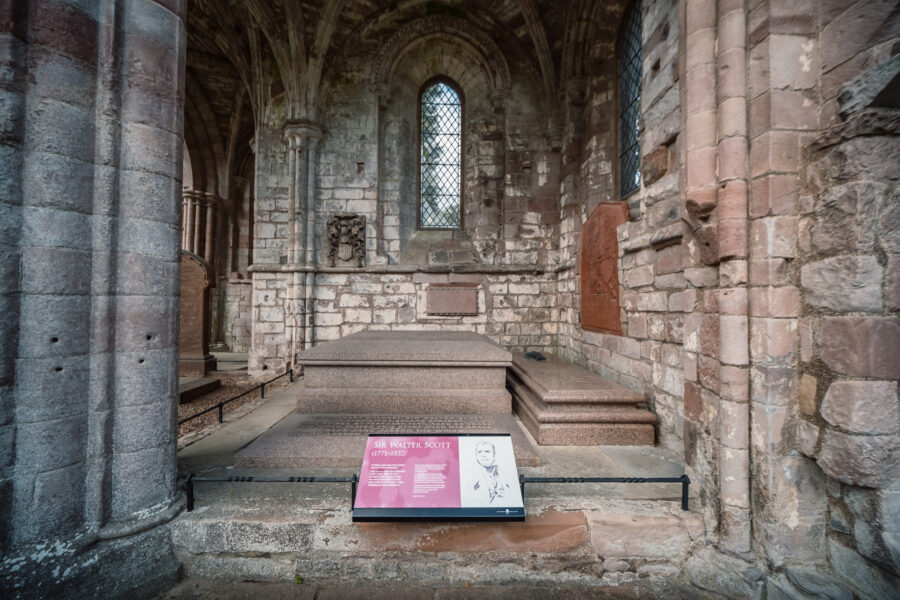
It is also a place of remembrance: Sir Walter Scott, Scotland’s beloved writer, and Douglas Haig, commander in WWI, rest here among memorials that are now Category A listed.