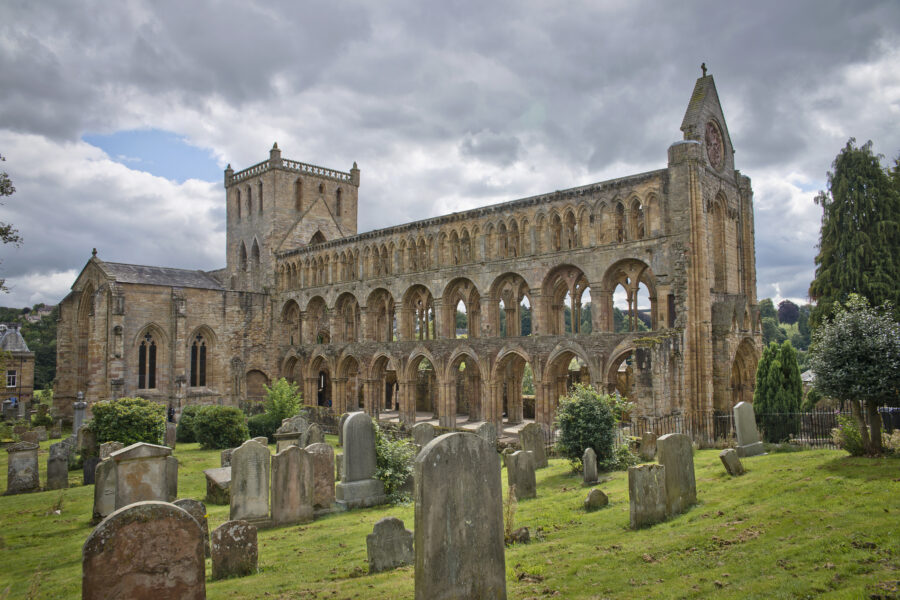
Just ten miles from the English border, Jedburgh Abbey is one of Scotland’s most striking monastic ruins. Its story stretches back to the 9th century, when the area was part of the Anglo-Saxon Kingdom of Northumbria and the first church was gifted to the See of Lindisfarne.
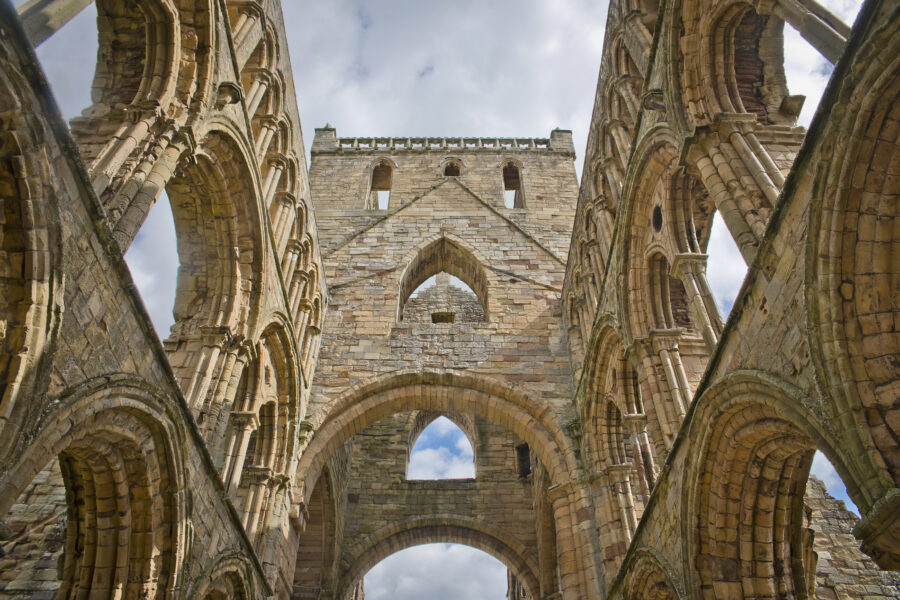
In 1118, Prince David, later King David I, established a foundation of Augustinian canons here. By the mid-12th century, the site had grown into a magnificent abbey dedicated to the Virgin Mary, showcasing the finest Norman and early Gothic architecture.
Jedburgh Abbey stood as a symbol of faith and power for centuries, but its position near the border made it vulnerable. After the Protestant Reformation in 1560, the abbey became the parish kirk, and worship continued within its walls until the 19th century. Eventually, the building was deemed unsafe, and a new church was built nearby.
Today, the abbey’s soaring arches and intricate stonework remain a testament to its grandeur, cared for by Historic Environment Scotland.