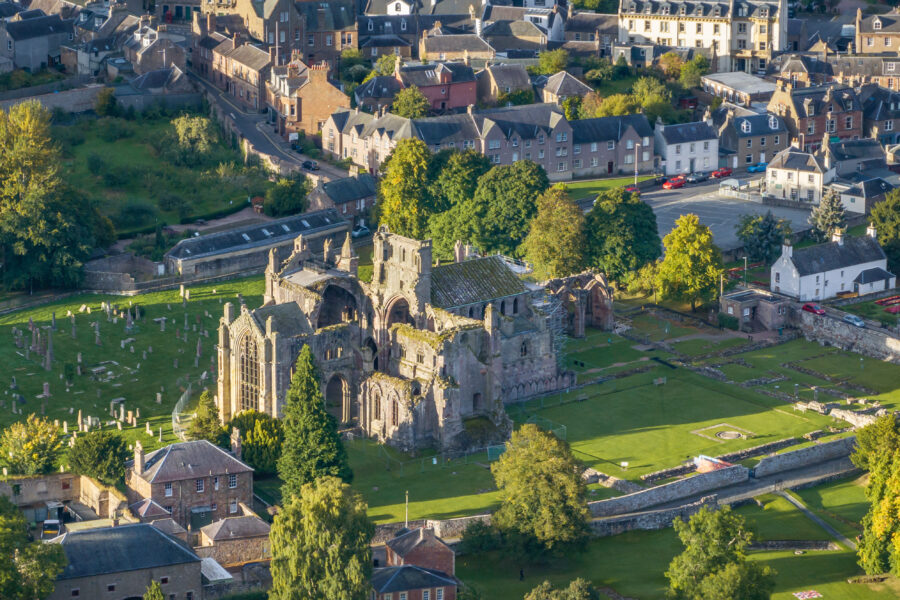
Melrose Abbey was founded in 1136 by Cistercian monks at the request of King David I, and became Scotland’s most important monastic house until the Reformation.
The abbey’s east end was completed in 1146, and over the next fifty years its soaring Gothic architecture took shape in the form of a St John’s Cross. Though much of the abbey now lies in ruins, its intricate stonework still tells stories of devotion and artistry with saints, gargoyles, dragons, and plants carved into its walls.
Melrose Abbey was a place of royal significance. Alexander II and other Scottish nobles are buried here, and in 1921 a lead casket believed to contain the embalmed heart of Robert the Bruce was discovered beneath the Chapter House.
Today, the Abbey is cared for by Historic Environment Scotland and remains a scheduled monument. Visitors can explore its haunting beauty and even step inside a structure dating from 1590, now preserved as a museum. On one of its stairways, the words of master mason John Morow still echo: “Be halde to ye hende” (Keep in mind the end). This phrase lives on as the motto of Melrose, a town forever shaped by its abbey’s enduring legacy.