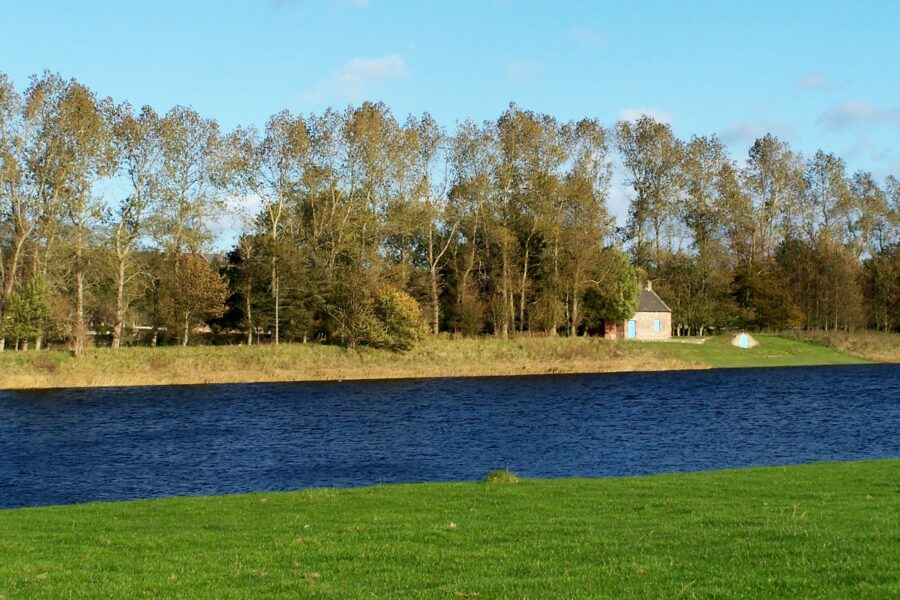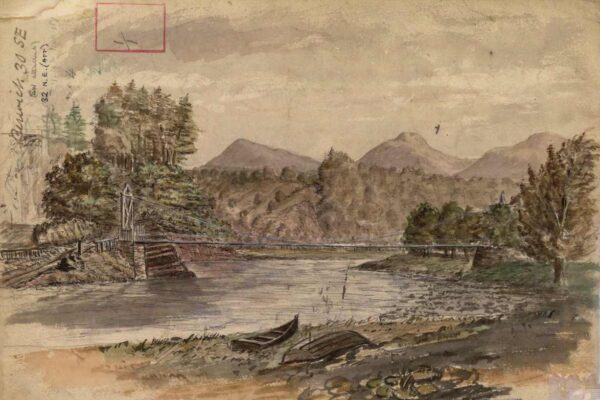
Many countries are separated from each other by a border which is a river. The River Tweed is one such case where, for part of its length it forms the border between Scotland and England. For a few miles it forms the border, but at its mouth at Berwick it is in England – although it has been in Scotland many times in the past as the town of Berwick has changed hands thirteen times during the wars between the two countries.
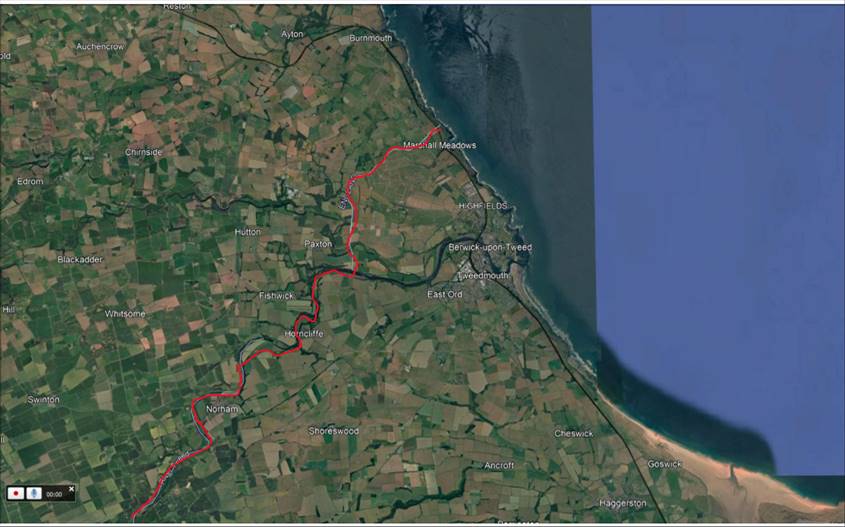
Berwick itself is an anomaly as it once was, obviously, the county town of Berwickshire when it was part of Scotland. A few miles upstream, near Paxton, the river no longer forms the border. Instead, the border makes an arc for a few miles around Berwick and there is an explanation for this, which may be apocryphal but nevertheless perfectly plausible. The story goes that the arc around the town represents a distance further than a cannon shot from the ramparts of Berwick Castle.
The twin town of Peebles is a town called Hendaye, which lies on the border between France and Spain, or situated in the Basque Country, whatever your viewpoint. If we consider the internationally recognised border between France and Spain, then the river Bidasoa, like the Tweed, forms the border between the two countries as it approaches the sea. There is a larger town on the Spanish side called Irun and a small town, Hondarribia, which is situated opposite Hendaye at the mouth of the river.
One rather bizarre situation on the border concerns a small island in the middle of the river called the Ile des Faisans, the Island of Pheasants, although, to my knowledge there are no pheasants there. Apparently, at the end of the Thirty Years War, neither the French nor Spanish sides could agree as to which country the island belonged. The solution was not to divide the island as one might expect, but to administer it between the two countries, which resulted in the island being deemed French for six months and Spanish for the other half of the year. This situation continues to this day.
Find out more about other examples of unusual and quirky situations in and around borders in Europe in the book ‘Strange, Odd, Peculiar Crazy Borders’, available directly from the author at kennybrownviking@talktalk.net.
Images: The loop of the border around Berwick shown in red (map courtesy of Google Earth earth.google.com) and the unremarkable point, just to the east of Paxton House, where the England/Scotland border leaves the River Tweed and turns north and east to reach the sea north of Berwick © David Chatterton (cc-by-sa/2.0) geograph.org.uk/p/4217570.