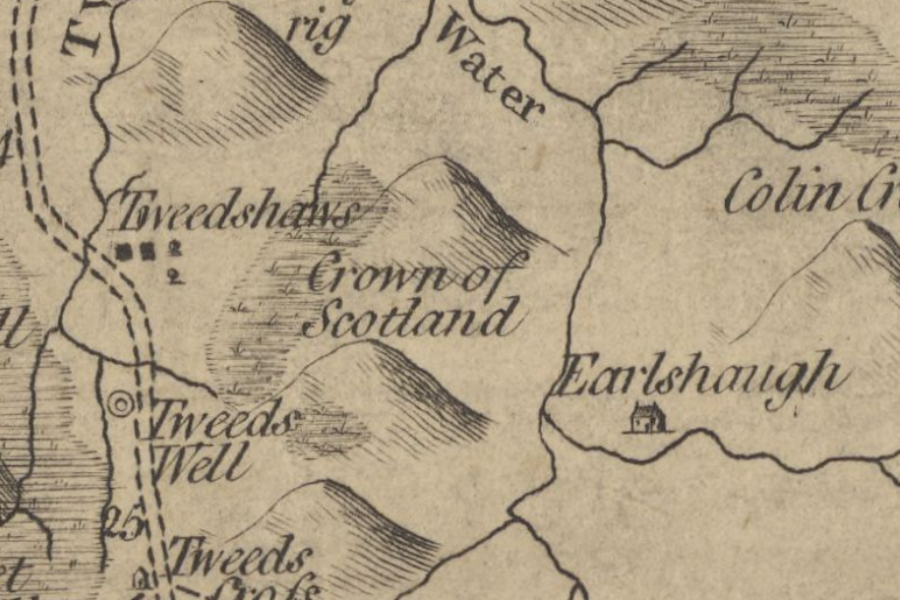
Rising quietly to just 538 metres, the hill was hardly impressive at first glance. Sheep grazed its slopes, and mist often clung to its rounded summit, disguising it as little more than another fold in the Scottish Borders. Yet locals had always called it The Crown of Scotland, a name far grander than the hill itself, and one whose meaning had long been lost to time.
On a cold evening in the winter of 1305, Robert the Bruce paused near Ericstane, weary from travel and heavy with uncertainty. He was a hunted man then, his claim to the throne fragile, his future unclear. As he rested near the ancient Roman road beneath the hill, another rider approached – James Douglas, a young nobleman stripped of his lands but not his resolve. Their meeting was brief, almost unremarkable, yet something passed between them: a shared purpose, a silent oath. By dawn, they rode together toward Scone, unaware that their alliance would shape the fate of a nation.
Centuries passed. Pilgrims walked the old way through Moffat, following paths laid by Romans long before kings dreamed of crowns. Some paused at the hill, sensing its quiet weight, though they could not say why. Stories faded and the truth blurred into legend.
Still, the name endured. Perhaps it was given for that single moment when hope rested briefly on its slopes—when a future king stood beneath its shadow, crown unseen but destiny close at hand. The hill never spoke its secret, but it never needed to. Scotland remembered for it.