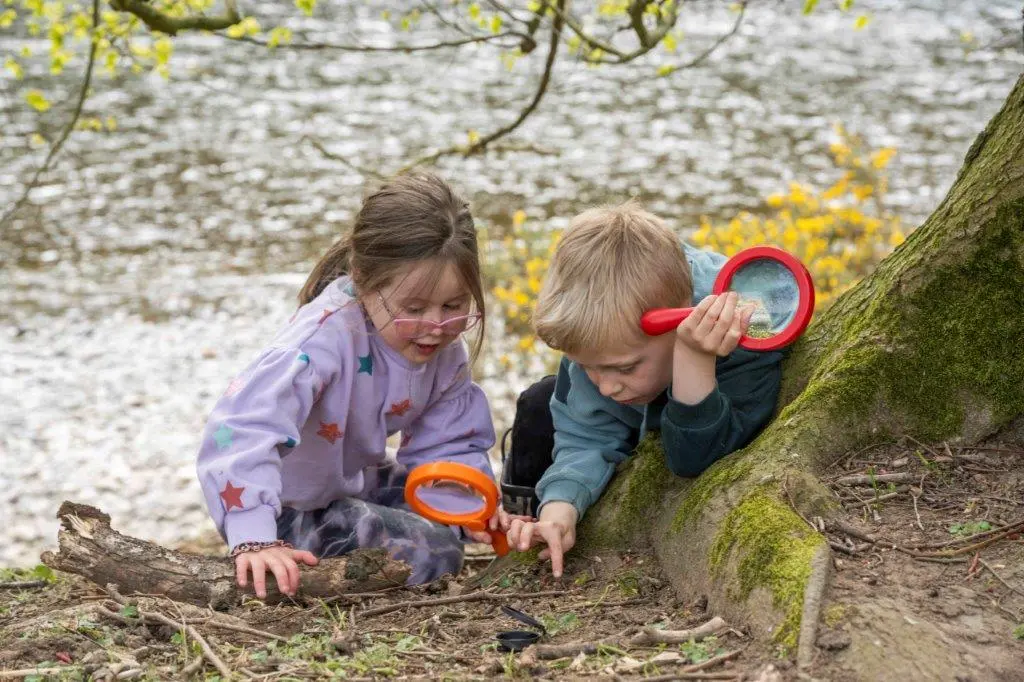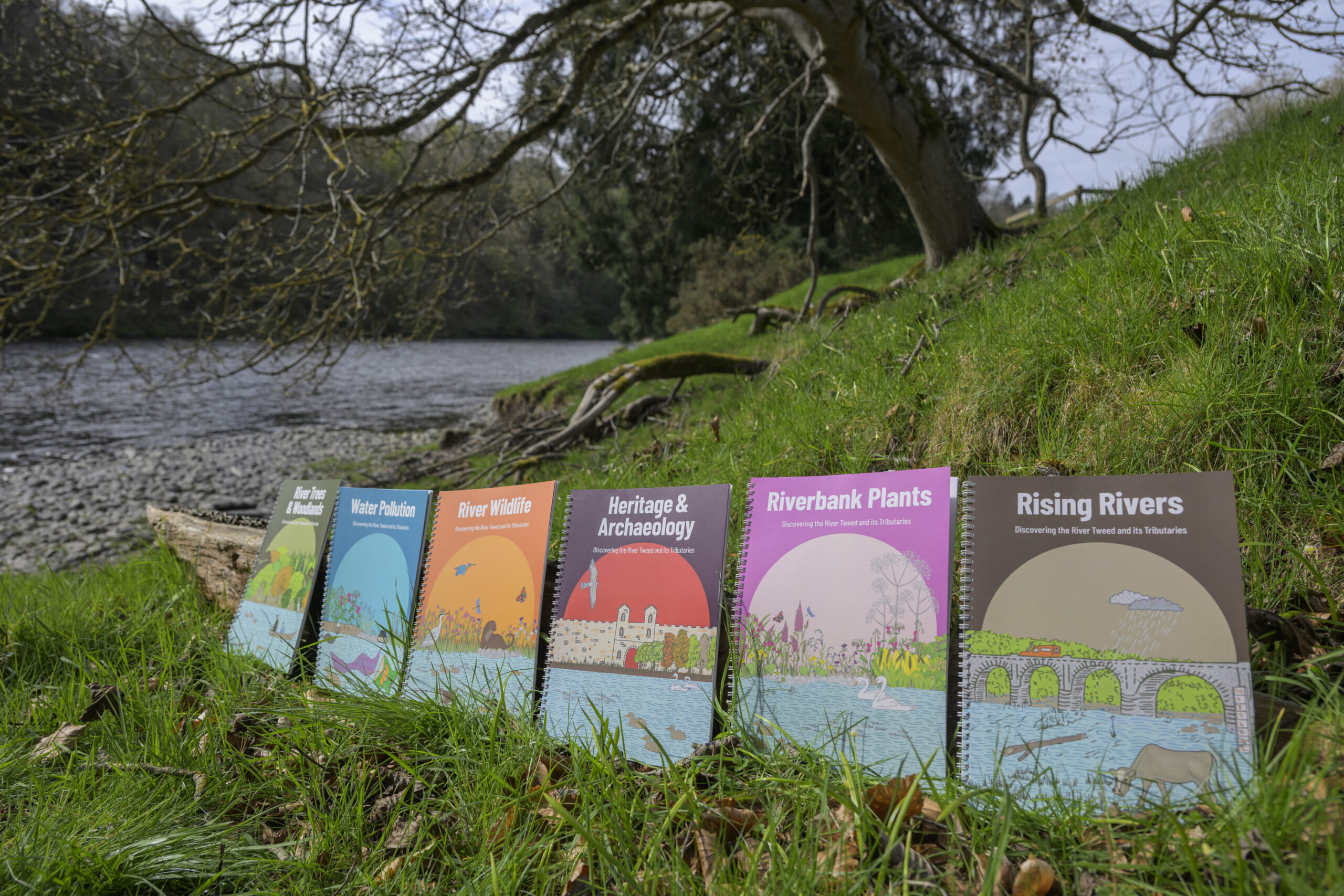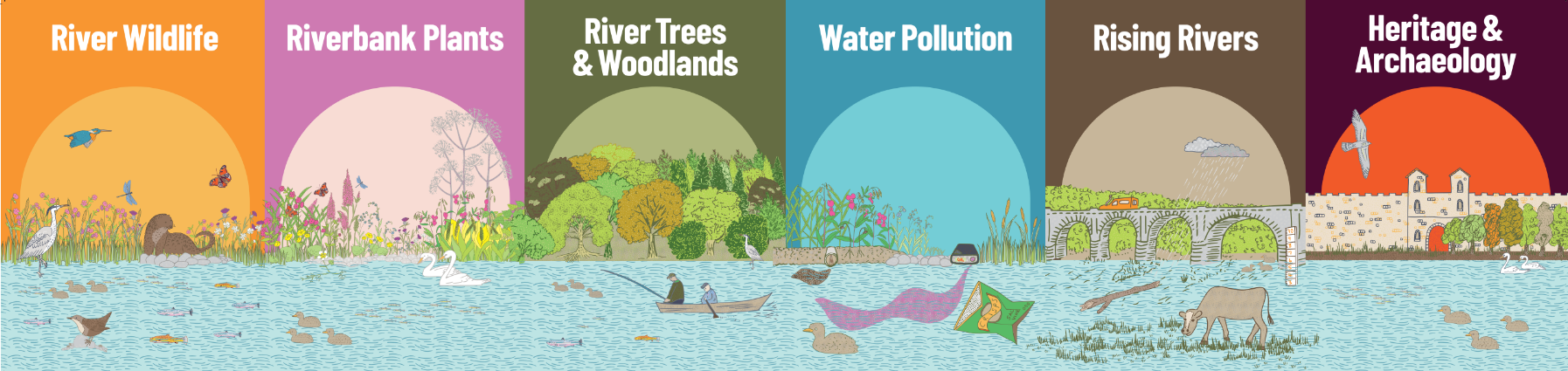
This topic explores riverside trees and woodlands, with a focus on how riverside trees support healthy river. Learners build tree identification skills and compare different woodland types, including broadleaf, conifer and mixed woodland.
Activities include a mix of games, sensory exploration, creative tasks and an investigation, allowing teachers to choose what works best for their group. Activities can be carried out in a river woodland or any local green space with trees, including school grounds.
This topic Includes:
- Two lesson plans: Riverside Tree Study and Woodland Study
- Active games and group activities to explore trees
- Sensory activities that encourage close observation and curiosity
- Tree identification and woodland survey activities
- Creative tasks including leaf bashing, drawing and bark rubbings.
- Illustrated learner worksheets and resources, teacher background notes, and curriculum links
This topic explores the plants growing along riverbanks and why plant diversity is important for healthy rivers. Learners investigate riverbank plants through surveys, observation and creative activities, building skills in sampling, recording, and making sense of their findings.
The topic introduces the idea of biodiversity and explores how native and non-native, invasive plants can affect riverbank habitats. A mix of practical investigation, discussion and creative tasks can be carried out beside a river or adapted for use in any local green space, including school grounds.
This topic includes:
- Two lesson plans: Hula Hoop Plant Survey and Super Spreaders
- Hands on plant surveys using simple sampling methods
- Exploring seed dispersal through investigation, sorting and design
- Learning about native and non-native, invasive plant species
- Opportunities to apply maths skills in a real-world context
- Illustrated learner worksheets and resources, teacher background notes and curriculum links
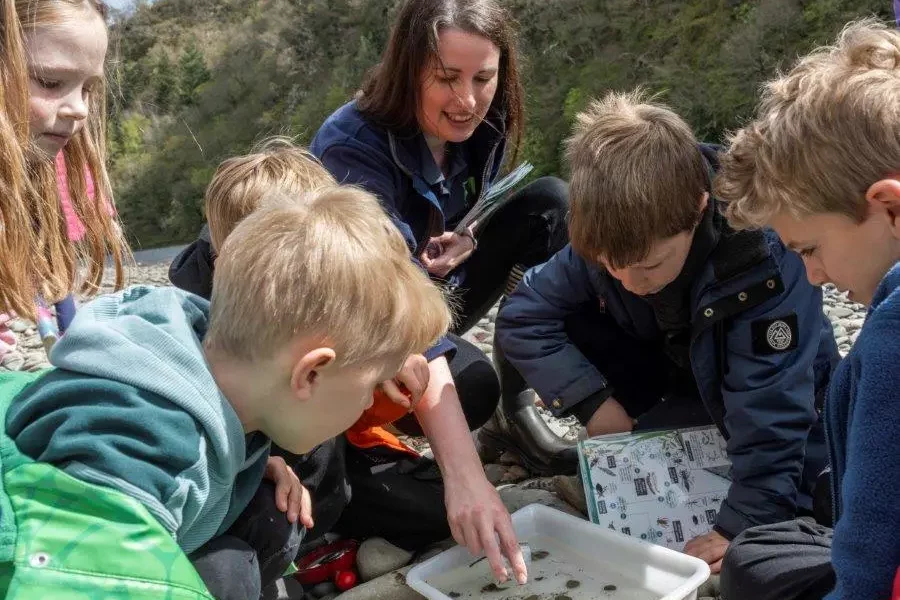
This topic focusses on exploring the wildlife that depends on rivers and nearby habitats. Learners investigate a range of river wildlife including minibeasts, pollinators, birds and mammals, while building observation, survey and classification skills.
Activities combine games, outdoor investigation, creative tasks and discussion to help learners understand how animals are adapted to river environments and how food chains connect living things.
This topic includes:
- Four lesson plans covering minibeasts, pollinators, birds and mammals
- A pollinator focussed lesson plan developed in partnership with Buglife
- Games and movement-based activities to explore animal adaptations
- Wildlife surveys and spotting activities
- Species Spotlights on river wildlife including mayfly, kingfisher and otter
- Illustrated learner worksheets and resources and curriculum links
This topic supports learners to explore why freshwater is important, how it can become polluted and what actions we can take to care for rivers. Learners investigate water use and pollution through practical activities, games, discussion, and simple fieldwork. Activities help learners understand what freshwater is, why it is limited and how everyday actions can affect river health.
Learners are encouraged to spot signs of pollution, explore what makes a healthy river, and think about positive actions they can take at home, school and in their community.
This topic includes:
- Two lesson plans: The Importance of Freshwater and River Health Check
- Hands-on activities exploring freshwater use and conservation
- Games and demonstrations to understand pollution and its impacts
- River and water quality survey using observation and simple sample testing
- Reusable game resources, including Habitat Hoop cards
- Illustrated learner worksheets and resources, teacher background notes and curriculum links
This topic explores why rivers rise and flood and how nature can help slow the flow of water and reduce flood risk to local communities. Learners investigate how natural (or nature inspired) features such as trees, wetlands, peatland and leaky barriers affect the movement of water through hands-on activities, games, and teamwork challenges.
Activities encourage learners to explore both nature-based and man-made approaches to managing water and reducing flood risk, while considering the wider benefits of working with natural processes.
This topic includes
- One lesson plan: Nature’s Flood Guardians
- Games and discussions introducing flooding and flood risk
- Outdoor activities exploring natural and man-made flood management
- Practical investigations into water flow and speed
- Team challenges that model how water moves through a river system
- Illustrated learner worksheets and resources, teacher background notes and curriculum links
This topic encourages learners to explore the long history of people living alongside the River Tweed and its surrounding landscapes. Through discussion, storytelling, creative tasks and practical activities, learners explore life in the Iron age, Roman Britain and the Bronze Age, using examples from the Tweed catchment to bring learning to life.
Activities encourage learners to connect past and present and reflect on the importance of rivers and landscapes to people. Learners express ideas through art, design and ceremony.
This topic includes:
- Three lesson plans: Examining Ancient Diets, River Rituals and Bronze Age Beakers
- Place based examples from the River Tweed Catchment
- Investigating ancient diets and everyday life in the past
- Story based resources set in Iron age and Roman Britain
- Creative design activities inspired by archaeological finds
- Opportunities for reflection, expression and taking action
- Illustrated learner worksheets and resources, teacher background notes and curriculum links