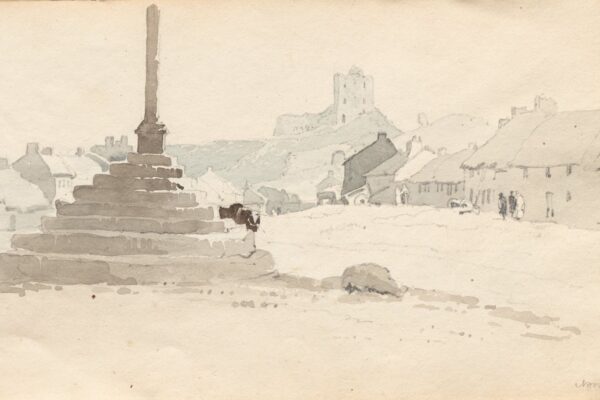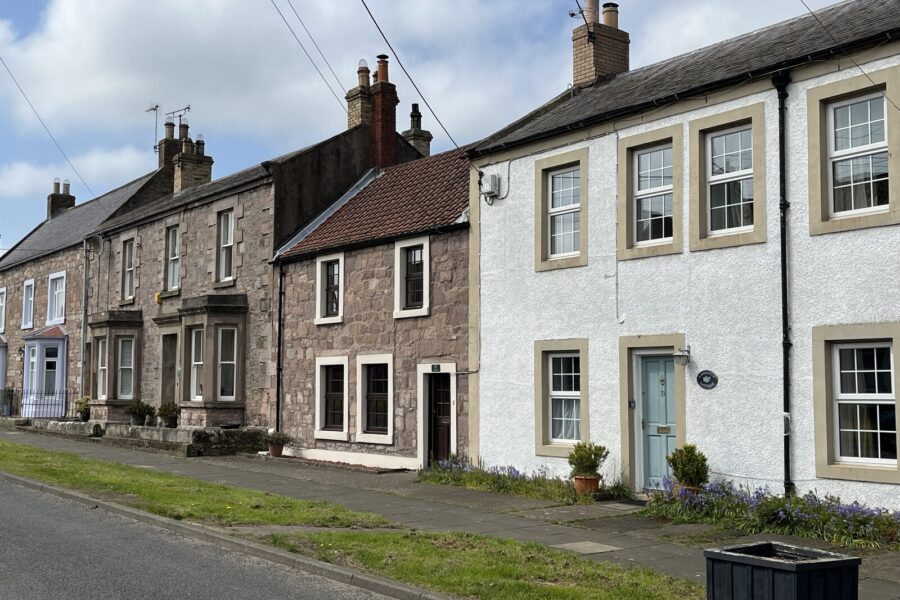
When the school was built, Norham was a smaller village. There were no council houses, no Ubbanford or St Cuthbert Square. One long village street with four houses surrounded by fields. The field, which was where St Cuthbert’s Square is, had only the little house that Mrs Thorn lives in and almost always had horses in it.
There were no houses where Ubbanford and Marmion View are, and only a row of tiny cottages around the Bow Well, which always had lovely clear running water. No houses facing the castle at the end of the north lane, but gardens belonging to a row of small cottages facing Castle Street. Where the two council houses at the extreme end of Castle Street are there was a little square of the same type of tiny cottages.
There was no electricity. The street lamps were iron standards, with a lamp enclosed and a large glass case, one side of which opened to enable the lamplighter to light the lamp. He had to carry a ladder around with him and there were crossbars beneath the lamp for him to rest it on.
There was a little green from the hall to the antique shop and no wide grass verges at all, excepting from the hall to the end of the row where the garage is now. Telephones were unknown, so the village looked much emptier without the grass, telephone and electric wires, and no swing on the green or telephone kiosk.
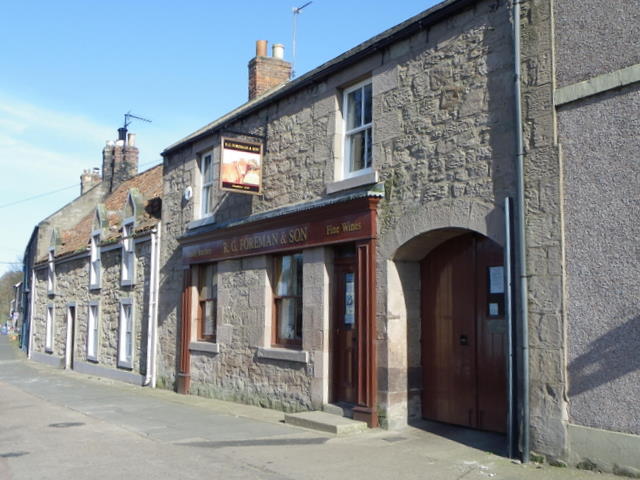
There were more shops. A saddlers in West Street, with harness hanging on the wall outside. A sweet shop next to the Masons Arms in a room of the cottage, and on the other side of the Masons a shoe shop with large windows and a workshop behind. The antique shop was a grocers. On the other side there was the ‘corner shop’ which sold cigarettes etc, the bakers, post office, a dairy where the bank is, another cobbler, Simpsons joinery and Shepperds was another shop. There were two butchers in Castle Street, a bakery where the Castle Kitchen is, a drapers, a paper shop and Gibsons dairy. The doctor lived alongside the green, the surgery door was where Mrs Parks’ house is.
There were lots of horses and carts. The milk from Galagate herd of Friesian cows was taken in large churns to the railway station every morning in a little pony trap to go to Berwick on the train.
With thanks to Marjorie Grahamslaw for sharing these recollections, handwritten by her mother-in-law Ivy who grew up in Norham in the 1930s. Ivy was much loved and respected in the village, not least for her tireless work for St Cuthbert’s Church and other local organisations.
Image: Castle Street in 2024 © Jennifer Petrie (cc-by-sa/2.0) geograph.org.uk/p/7765987
Image: The butchers on Castle Street. The firm was established in 1840, and the shop and house date from this period.
R G Foreman & Son, Norham, in 2011 © Maigheach-gheal (cc-by-sa/2.0) geograph.org.uk/p/2614237