The streets were safe to play on as there were very, very few cars and children would stand to watch them go very slowly past.
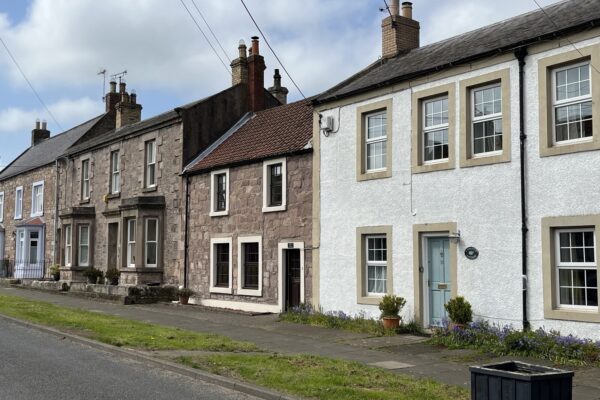
The mill was at the top of the ‘mill opening’, as we called it, adjoining the row of cottages. It had a dovecot at the top with lots of pigeons in it. Where the spring leaves Castle Street there was a little shop in the cottage. Molly Waugh’s, the tiny window was full of boxes of sweets, thick nougat covered with chocolate, aniseed balls, gobstoppers which changed colour as you sucked them down, dolly mixture, chewing nuts, conversation lozenges with messages written on them [the forerunner of Love Hearts!] and lots more. Often her cat would be sitting amongst them. Then you could buy perhaps four different kinds of sweets for 1d [one old penny]. We were always forbidden to go there.
Very few people had water in their homes. There were water pumps, which we called ‘pants’, at intervals along the street. There was one left outside the wall in Pedwell Way. People would take their pails and there was a grid to set it on below the large spout. Turn the handle, fill the pail and carry it home.
Bath night would be perhaps once a week in a tin tub in front of the kitchen fire. With all of the water to carry, children would use the same bath water, warming it up between each one. There were large families then.
Children from the farms had to bring a packed lunch to school. Jam sandwiches mainly or cheese, and a tin bottle with a cork in it carried their tea. They used to put them in front of the staff room fire to keep warm, but must always have been nearly cold after walking from Grindon, Shoreswood or the Newbiggins.
With thanks to Marjorie Grahamslaw for sharing these recollections, handwritten by her mother-in-law Ivy who grew up in Norham in the 1930s. Ivy was much loved and respected in the village, not least for her tireless work for St Cuthbert’s Church and other local organisations.
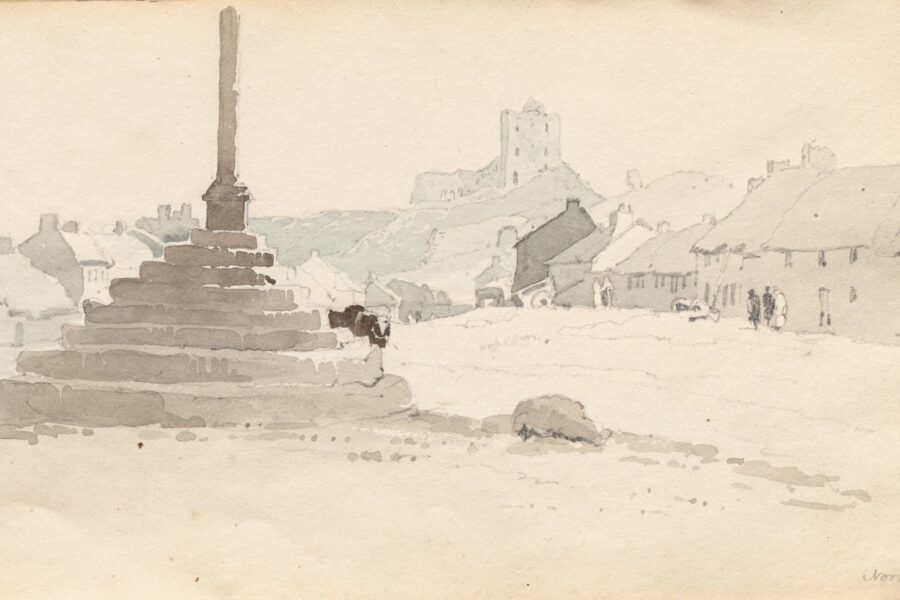
Image: Norham in 1814, sketched by Samuel Prout (courtesy of Look & Learn).