Archives
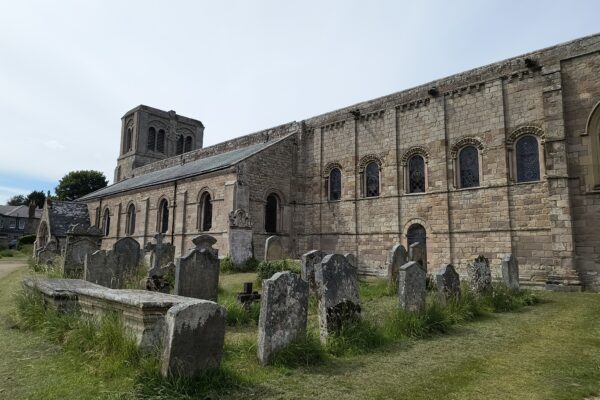
Commemorating Norham’s St Ceolwulf
Ceolwulf, King of the Northumbrians between 729 and 737, abdicated the throne to became a monk on Holy Island. He is remembered in Norham, where his body was later laid to rest. St Aidan brought the Good News of Jesus to the people of Northumbria over a thousand years ago. He came from the Island […]
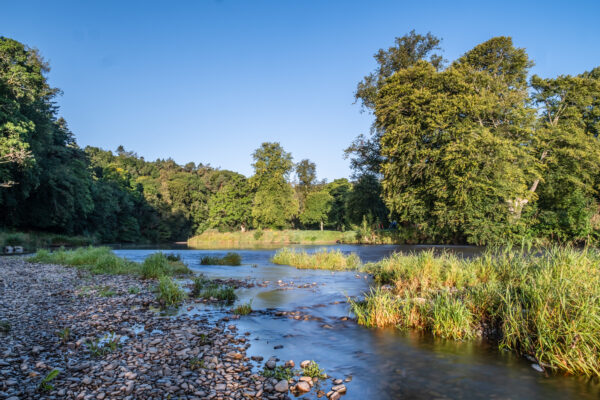
The Ballad of Tweeddale
In fair Tweeddale where the Tweed runs bright, Through heathered hills and morning light, The valley winds through glen and lea, A land of beauty, wild and free. From Broughton down to Peebles town, Where rolling green-clad hills look down, The river sings its ancient song, As through the countryside it flows along. Long centuries […]
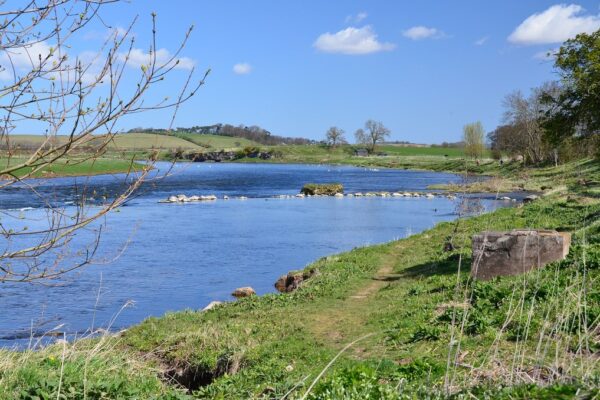
Coals to Kelso – the coming (and going) of the railways
In 1809, a sales pitch was made for an iron railway between Berwick and Kelso. It argued there were large profits to be made from moving substantial quantities of coal and lime from coal-bearing districts nearer the coast to the largely agricultural Tweed valley. Coal was in high demand for industrial and domestic use, while […]
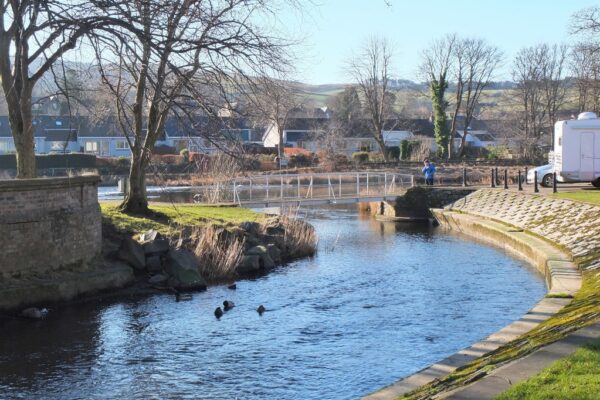
Taking a punt
I think what happened was that my grandfather, going for a walk on a Sunday afternoon, saw the deposits of sand and gravel up at Neidpath Castle. He must have thought about it and approached the Earl of Wemyss and they made an arrangement that he could take as much as he wanted for £10 […]
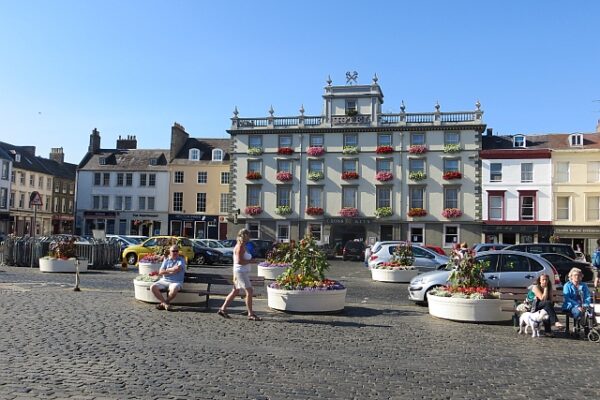
Kelso in the heyday of horse-drawn coaching
The Cross Keys Coaching Inn, in the centre of Kelso, was built by James Dickson of Ednam House in 1769. It was a well-patronised coaching inn when Kelso became a staging post for those travelling between Edinburgh and London. Coaches would pass under the (now built up) main front entrance of the hotel on Kelso […]
Kelso’s connections to the Industrial Revolution
This extract from Samuel Smiles’s The Lives of George & Robert Stephenson (1874) points to Kelso’s connections to the pioneering railway engineers of the world’s first Industrial Revolution. ‘In the evenings, after his day’s labour at his [Killingworth Colliery near Newcastle] engine, he would occasionally employ himself for an hour or two in casting ballast […]